
Travel sleep tips – and Tempur travel pillow review
If only you could bottle sleep. There are nights I would have paid very good money for another hour… another minute.

ad/paid collaboration*
And not just when my daughter was a baby. I remember lying awake in Japan, jetlagged and almost sobbing with frustration in the knowledge I had a busy day exploring ahead.
Or long-haul flights when you just cannot get comfy with those flimsy wafer-thin pillows that the airline gives you. But as with so many thing, practice makes things better, even if not perfect.
I’ve survived countless bouts of jetlag, including my daughter’s jetlag (often worse than my own), I have curled up on flights galore in economy, and I have settled down resolutely to sleep in more strange hotel beds than I can count.
So when you’re desperately trying to sleep on your travels, this is what works for me.
Adjust asap
Whenever I get onto a plane, I change my watch for the new timezone.
Even if it makes no sense – sunlight pouring in when the clock says night, or lunch and wine being served when the time is officially breakfast, the sooner you start thinking of your ultimate time zone, the better.
At the same time, stop thinking of the ‘other’ time zone. My daughter, who has now got the concept of ‘different clocks’ around the world, kept asking what the time was back home while we were in Aruba, or what the time was in Aruba once we returned to the UK.
I flatly refused to tell her, much to her outraged disgust. But if half your brain is thinking that it’s really dawn or the middle of the night, it takes longer to adjust.

Pack a decent travel pillow
There are so many travel pillows out there – the U-shaped inflatable ones might be easy to pack but I never looked forward to snuggling down into one. The best one I’ve ever used is a Tempur Comfort travel pillow.
Sent to me for review, it’s a mini version of their classic pillow. Not cheap, but it’s more comfortable than a lot of full size pillows I’ve used (including the sadly deflated bargain versions on my bed at home, which I finally replaced after hurting my shoulder in my sleep).
Developed by NASA to cushion astronauts during lift-off, Tempur products (including the range of pillows and mattress) distribute weight and pressure.
In practice, they mould themselves to you, so if you’re squirming and shuffling around in your tiny plane seat (and even at 5 ft 3 and a bit, I wriggle constantly to try to get comfy), they adapt to the shape you need.
I’ve had mine curled around my neck, at an angle supporting bits of my shoulders, propped down my back almost as a bolster.
It’s impressively supportive, with a very soft case that’s machine washable and there’s even a three-year guarantee.
Get some sun
Or rather, find the daylight. There’s nothing quite so good for re-setting your body clock and recharging your batteries than being out in full daylight.
It won’t always work, of course. I downloaded an app called Timeshifter before our latest trip – you tell it where you’re based, where you’re headed, plus when you’re travelling and it plots out a clever timetable of when to drink or avoid caffeine, and when to avoid bright light or to seek it out.
The idea is that this will re-set your body clock all the faster.
Admittedly I fell at the first fence on my trial run, when it told me to avoid caffeine at breakfast before our nine-hour flight and then to find bright daylight in Aruba at around 10pm (there’s a certain logic to the recommendations, but given that sunset is long over, it had some practical drawbacks).
But there’s no doubt that avoiding blue light from phones before bed and flooding your tired brain with sunshine in the day is a good way to improve your sleep when travelling.

Don’t sit on the hotel bed
When you’re travelling west, you often arrive when your brain thinks it’s night – but the local time is early evening.
So my failsafe is – if possible – a reviving shower, and under no circumstances to sit on the bed. Under no circumstances!
Because if you sit on that temptingly comfortable hotel bed, you’ll want to lie down. And if you lie down, you’ll want to close your eyes… just for a moment.
You can guess what comes next.
And then you inevitably wake up in the early hours, disorientated, hungry and as jetlagged as when you arrived.
Don’t. Sit. On. The. Bed.
Switch your brain off
And if you are lying awake? After years with a small girl, I feel tired enough to sleep almost anywhere… the biggest problem I have in dropping off is switching my busy brain off.
It’s almost as if I wake up at 3am and instead of going, ah you should really get back to sleep, my brain says, ‘aha, while you’re awake, let’s think about ALL THESE THINGS’.
Work, life, worries, shopping lists, things I’ve forgotten – they all crowd in.
Reading a book can help, but I’ve found another bonus to all those audio books I download for my daughter on road trips.
I discovered this on our latest trip to Aruba, when she was wide awake at 2.30am (and then 3.30am the next night).
Searching for something which would keep her quietly entertained (and thereby reduce the times she woke me up sighing VERY loudly that she’d never get back to sleep) but not be so entertaining that she wouldn’t fall asleep, I stuck on a Paddington audiobook.
We know the story well but it never fails to amuse. And while she didn’t doze back off either time, I was asleep again by the end of the first chapter. I took that as a win.

Find a scent association
There are certain scents, especially lavender, which are supposed to help you fall asleep.
Whether they do or not, there’s nothing as powerful as a scent which your brain associates with falling asleep.
It’s a tip I was given when my daughter was a baby. Drip a bit of lavender oil onto a muslin and leave it by her at bedtime and before long, the scent of lavender will trigger that automatic reaction that it’s time for sleep.
Over the years, we’ve also acquired a couple of pillow sprays which I’m happy to give suitcase room to.
One lives in my daughter’s room at home and if she’s struggling to get to sleep, she squirts a little on her pillow.
In her head, that particular smell helps her drift off to sleep. And when something works, I’m not about to argue why.
Consider melatonin
I first tried melatonin after picking some up in the US – it’s available over the counter there, unlike the UK, and the one pre-baby trip where I forgot to pack it was the Japan trip where I had the worst jetlag of my life.
A natural hormone which rises as you fall asleep, it won’t work like a sleeping pill – not something I’ve tried or fancy trying – but I find that if you’re awake, struggling to sleep but exhausted, it seems to be enough to help me doze off again and give in to that exhaustion.
It does make me feel a bit fuzzy headed the next morning, but certainly less fuzzy headed than lying awake staring at a clock in the wee small hours.
Of course you should always take advice from your doctor and check before taking any medication, natural or otherwise, and it’s not something I’ve ever given to my daughter, so it’s less useful when I travel with her.
Even if I doze happily back to sleep, a penetrating whisper of ‘mummeeeeee, I can’t sleep’ – or even her triumphant announcement towards the end of our week in Aruba that she had slept to 6.11am (still too early) can wake me from the deepest sleep.
Embrace the early start
I have never been a lark. I’m not even sure I’m an owl any more (more a permanently exhausted pigeon, as the Facebook meme has it).
I love to sit and watch the sunset. I can probably count the number of sunrises I’ve seen on my fingers.
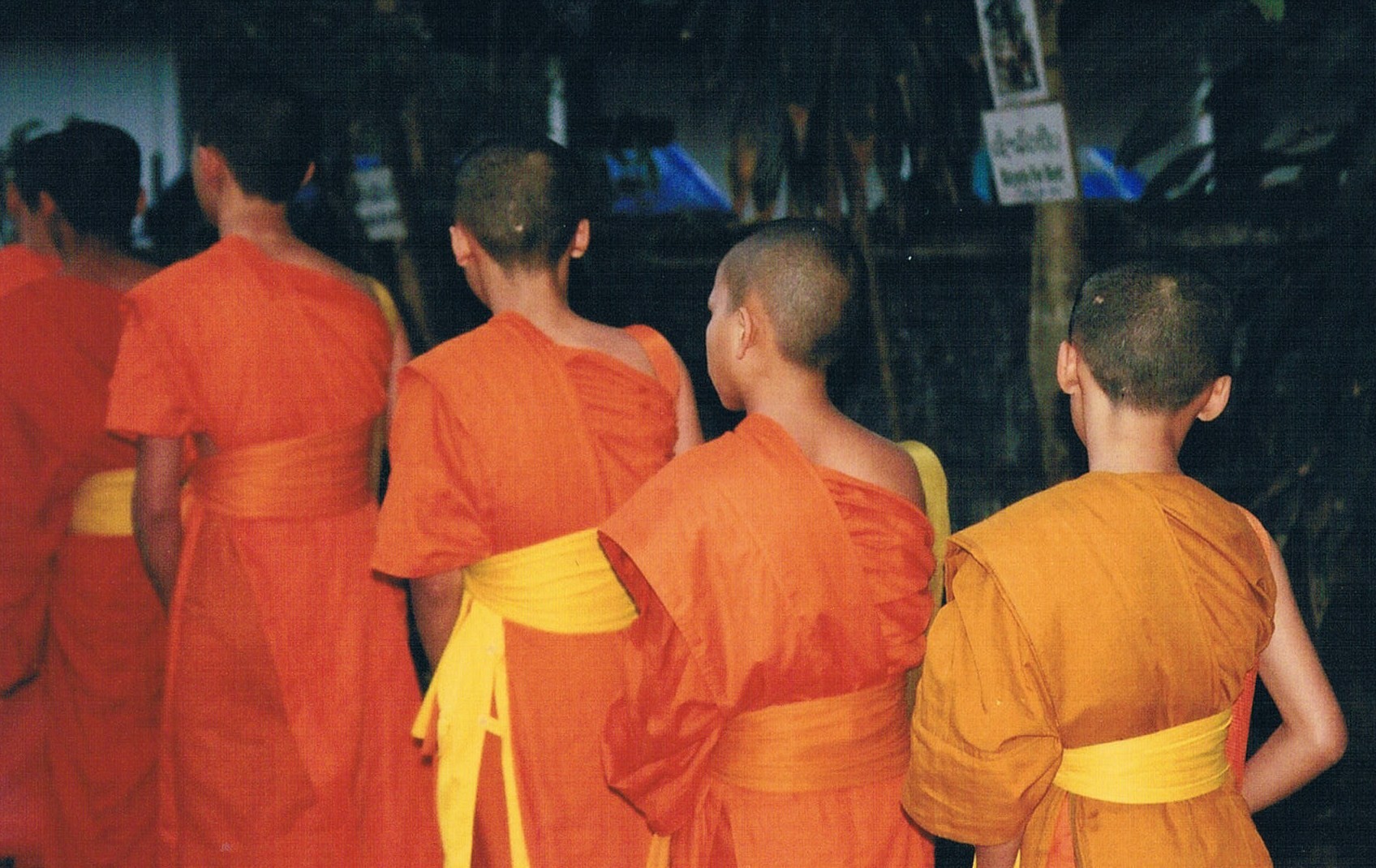
Most have been while I’ve travelling – getting up early to see the monks processing for alms in the streets of Luang Prabang, or climbing St Catherine’s Mount in Egypt to see the sun rise over the Sinai desert are standout examples.
There’s nothing like travel for persuading me to do something that I’ll only do under extreme protest back home… or for jetlag in giving me a helping hand.
On a visit to Boston, having woken up very bright and early, I went out for a long walk around the city near the hotel (pre-daughter) to explore in the quiet and peace of the morning before arriving back for breakfast feeling like I’d got a head start on the day.
Make it a memorable sleep
Revel in the experience. I love my bed at home, my comfortable mattress, the sheer familiarity – no hotel, however many pillows they pile up, ever comes close.
But I don’t look back and remember a night in my bed at home as something out of the ordinary.
Unlike the night I spent in the desert in Jordan, with stars winking above the Bedouin tent where we were spending the night (I am really not a natural camper but this was something special).
Or the time I slept in a treehouse in Tahiti. Was it as luxurious as many of the South Pacific island hotels? No… But the wooden structure carved into the canopy, the bed carved into the treehouse and mosquito nets wafting around me were unforgettable.
Even our sleepover on the Golden Hinde in London. I wouldn’t call it a good night’s sleep (I wish I’d had my Tempur pillow there….) but how often do you get to time travel to the 16th century and doze off aboard a replica Tudor galleon?
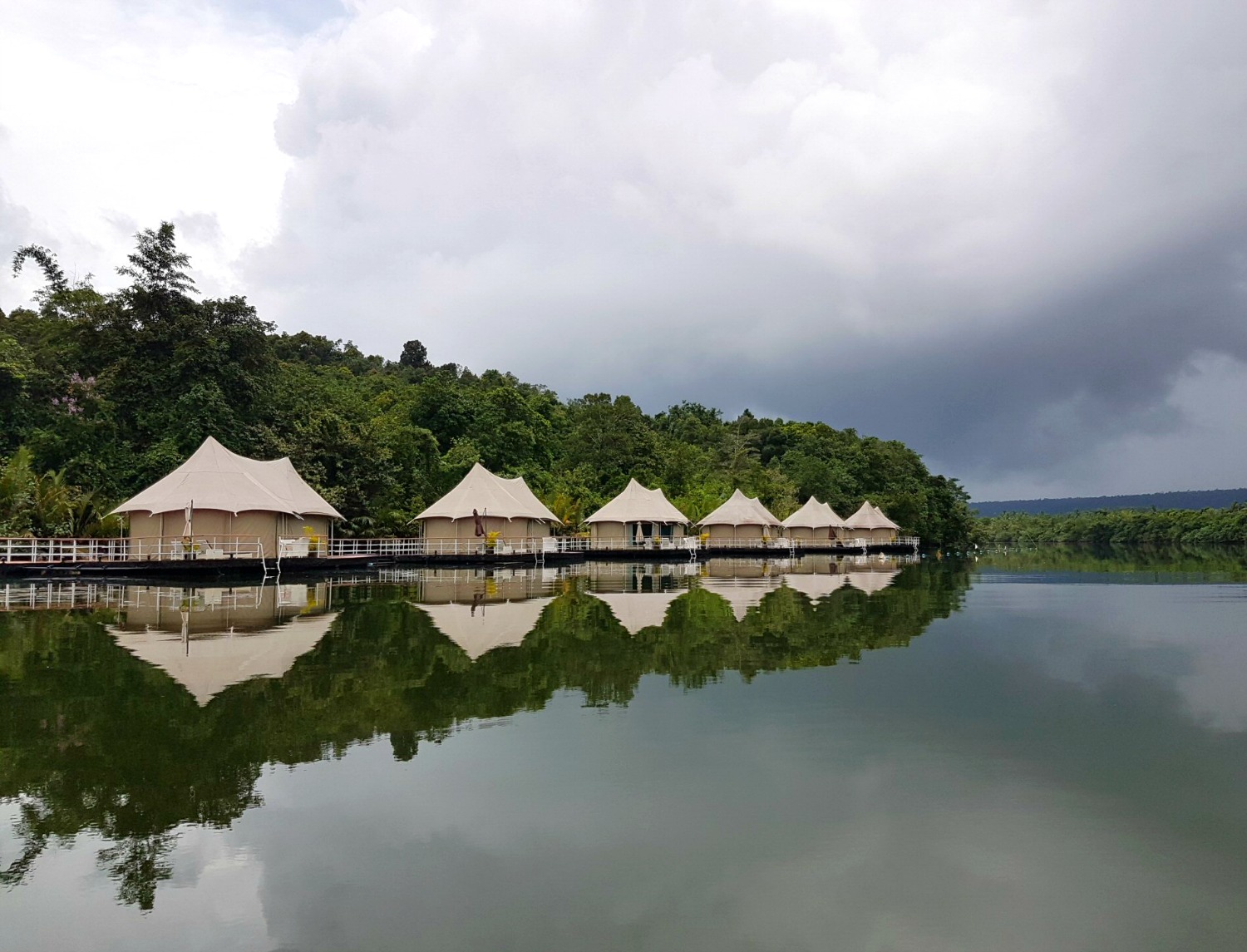
My daughter still talks about the floating tents we slept in in Cambodia. Safari style tents, they’re definitely at the luxurious end of glamping, let alone camping, set in a line along the Tatai river in the Cardamom mountains.
It’s perhaps the most relaxed sleep I’ve ever had.
Disclosure: This post has been created in conjunction with TEMPUR® but all opinions in my Tempur travel pillow review, tips and recommendations to not sit on the bed are my own.
Images copyright MummyTravels
LIKED THIS? SIGN UP FOR MY EMAIL NEWSLETTER
Great posting !!
With so many options available in the market, its so hard to choose one. But Thanks for the Tips/Suggestions.
Thanks! Glad the tips were helpful