
The 16 best things to do in Gyeongju with kids
If you’re planning a family trip to South Korea and wondering whether Gyeongju belongs on your itinerary, the answer is an emphatic yes – the ancient capital of the Korean peninsula is a fascinating contrast to the modern cities, and you definitely won’t be short of things to do in Gyeongju with kids.
contains affiliate links*
Often called the ‘museum without walls’, Gyeongju was somewhere I wished we had longer to explore and would definitely be high on my list to spend a few more days if (when?!) we go back to South Korea.
The historic capital of the Silla Kingdom, between 57BCE and 935CE, you can visit as a day trip from Busan (less than an hour by high-speed KTX train), and it’s only around two hours by KTX from Seoul, but this is definitely somewhere which is worth allowing more than a single day.
Contents - click to jump to a section
Why visit Gyeongju with kids
If you’re wondering what makes Gyeongju so special, this city still keeps much of its historic charm – expect low-rise wooden buildings, hanok accommodation, and the chance to step back in time to the days before Korea was a single unified kingdom.
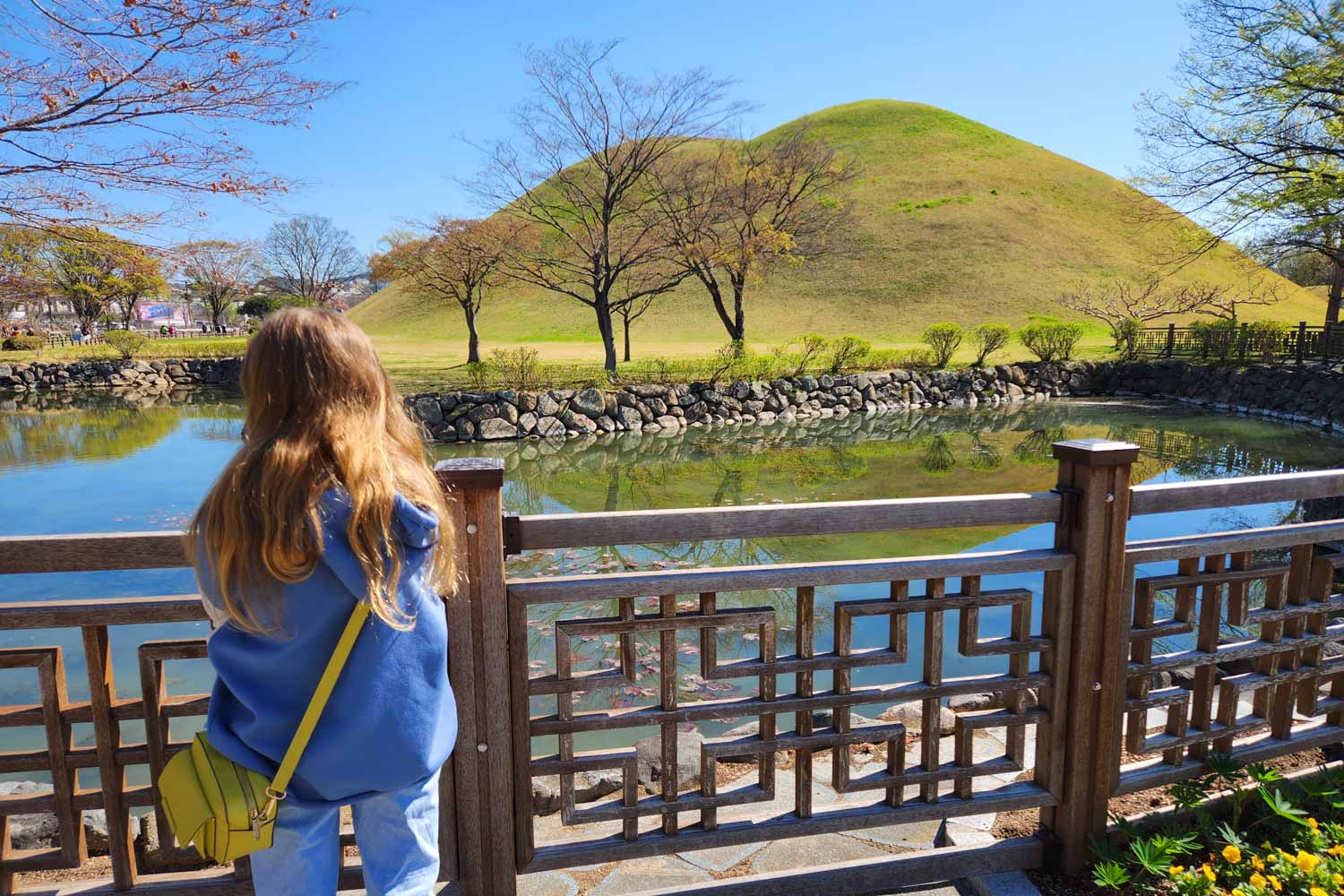
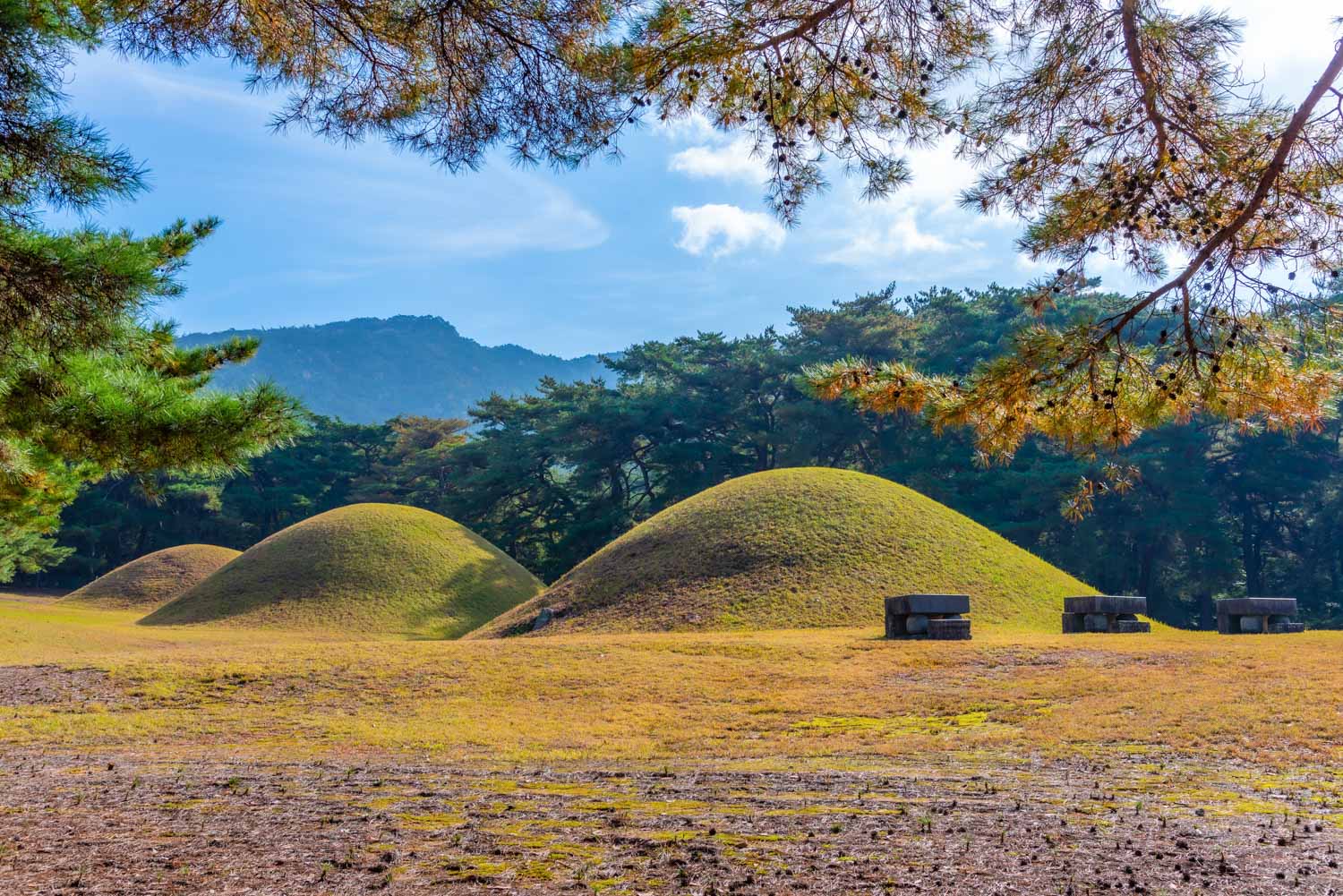
One of the first things that strikes you are the countless grassy domes which appear across the landscape, all of which hide a royal tomb. Only a handful of these royal burial mounds have been excavated so far, with over 150 left untouched.
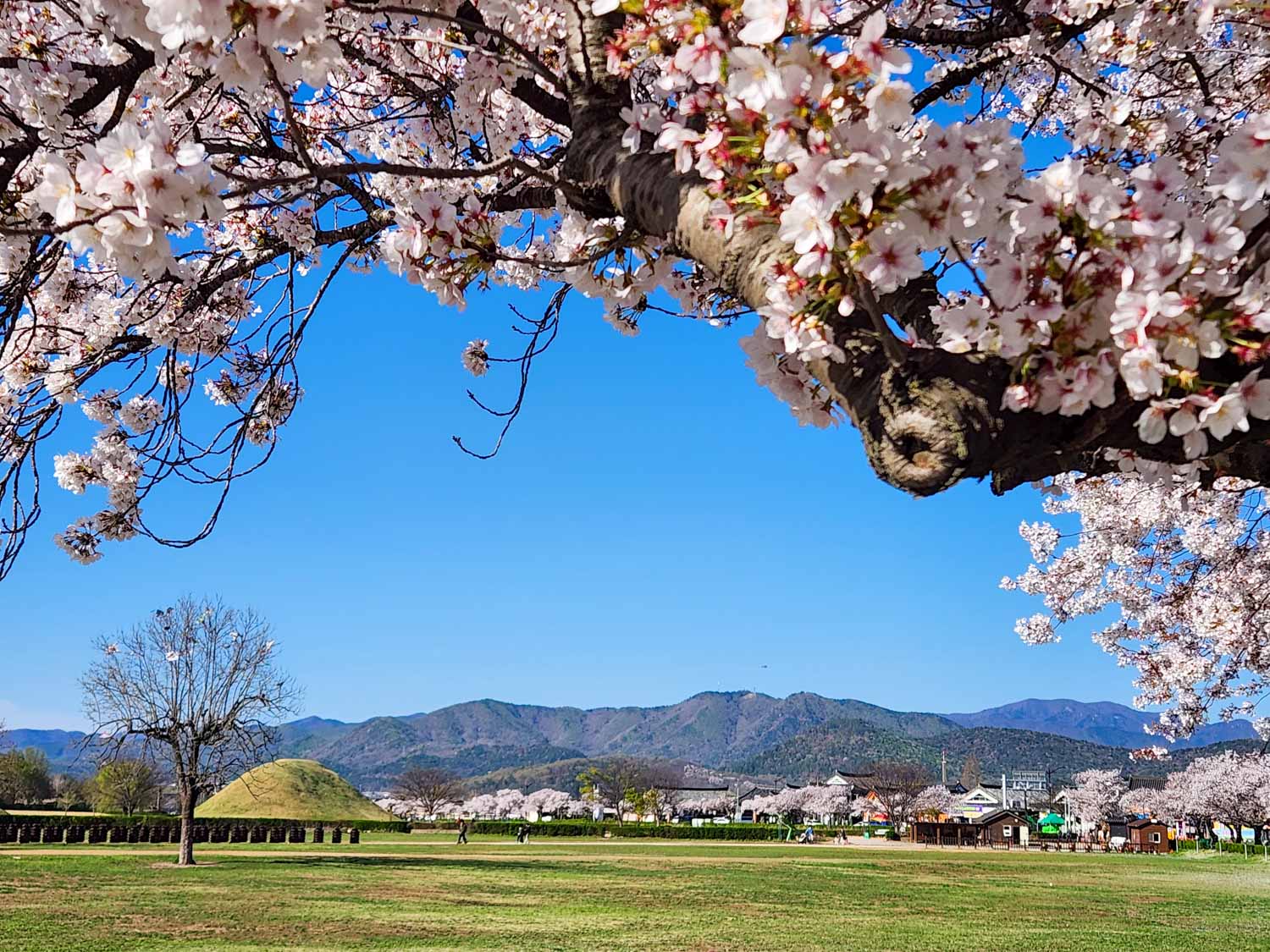
But even those few which have been explored by archaeologists (read on to learn about one open to the public) have held thousands of artefacts, including astonishing amounts of gold.
The city itself, which also goes by the names of the Golden City and the Thousand-year City, has history around every corner – you’ll also find a stargazing tower that’s stood for over 1,300 years, along with Buddhist temples tucked away in hillside trees, and streets where if you look past the 7-Elevens, you can imagine yourself back in time.
Gyeongju Historic Areas: Understanding what you’re visiting
Before you set foot on the first site, it’s worth knowing that Gyeongju’s UNESCO World Heritage designation isn’t a single location – it covers five distinct historic zones spread across the city and surrounding mountains, collectively inscribed in 2000 as the Gyeongju Historic Areas.
So if you’re expecting to turn up and visit a single site or tick off everything in a single day, you’ll need to readjust your plans a bit once you start to understand the scale and variety of what there is to explore. The five zones are:
- Namsan Belt, a mountain scattered with hundreds of Buddhist carvings and relics
- Wolseong Belt, the site of the ancient palace grounds including Cheomseongdae Observatory and Donggung Palace
- Tumuli Park Belt, home to the great royal burial mounds of Daereungwon
- Hwangnyongsa Belt, where the foundations of a once-magnificent nine-storey pagoda and royal temple survive
- Sanseong Belt, the mountain fortress of Myeonghwalsan to the north-east.
Together they represent one of the most extraordinary concentrations of historical heritage in all of Asia.

If you only have limted time, you can see several highlights in Wolseong Belt and Tumuli Park Belt which are within walking distance of each other, around 15-20 minutes apart. The Hwangnyongsa is around 15 minutes in the opposite direction from Cheomseongdae Observatory in the Wolseong Belt, so it’s not too hard to combine those either.
Namsan Belt, around Mount Namsan, is outside the city, as is the Sanseong Belt around Myeonghwal Mountain Fortress, slightly north-east of Gyeongju.
We stayed not far from the Tumuli Park Belt area, in the area around Poseok-ro and Hwangnidan-gil – a bit touristy but lovely to walk around, and with lots of places to eat and grab souvenirs.
You can also get a Gyeongju tour pass from Klook which includes a preloaded transport card and entrance to various attractions – you also get some freebies like hanbok hire and Gyeongju bread too
Gyeongju National Museum
The Gyeongju National Museum makes the ideal starting point for any family trip to Gyeongju, setting the scene before you actually venture out to the archaeological sites themselves, or helping to put everything in context if you’re visiting afterwards.
It houses one of the finest collections of Silla artefacts in the world – intricate gold crowns, jewellery, pottery, and weapons – including originals of some of the displays you’ll see in the ancient tombs, and does a great job of helping to bring the ancient kingdom to life for young visitors.
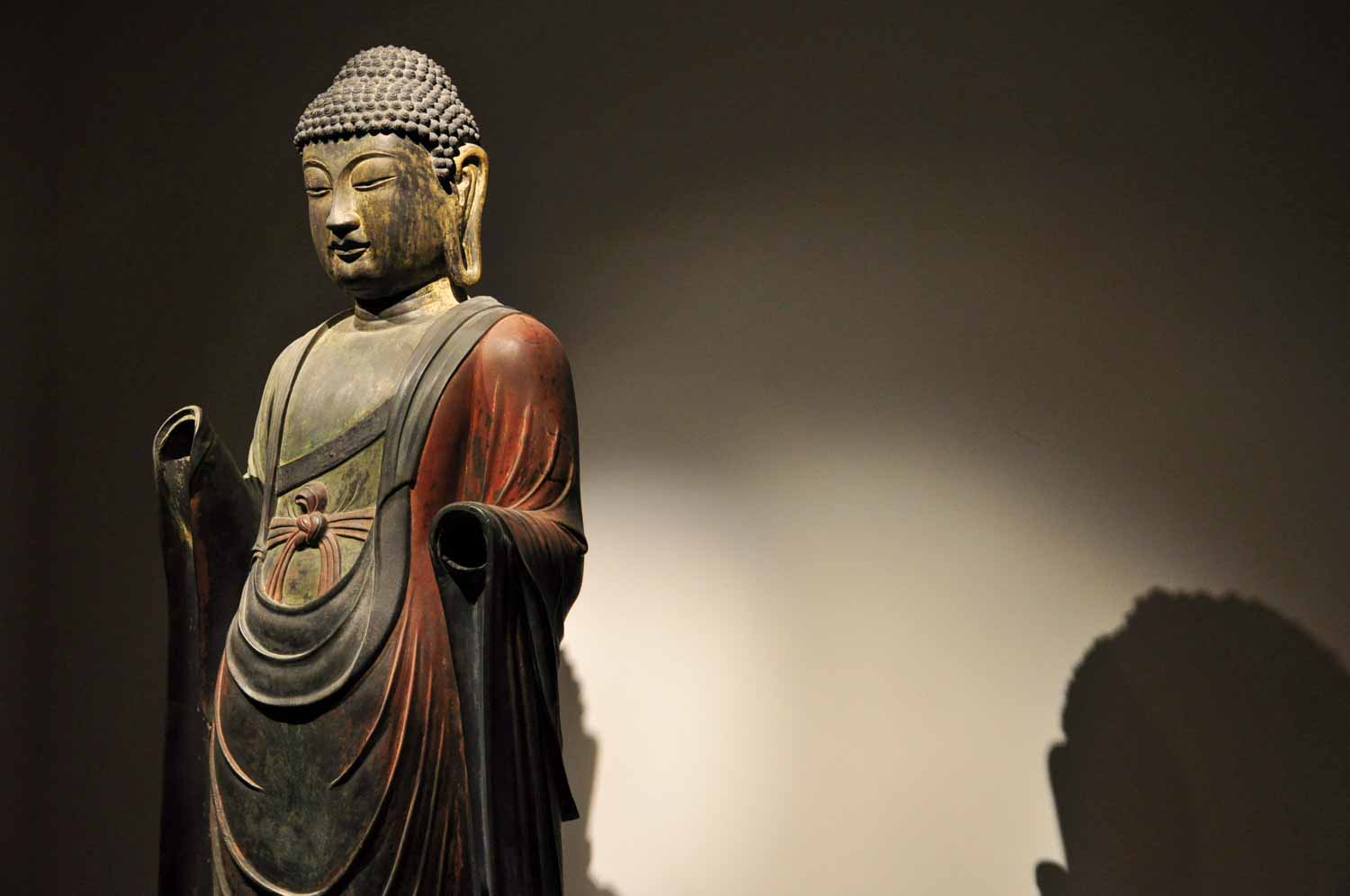
There’s an audio guide to give a bit more information, but looking at the displays of golden crowns is going to appeal to all ages. The outdoor sculpture garden is a lovely spot too. Entry is free, so if your kids have a limited tolerance for museums, it doesn’t matter if you whizz round quickly either.
There’s also a separate children’s museum which is very hands on and which makes the history accessible for younger kids – there are limited numbers, so it’s worth trying to reserve a place if possible. Or there are walk-up places for non-Koreans.
Daereungwon Tomb Complex
Our favourite of all the things to do in Gyeongju with kids, the Daereungwon Tomb Complex stands out even amidst all the history.
Even just walking past this extraordinary cluster of 23 ancient royal burial mounds is slightly surreal, with the symmetrical grassy mounds rising up like something out of a fairytale. Some are up to 22m tall, and the fact you’re a stone’s throw from the city streets makes it even more unusual.

The biggest attraction is Cheonmachong, the one tomb where you can actually go inside. Known too as the ‘Heavenly Horse Tomb’ thanks to a painting on a saddle among the treasures buried here, you can explore a replica of the original burial chamber along with displays of some of the individual finds.
And walking through, you start to get a sense of the fabulous wealth belonging to the Silla dynasty, with golden crowns, accessories, even gold (or gilt) shoes, alongside jade ornaments, decorative gear and trappings for hoses and a whole lot more.
Walking in through the dark entrance does feel a little like living out any Indiana Jones/treasure-hunting fantasies too, especially as you see the first glimmers of the gold replicas. We also loved watching the videos at the end, which showed how the pieces were probably made.


The surrounding park itself is beautiful too, especially in spring with the blossom in bloom, so it’s well worth saving some time to walk around and soak up the views – and ponder what else is hidden inside the other mounds.
It’s free to enter the park itself and only 3,000 won for adults to go inside the tomb (2,000 won for teens/1,000 won for younger kids) and you can buy your tickets at the booth by Cheonmachong itself. Alternatively, it’s included in the Gyeongju tour pass from Klook.
If you prefer a guided tour, this small-group tour is led by a history specialist and takes you to the Daerungwon Tomb Complex as well as other key historical sites – it’s a full-day tour so better with tweens and teens though.
Cheomseongdae Observatory
One of the best-known sights to visit in Gyeongju with kids, Cheomseongdae Observatory is also one of the oldest surviving astronomical observatories in Asia, built during the reign of Queen Seondeok in the 7th century.
This 30ft-tall bottle-shaped stone tower – constructed from 362 precisely stacked granite blocks – was used by Silla scholars to observe the heavens and track the seasons.
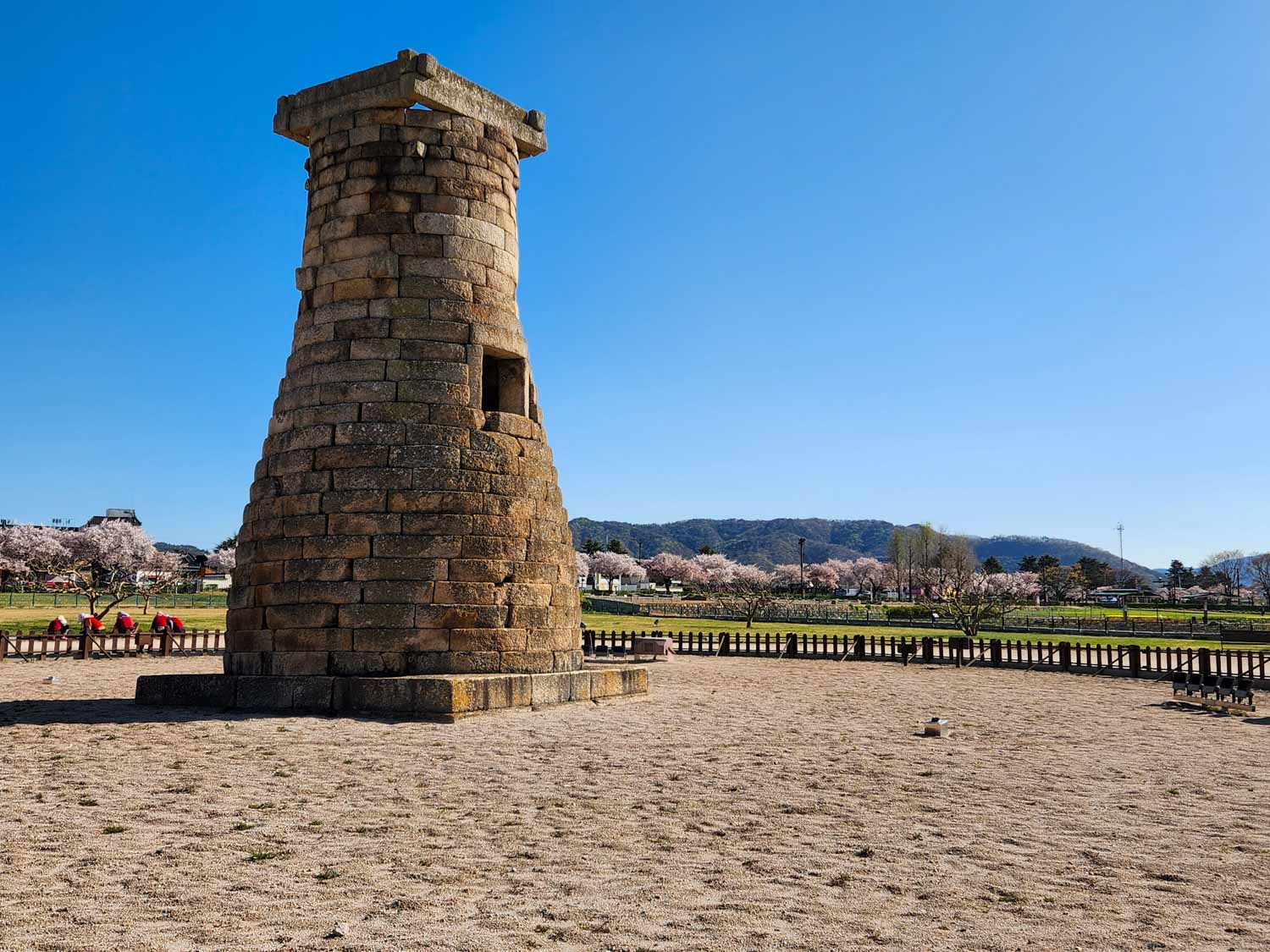
While you might otherwise overlook the tower if you didn’t know its history, it’s a great way to get kids talking and thinking about life in the Silla dynasty – how could this be built without modern tools, what the oldest observatory in Asia says the early days of science, even about female rulers and how the Queen’s name has endured as a result.
If that doesn’t grab your family, the observatory stands amid open fields surrounded by flower gardens and it’s particularly lovely in spring with the cherry blossom and autumn when the muhly grass turns pink. Or if you head there at night, it’s lit up for another great view.
Cross Woljeonggyo Bridge
The original Woljeonggyo Bridge was built in around 760CE, but was later burned down during the Joseon dynasty – and reconstructed in 2018 based on historic records, becoming the largest wooden bridge in Korea today.
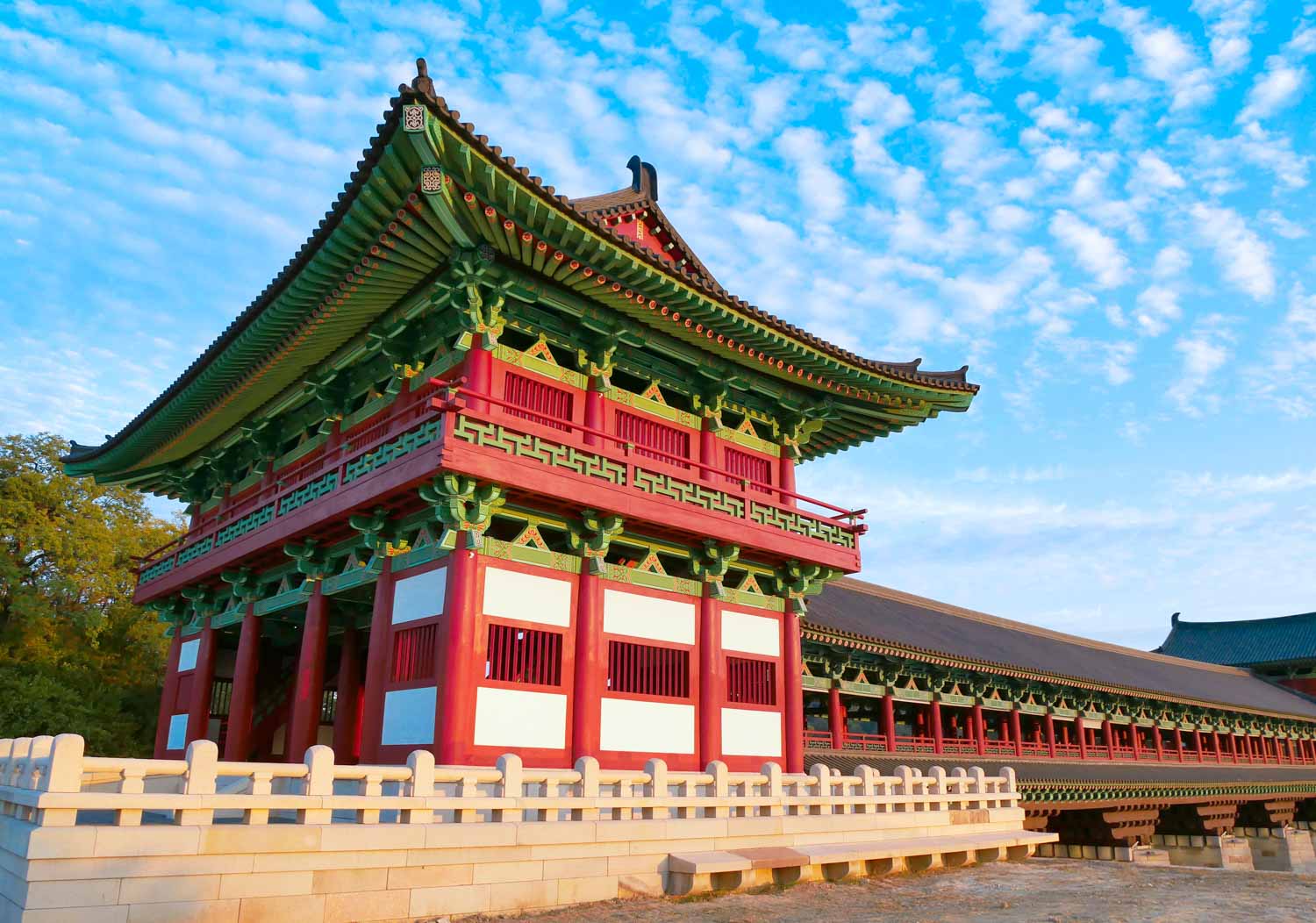
You don’t really need to know the back story to appreciate it though, as it’s easily one of the most photogenic places in Gyeongju. Set across the Munheon Stream, the colourful wooden bridge has roofed pavilions at either end and plenty of decoration.
It’s well worth a visit at any time but if you head there around sunset, you’ll enjoy the views at twilight before the bridge is illuminated after dark – the whole area nearby is great for a relaxed family wander with street food stalls, or there’s also a riverside walking path nearby if you’re visiting during the day.
Donggung Palace and Wolji Pond
Just a short walk from the city centre, Donggung Palace and Wolji Pond (also known historically as Anapji Pond) is one of the loveliest spots to wander around in Gyeongju with kids.
The ornamental pond was created in 674CE as part of a royal pleasure garden, with the three reconstructed palace halls on the western edge reflecting in the calm water.
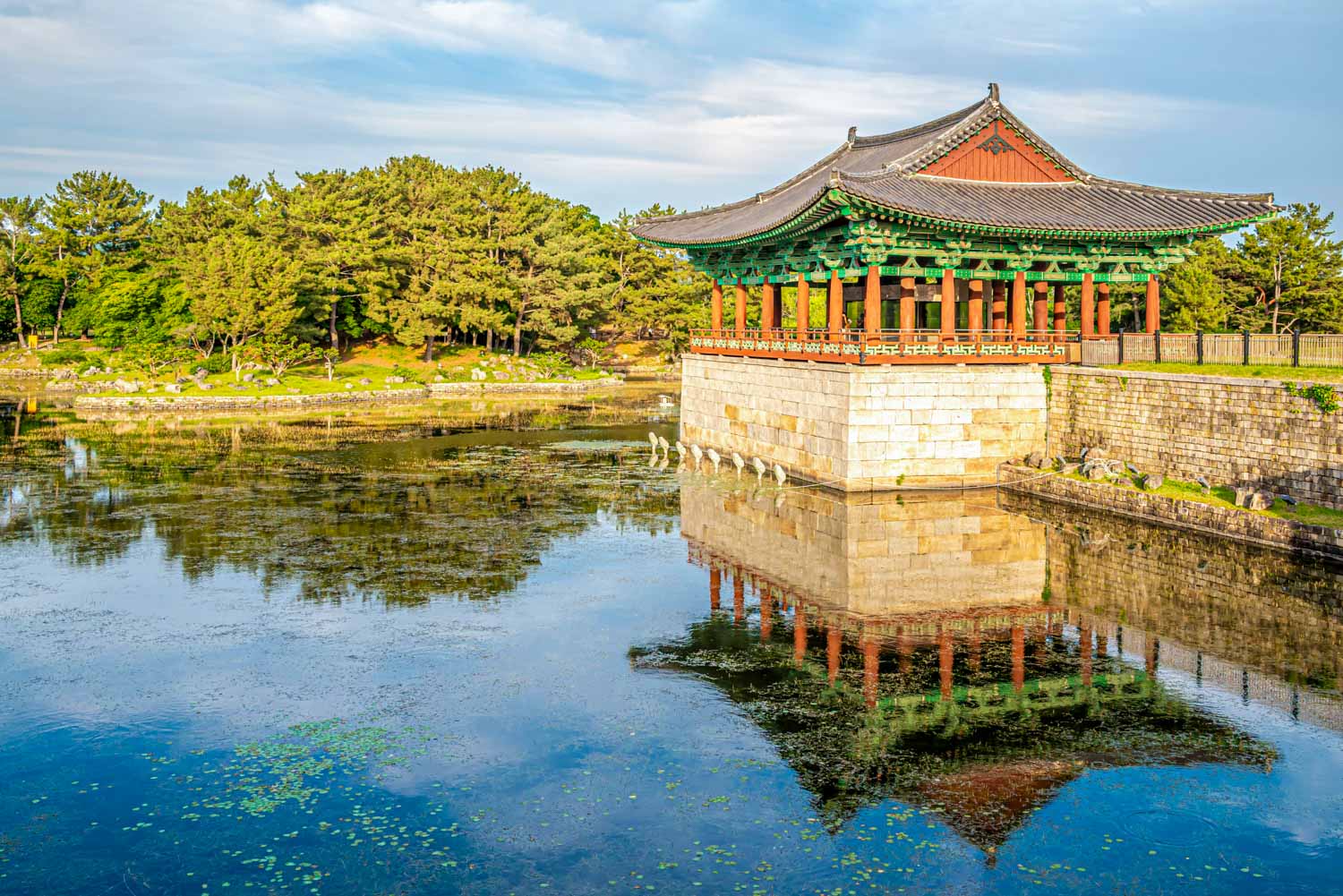
A secondary royal palace, it’s where the prince of the Silla dynasty would live as well as being the location for important feasts and the pond was designed with three islands in the centre and to house rare birds and animals. It’s name, found on a piece of excavated poetry, was ‘a pond that reflects the moon’.
So while it’s still ideal for a gentle stroll during the day, it’s magical in the evening when the buildings are lit up and glow amber, their reflections shimmering in the water. If you arrive just before sunset, you can watch the light turn golden before the illuminations switch on, all to the sound of frogs calling across the pond.
It’s open until around 10pm (last entry 30 minutes before), priced 3,000 won for adults, 2,000 for teens and 1,000 for children.
Bulguksa Temple
Arguably the most famous temple in South Korea, Bulguksa is an intricate complex of wooden halls, stone staircases, and manicured gardens, with a backdrop of forested mountainside around 40 minutes from Gyeongju itself.
Also a UNESCO World Heritage Site, it was first constructed around 528CE and rebuilt in its current form during the Joseon Dynasty before being seriously damaged by fire and restored in the 20th century.

This masterpiece of Silla Buddhist architecture is as magical for kids as adults. The colourful dancheong paintwork (the traditional Korean decorative patterns in vivid blues, greens, and reds) transforms every building, while you’ll also spot huge bronze bells, dragon carvings, and stone pagodas.
The two famous and striking stone bridges – Cheongun-gyo (Blue Cloud Bridge) and Baekun-gyo (White Cloud Bridge) are a great spot for photographs.
There are no audio guides (unless you find a third-party one), so if you do want to understand more of the symbolism, it’s worth considering a tour guide. Many day tours are based on a day trip from Busan, but this private tour of Gyeongju has a family-friendly four-hour option based on pick-up in Gyeongju.
Alternatively, if you want to travel on your own, there are several buses which run from Gyeongju to Bulguksa temple including Golden Line bus 10 (and 11 which follows a similar loop in the opposite direction), as well as bus 700.
It’s also easy to combine a visit to the temple with Seokguram Grotto which is a short bus ride up the mountain – bus route 12 shuttles between the two and takes about 20 minutes, leaving Bulguksa at 40 minutes past the hour, and returning from the grotto on the hour. You can use a T-money card to pay.
Girimsa Temple
Less visited than Bulguksa but no less beautiful, Girimsa Temple is tucked into a valley in the Hamwol Mountains to the north-east of Gyeongju – around half an hour away by taxi (realistically this one is harder to reach with public transport, so taxi or tour is best).

Founded in the 7th century, it’s the second largest temple complex after Bulguksa but has a wonderfully peaceful, unhurried atmosphere – particularly welcome if you’re visiting during peak season when Bulguksa can feel a little crowded.
The approach along a forested valley path is lovely, and the temple buildings themselves are impressive; it’s split into two areas, with one section around Daejeokgwangjeon Hall and the second around a 500-year-old bo tree, with a wooden pagoda, museum and three other halls.


More unexpectedly, the temple is also famous for its water from the Ojong-su Spring: it’s said to have five distinct tastes (sweet, sour, salty, spicy, and plain).
You can also visit Golgusa Temple with its 12 grottos nearby – it was originally the temple hermitage
Some of Korea’s temples also run temple stay programmes, some of which are suitable for families – look for rest programmes as these tend to be more flexible. Better for older children and teens who are interested in learning more about Buddhism and participating in meditation and rituals than younger ones though.
Gyochon Traditional Village
Right in the heart of the city, Gyochon Traditional Village is a great place to get a taste of traditional Korean village life in Gyeongju with kids. Quite a few of the well-preserved hanok houses are now converted into workshops, teahouses and places to discover different cultural experiences, so there’s plenty of chance to get hands-on.

The village itself is famous for its traditional gyodong rice wine, gyeongju beopju, which has been brewed here for over 1,000 years – although that might be more interesting to parents!
There are workshops, including options to make bracelets as well as rice cakes, or you can also hire hanbok, traditional Korean clothing, to explore in. It’s easy to combine with the Cheomseongdae Observatory if you’re short on time or don’t want to venture too far out of the centre of Gyeongju.
If you’d like to hire hanbok elsewhere, you can reserve for a couple of hours or the full day on Klook for one of the stores with the widest range in Gyeongju – it’s walking distances from the historic sites so you can make the most of dressing up as you explore
Yangdong Folk Village
A little way outside Gyeongju, Yangdong Folk Village is another UNESCO World Heritage Site and Korea’s largest traditional village.
Founded in the early Joseon period, the village has been continuously inhabited for over 500 years – which means real families still live in these extraordinary houses, rather than some of the other reconstructed folk villages across South Korea.
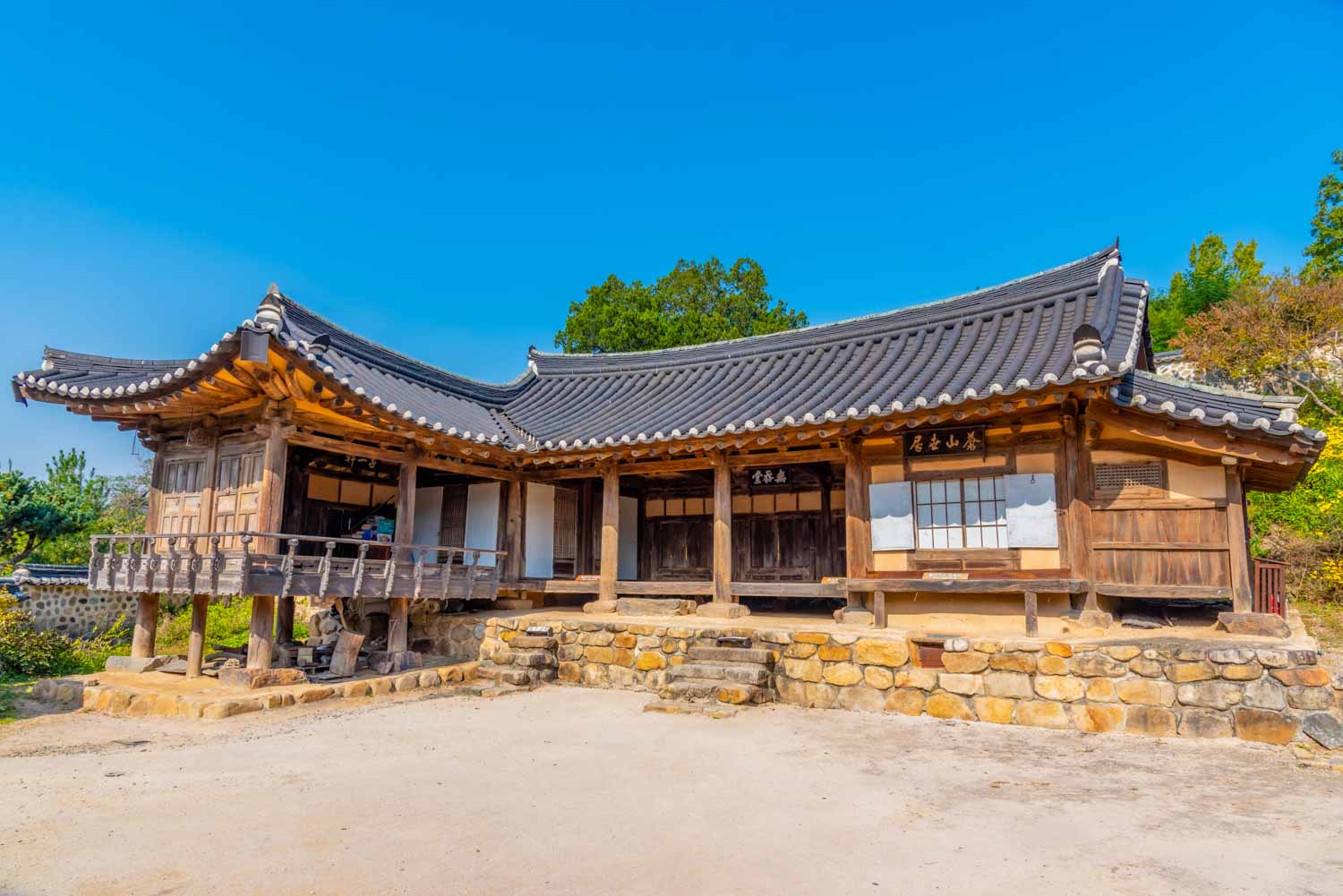
The village itself is set in the shadow of Seolchangsan Mountain, with 54 homes dating back more than 200 years, as well as some 500-year-old cottages with thatched roofs.
It’s a lovely way to explore different types of traditional Korean houses too, with some aristocratic yangban houses higher up and dwellings for lower classes lower down – a living illustration of Joseon social hierarchy.
Go on a weekday if you can as it gets much busier at weekends. There are buses which run directly from Gyeongju to the village in around 45 minutes, or it’s easy to get a taxi out there which is quicker.
If you don’t have time to visit, Bukchon Hanok Village in Seoul and Yongin Korean Folk Village (around an hour outside Seoul on the way to Gyeongju by road) are a couple of alternatives to visit if you’re spending time in the capital
Join a cookery class
There’s no question that embracing local culture is a lot more fun when you can get hands on, and food is one of the easiest ways to do that in Gyeongju with kids.

This fun half-day tour takes you a little way outside the city to Ura Village, around an hour from Gyeongju itself, where you’ll craft your own wooden chopsticks before learning how to cook two traditional dishes – gimbap and jumeokbap (Korean rice balls).
Plus, as well as getting to eat your creations, you can wander through the village and meet some local inhabitants.
Or if you have kids aged 10+, this bibimbap and gimbap cooking class takes place in Gyeongju itself, while this Gyeongju cooking experience includes a visit to a market, as well as learning how to make a variety of dishes including gimbap and japchae (all ages, although under-fives must work with an adult).
Not sure what to eat in Korea with kids? Check out my guide to child-friendly Korean food to start you off
Stay in a hanok
Many of Korea’s traditional single-storey hanok houses have been converted into places to stay, and it’s a fantastic experience while you’re visiting South Korea with kids.
Although you’ll find options in Seoul too, for example, this is easily one of the best things to do in Gyeongju with kids – you’ll be surrounded by history during the day, so it’s fun to keep the theme going at night as well.


Happily a lot of the traditional buildings have had a few modern upgrades so you get the best of both worlds. You’ll need to take your shoes off before going into the room, and you’ll be sleeping on a futon mattress on the floor, but the one we stayed in had underfloor heating and a mini fridge as well as an en-suite bathroom, all set around a lovely courtyard. You might need to bring your own towel, or expect fairly small ones to be provided, although we didn’t have any problem.
Our stay was part of our tour with Intrepid Travel but it’s easy to book your own if you’re travelling independently – booking.com has a selection or there are several to choose from on Klook.
Check out Gallery Jin Hanok Guesthouse which is walking distance from the historic centre (and has a room with a proper bed if you’re not sure about sleeping on the floor) or Gyeongju Hwangnamkwan Hanok Hotel which is also very central.
Explore Hwangnidan-gil
Half the fun of visiting Gyeongju with kids isn’t the specific sites, although these are fantastic, it’s wandering around the streets of this historic town.
Hwangnidan-gil one of the best places to start your wanderings – it’s touristy, sure, but it’s also packed with low-rise buildings, fun souvenirs and lots of places to get food, including coin bread (coin-shaped rounds of bread stuffed with melted cheese).
Wander the little streets off to the side and you’ll stumble across another road which is one restaurant after another, lots set around pretty courtyards with streams, including various different types of food including plenty of places to find traditional Korean food and dessert.


Look out too for hwangnam-ppang – more commonly known as Gyeongju bread. These small pastries are filled with sweet red bean paste and sold in bakeries throughout the old town too.
Seokguram Grotto
High in the forested mountains above Bulguksa Temple, Seokguram Grotto dates from the 8th century and is another of Gyeongju’s UNESCO-listed sites.
Walking up feels faintly otherworldly, wandering through the pine forest – look out for chipmunks – before gazing out to the surrounding peaks. In the grotto itself, the Buddha statue is surrounded by dozens of guardians and bodhisattvas, although they’re all behind protective glass so a cloudy day sometimes gives you better views than when the sun reflects.

There’s also an 11-faced carving of the Goddess of Mercy, although that’s concealed behind the statue. While it’s a significant Buddhist monument, it’s also impressive for the fact that huge blocks of granite were brought here along a narrow mountain path when the grotto was originally constructed.
Easy to combine with Bulguksa Temple (see above), there’s a bus which runs between the two, or you could come back down the steps – it’s less than 1.5 miles and not too strenuous.
Namsan Mountain
Namsan Mountain is easily one of the most unexpected places to explore in Gyeongju, with more than 50 temple sites, 100 stone pagodas and 80 stone Buddha images scattered around the slopes – many dating from the Silla period.
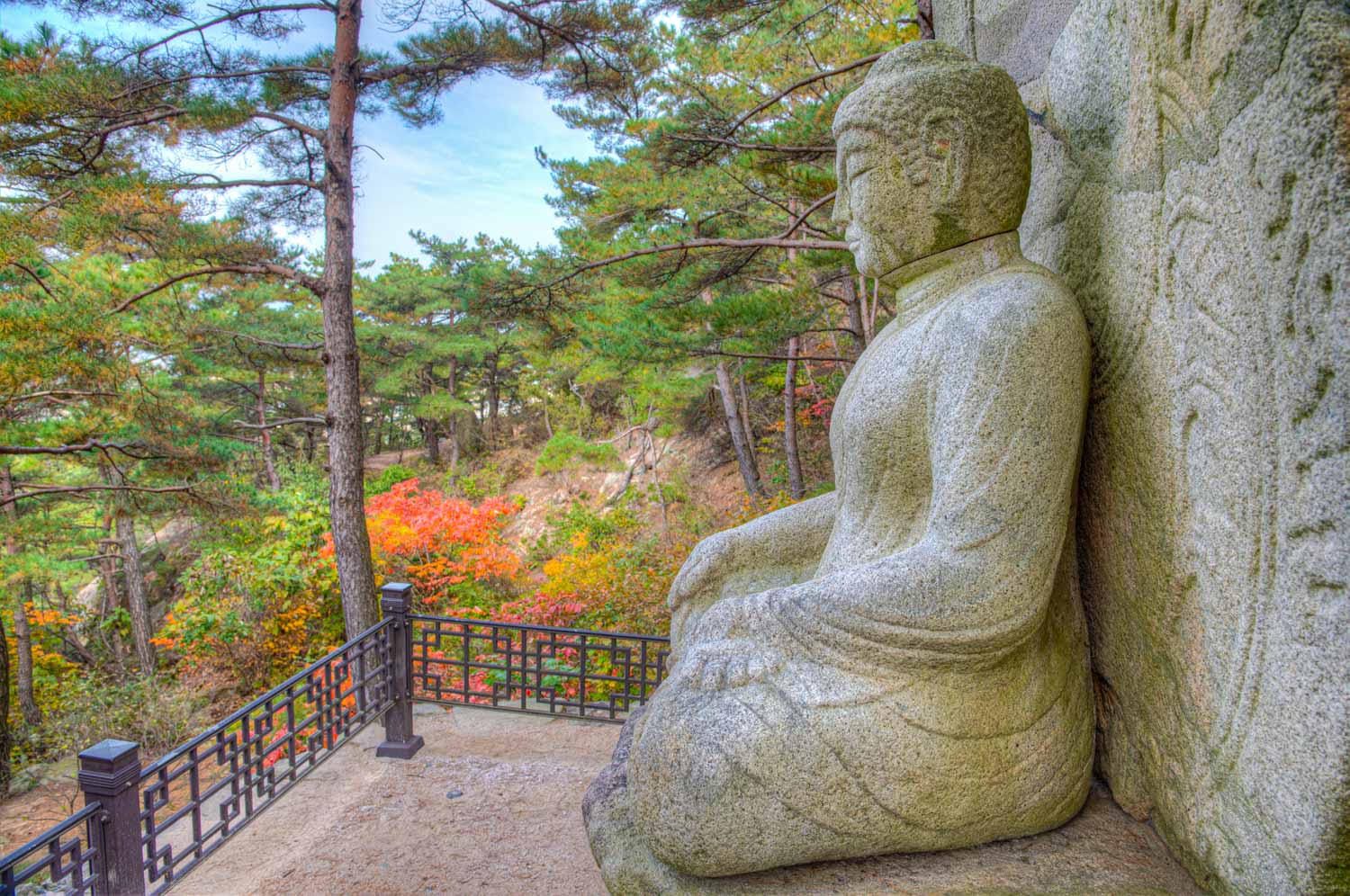
So as you follow one of the mountain’s well-marked trails, it feels less like your average hike and more like something of a treasure hunt, with everything from carvings to stone lanterns appearing suddenly around the next bend.
If your kids are old enough to take on a longer trek, the Samneung Valley trail stretches for around 6km and takes around three hours to complete and get back to your starting point, taking you past some of the Buddha carvings as you walk through the pine forests.
There’s also a 10km version taking you to Chilbul-Am, although the higher stretch is more challenging, or you could just walk a shorter part of the Samneung Valley trail.
Buses run from central Gyeongju to the Samneung Royal Tombs stop, where the route starts. It’s best for families to tackle the route during spring and autumn, to avoid the high temperatures and rain of the summer, as well as the much colder weather in winter. Always bring plenty of water and allow plenty of time whenever you go.
Gyeongju World
There’s more than just historic sites, temples and grottoes in Gyeongju, so if you’re looking for something completely different, check out Gyeongju World theme park.
This amusement park is a little way east of the centre, not far from Bomun Lake, with a whole series of rides as well as two separate seasonal attractions – the California Beach water park for the summer, with slides, pools and a lazy river, then a snow park for the winter.
There are gentler rides to suit younger kids, with height restrictions starting at 100cm; if your kids are 110cm or taller, they’ve got 10 options for choose from. Or if your kids are older/taller/braver, there are options like Phaeton, one of the world’s most powerful inverted rollercoasters., while Draken is the world’s sixth dive coaster (and the first one in Korea).
You’ll find western fast food on sale alongside some traditional Korean food and snacks, or you can bring your own with you. Get discounted day passes for Gyeongju World on Klook.
Klook.comPororo Aqua Village
Not too far from Gyeongju World, Pororo Aqua Village is a water park themed around Pororo the Little Penguin – probably the most beloved children’s animated character in South Korea.
But even if your kids haven’t encountered Pororo before, this little water park is lovely for families with younger children. There are shallow splash areas, gentler slides and some fun interactive water features, all designed around the characters from the Pororo stories.
It’s not huge but if you’ve got toddlers or preschoolers in particular, they’ll have plenty to entertain them in this colourful world. Unsurprisingly busier during Korean school holidays.
Tips for visiting Gyeongju with kids
Gyeongju is located in North Gyeongsang Province in the south-east of South Korea, roughly 170 miles from Seoul as the crow flies and around 50 miles from Busan.
For my complete set of tips for visiting South Korea with kids, check out this post, along with ideas for the best things to do in Seoul with kids
Getting to Gyeongju
The easiest way to reach it is by KTX high-speed train to Singyeongju Station (around two hours from Seoul, less than an hour from Busan) which can be booked on the Korail website – seats on the KTX trains sell out quickly at peak times, so it’s well worth reserving in advance.
You can also find express bus services to Gyeongju, which take up to four hours from Seoul and around an hour from Busan.

Getting Around
Once you get there, many of the sights are in easy walking distance of each other and there are good bus links, as well as taxis (including Uber). Bus route 10, the Golden Line, is particularly useful as it passes attractions including Cheomseongdae Observatory, Donggung Palace and Wolji Pond, and Bulguksa Temple (and route 11 does a similar loop in reverse).
It’s well worth downloading Naver maps to navigate by as Google Maps doesn’t currently work well in South Korea – we used Google Maps to pin places of interest, and you can use it to navigate short distances between them on foot, but Naver makes getting buses really easy. Kakao Map is another alternative to try.
The main historical sights – the tomb complex, Cheomseongdae, Donggung Palace, Woljeonggyo Bridge – are all within comfortable walking or cycling distance of each other, and you can hire bikes in the city including options for kids.
When to visit Gyeongju
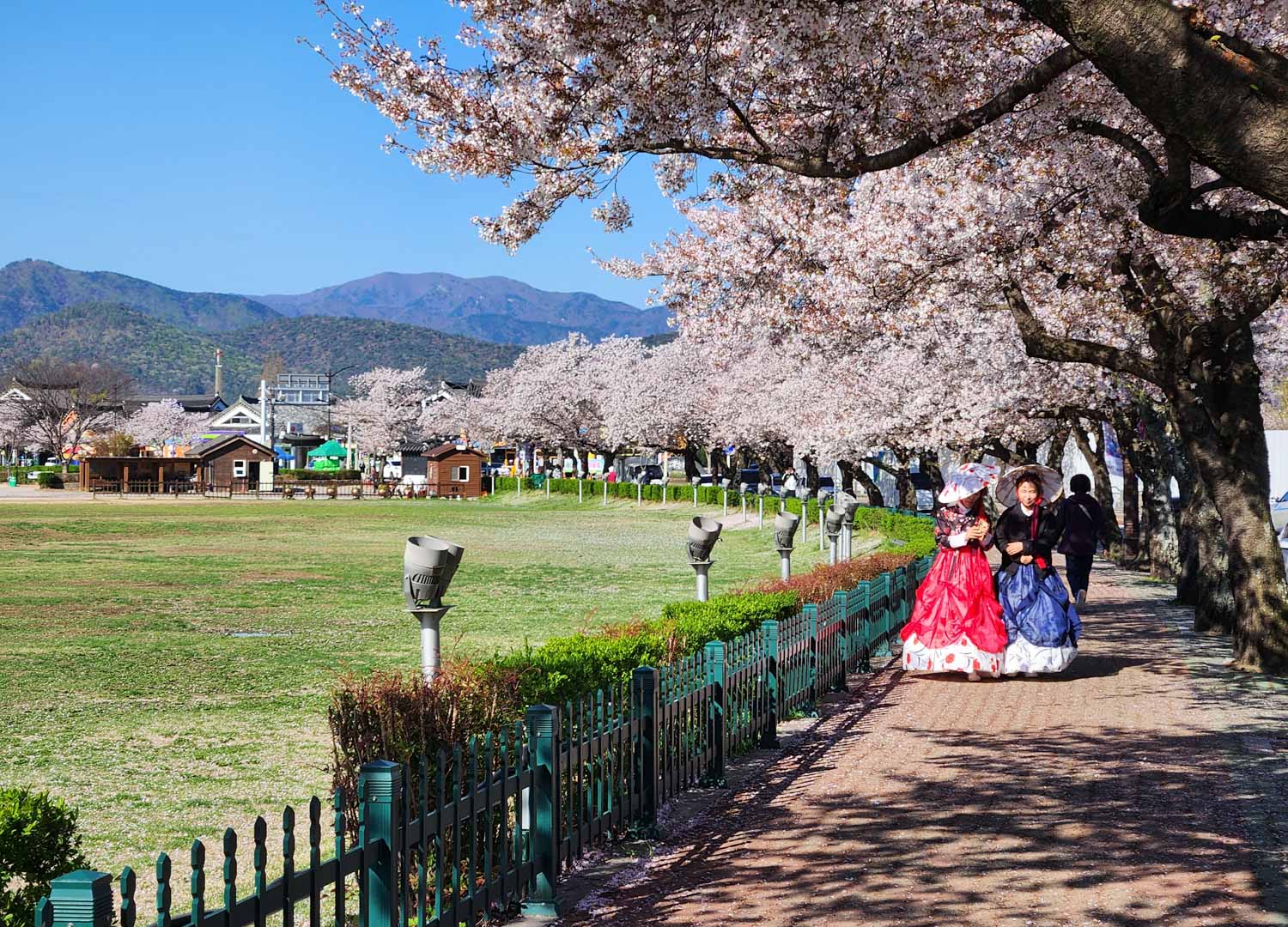
The best time to visit is spring (late March to May) when it’s not too hot, not too cold, and you’ll get to see the cherry blossoms in bloom if you visit around early April. Autumn (September to November) is another good alternative with fantastic colours on the trees and the unusual pink grass around the observatory.
Summers are hot and humid, so pack light clothing and plenty of sun cream, although be prepared for rain as well. Winter temperatures get very cold, although if you wrap up warm, you’ll often get clear blue days.
Disclosure: This post contains affiliate links – any purchases you make are unaffected but I may receive a small commission
Images: National Museum/Woljeonggyo Bridge/Donggung Palace/Bulguksa/ Gyochon/Yangdong/bibimbap/ Seokguram grotto/Namsan Mountain/Samneung Royal Tombs courtesy of Depositphotos, all others copyright MummyTravels
LIKED THIS? SIGN UP FOR MY EMAIL NEWSLETTER