Top tips for South Korea with kids
There’s no question South Korea is a fantastic destination for families, mixing history, heritage and lashings of modern K-culture – but if you haven’t visited before, it’s well worth checking out these tips for South Korea with kids before you go.

contains affiliate links*
Even if you’ve visited other destinations in South East Asia and East Asia, there are a few things to know before visiting South Korea with kids for the first time, which you might not expect from your previous travels.
From money to transport, food to essential apps, these are my top tips for visiting South Korea with kids.
Contents - click to jump to a section
Money
While it isn’t cheap to fly to South Korea, I found it cost a lot less once we arrived which was great, from transport and entry tickets to food. You won’t get away without spending some money, obviously, so here’s what you do need to know.
Bring cash
We were told that South Korea is still very much a cash society, although we really didn’t find that was the case in the cities – but it’s definitely helpful to have some won with you, and especially if you’re heading off the beaten track.
You’ll need it if you’re planning to visit any of the markets or street food markets, although a lot of places did have card machines, some were firmly cash only.
You also need cash to top up the T-Money travel cards for public transport (although this has changed recently to allow foreign cards to top up, it’s very limited currently so don’t count on it for now).

I converted around £100 at home before we left – while it wasn’t the best exchange rate, I knew I’d need some at the airport to pay for transport into Seoul and it meant I had one less thing to worry about after a long-haul flight. As the exchange rate in the airport isn’t the best one either, and as I wasn’t changing a huge amount, I don’t think it made much difference.
Once we arrived, I needed some extra cash (mainly for a tip, a boat tour where I had to pay someone else, and transport back to the airport) so I used my Wise card – this lets you have balances in various currencies, so I converted it to won, then just withdrew it from an ATM.
I didn’t have any trouble either time, but if you do run into problems, look for one marked Global ATM (Woori and Hana banks are both good). The displays have an option for English, then select foreign card from the options. You’ll normally get charged around 3000-4000 won to withdraw it.
There’s currently around 2000 Won to the pound so you do need to get used to dividing by that, but it quickly becomes second nature to knock off a few zeroes and halve the rest.
Which credit cards?
Most of the time, you’ll find it’s fine to use your credit card – I’d read that Visa is sometimes more readily accepted than Mastercard, but both should be widely accepted in cities.
I have a Visa credit card with no overseas charges and I used that pretty much everywhere. You’ll also need this at hotel check-in and if you’re getting pocket WiFi as I was.

Having a physical card is definitely a good plan though – not everywhere will accept virtual ones in eg a Google Pay or via Apple Pay.
If you need another option, check out the Wowpass, which is a sort of debit card for tourists. There are kiosks at the airport and in subway stations where you can exchange 16 different currencies into won – and you can then use it as both a payment card and public transport card. It’s not an essential if you’ve got other cards which will work though.
Get a tax refund
If you’re planning any shopping (and my 13-year-old definitely was), you can get tax refunds on what you buy – usually as long as you spend around 15,000 won.
If you carry your passport with you, you can often get the refund at the till – some places may accept a photo of the passport, but most won’t. South Korea is very safe so it’s one of the few places I felt happy carrying it around with me.

If you prefer not to (or forget), you can keep the receipts and scan them at the airport to get your refund. There are kiosks before security, then you get your money back after – there aren’t too many choices as to how you receive it, so the easiest option was simply getting it back in won, which we then spent on dinner.
Transport in South Korea
You won’t avoid using some public transport during your stay, or at least taking a taxi, especially in Seoul and Busan which are both big sprawling cities. But they’re both very well connected, so as long as you allow enough time, it’s easy to get around.
Paying for public transport
The easiest option is to buy a T-Money card, which costs around 3,000-5,000 won – or you can get some special edition cards which cost more if you want a particular souvenir.
These work across the whole country, including in Seoul and Busan, on buses and the metro system.
Once you have the card, simply top it up to pay for your transport – you can do it at the airport initially, but also at convenience stores which are dotted all over, as well as at the machines in the subway stations.
Whether you’re taking the subway or bus, you need to tap the card at the start and end of the journey – that’s when you get on the bus at the machine by the driver, then when you get off at the middle doors, or at the gates going in and out of the metro.

If you’ve used the tube in London, it should all feel very familiar – although fares are really cheap by comparison, around 1550 won (less than a pound) depending on the distance you travel.
Tapping out also lets you transfer to another form of transport (within 30 minutes during the day) if you’re taking several buses to get to your destination.
It’s free for kids under six, and there are supposed to be child and youth fares for 6-12 and 13-18-year-olds.
You need your passport to have the discount applied but we never quite worked out how to do it, even with English-speaking staff at the airport, let alone at a convenience store – as the difference was about 30p, it honestly didn’t seem worth the effort to find out for a 12-day trip!
You can also use a Climate Card in Seoul, although that doesn’t work outside the capital. This acts as an unlimited pass for a specific number of days, from 5,000 won for one day up to 20,000 for seven days (and longer versions) – if you are taking more than three journeys per day, it’s a good option. The card costs 3,000 won and doesn’t work on the trains to the airport.
Planning your journeys
By far the most useful app you can have is Naver Maps. Do not visit without downloading this!
Google Maps doesn’t currently work well in South Korea, although it’s useful for pinning places which doesn’t tend to work with Naver as you need an account (and it usually doesn’t create one successfully if you’re outside Korea/have a non-Korean phone number).
That is due to change as the government has agreed to give Google access to the data is needs, but in the meantime, Naver Maps is brilliant.
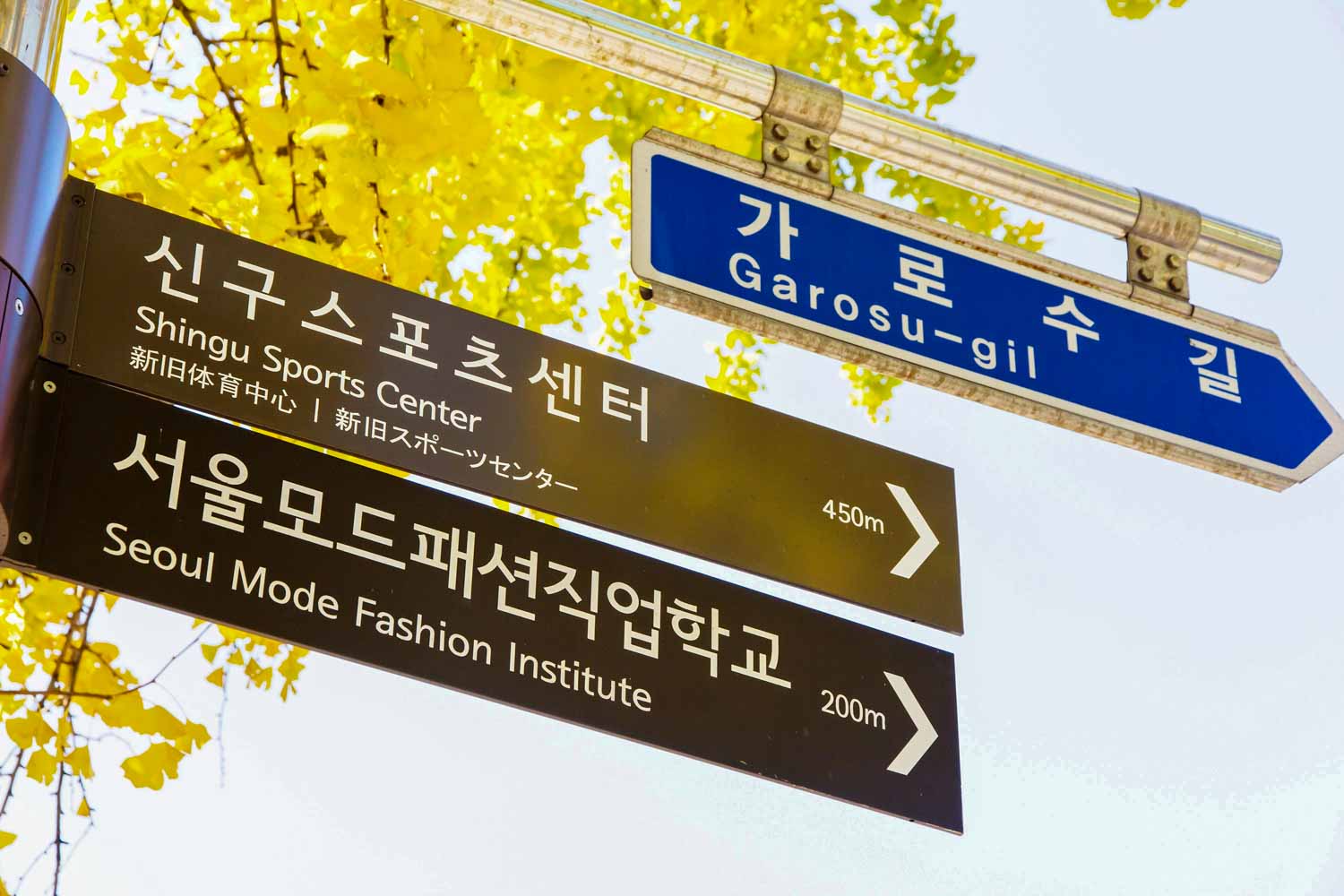
As well as planning out your journey, it will quite literally walk you through each step, telling you which entrances/exits to use at the subway stations (which are often huge and have 6-8 of them), and which direction train you need, as well as when it’s due to arrive.
I also had Kakao Maps recommended, and Citymapper should work in Seoul, but I found Naver so easy to use that I just stuck with that.
Public transport etiquette
Look out for the arrows showing you where to line up to get onto the subway carriages – people do follow this, so you don’t want to be standing where everyone gets off.
As with most underground trains, you should let people off before you try to get on.

Once you are in the carriage, you’ll also see a section of seats for the elderly/those who struggle to stand, plus a few bright pink seats for pregnant women, and you definitely should not sit in them otherwise, even if they’re empty.
You are also expected to be quiet – while you can talk, do keep your voice low.
BONUS TIP: As a general rule, people walk on the right-hand side on streets and on platforms (though that’s less strictly followed, especially in busy subway stations when people are rushing from A to B).
Taxis/Uber
You can also find taxis in South Korea, including ride-share such as Uber, which is also far cheaper than in the UK (or US/Australia) – but if you’re planning to do this, I’ve got a few warnings.
Although you can flag taxis down (look for the illuminated light), it’s not always easy to find one unless you’re at a station where there’s a rank.
Using an app also tends to be easier as you don’t have the risk of miscommunicating the destination, you don’t need cash to pay and the pre-agreed price means there’s less risk of overpaying. If you don’t want to use Uber, the best local option is Kakao T, which works in a similar way.

You don’t often find larger vehicles unless you’re around the airport, so if you have multiple people with large luggage, you may find yourself more limited, or need to book two cars (easier for a family of four than if you’re travelling solo with a child…)
Drivers also seem reluctant to take relatively short fares – eg from Seoul Station to Myeongdong. I know of at least two cases where a mum and their child (plus luggage) were turned down by driver after driver. Getting an Uber without luggage across the city seems much more straightforward though.
Seoul airport transport
If you’re looking for an alternative way to get into Seoul from Incheon International Airport, happily there are a couple of other useful alternatives.
The K airport limousine buses are what we used, and make the travel a breeze. We needed to buy tickets in cash (there are machines or staff selling tickets, it cost us around 17,000 won each) – kids aged 6-12 should get a discount, and coming back, we did see a credit card machine on the bus too.
Make sure you communicate your destination clearly to the driver – I spent part of our first journey feeling faintly panicked about how to make the bus stop (fortunately it was a popular stop).
There are various routes with multiple stops in the main areas you’re likely to be staying. We also took the airport limo back from Myeongdong to the airport (from a different stop, having swapped hotels) and it was equally straightforward – you can use a T money card going from Seoul to Incheon, or just use cash again.

There’s lots of luggage storage, and comfy seats with lots of leg room. It also meant we rarely had to walk more than a few minutes with suitcases, and meant we could avoid steps to and from the subway.
Just factor in some extra time for any traffic and the various stops in the city, although 90 minutes should be plenty. I also factored in extra time in case the first bus back to the airport was full, but it turned up practically empty (better safe than sorry though).
Otherwise, the AREX trains run from Incheon and Gimpo airports to Seoul Station – there are express versions which run less frequently, or stopping versions which regularly, but both will take less than an hour.
You do need to have a timed ticket, so it can be easier to buy one at the airport rather than trying to guess how long immigration will take. If you’re not staying near Seoul Station, you will also then have to navigate public transport or find a taxi that will take you onwards.
The essential apps for visiting South Korea
There are a couple of apps which will make life MUCH easier while you’re exploring South Korea with kids.
Naver Maps
I mentioned this above, but I can’t stress it too much – Naver Maps is fantastic for helping you navigate, including walking directions and public transport routes.
It also shows opening times (useful for cafes which often opened later than we needed for breakfast), and even lets you book tables and order food, although I didn’t end up using that function.
If you normally use Google Maps, that’s still very handy to pin different locations and it’s fine for helping guide you on shorter walks once you’re in South Korea. Or Kakao Maps is another alternative if you have any issues with Naver, while Citymapper also works in Seoul.

Google Translate
Unless your Korean is significantly better than mine, you’ll want a translation app at some point. We were recommended Papago over Google Translate, but didn’t actually find that particularly user-friendly.
In the end, Google Translate’s camera function was helpful for working out ingredients in food at convenience stores, and on the one occasion I needed to say something more complicated (in a post office in Korea), I also brought up the sentence to show.
Klook
If you haven’t come across Klook before, it’s a similar site to Viator and GetYourGuide but tends to be far more popular in Asia.
So while you’ll find options on all three, Klook is a great go-to for everything from transport tickets to attraction tickets to tours to experiences (and you can even book hotels).
It’s particularly handy when you run into problems with Korean websites, which sometimes have issues if you don’t have a Korean phone number or are using it when you’re outside South Korea. As ever, it’s worth checking prices as some things will end up costing more, but there’s plenty to save money as well as stress.
TOP TIP: Make sure you’re connected! Although there was a lot of free WiFi in Seoul particularly, we found it a bit erratic – networks often had no internet, or mysteriously didn’t connect.
If your home network charges a lot (as mine did for South Korea), the options are an esim like Airalo and Saily or hiring pocket WiFi – the latter is a good idea if your phone doesn’t support an esim or you want more than one person using the WiFi.
You do need to carry it around, although it isn’t huge, and you’ll almost certainly need a power bank if you’re out all day – I booked ours through Trazy and collected at the airport, and while it did come with a portable power bank but that never seemed to work so I just used my own.
Language & communication
Unless you’ve got a lot of time and are very dedicated, you’re unlikely to be fluent by the time you arrive in South Korea but I’d strongly recommend learning some basic Korean.
Even a few basic words – hello (annyeonghaseyo), please (juseyo), thank you (gamsahabnida), yes (ne), no (aniyo) – went down really well. I did do my best to learn some more but a couple of months wasn’t really long enough to work out more than a few very basic sentences.
Learing the hangeul alphabet is also very straightforward and logical (it was specifically created in the mid 15th century to be easy to learn), which means you can quickly work out how to sound out signs. This ‘learn hangul’ site was really helpful to start off.

We did find that a lot of people spoke some English in the cities, so between that and sign language, we always managed to make ourselves understood, plus there’s always translation apps for anything more complicated.
Outside the cities and tourist areas, you might well have more issues, but I’ve found that people are always more tolerant if you’re making an effort.
You’ll also find English translations of signs in the metro and announcements in multiple languages on all public transport. And if you’re in cafes, most have touchscreens with English translation, so you can order easily that way.
TOP TIP: The Korea Travel Hotline is on 1330 – they speak English and can help if you need it, whether that’s in an emergency or trying to communicate with a taxi driver if you’re struggling to understand each other.
Korean food
Korean food is fantastic – and needless to say, there’s a lot more to it than kimchi, including plenty that kids will eat very happily.
Some of our top picks were bibimbap (this mix of rice and vegetables is topped with a fried egg and may have meat in – just mix it all up together), lots of chicken, bulgogi (beef), mandu (dumplings with various fillings), and lots of rice and noodle dishes.
For more tips on what to eat in South Korea with kids, check out my post on child-friendly food and where to find it


There are plenty of cafes and convenience stores if you’re just grabbing a snack – Twosome Place has some good salads and sandwiches (plus phenomenal cake) if you want an easy option for more Western-style food.
If you are vegetarian or don’t eat meat, it can be harder as these can pop up in even apparently innocent dishes – gimbap (often called Korean sushi, as it uses rice wrapped in seaweed but with cooked ingredients) will often contain spam or crabsticks, even if otherwise vegetarian, while shrimp and anchovy is often used to make kimchi.
A lot of food is very spicy too, so even dishes marked as low spice may be hotter than you’d expect – although conversely in more touristy areas, you’ll often find the spice is dialled down more than you’d like. There’s always kimchi to counteract that though.
If your kids don’t love anything too hot, the phrase ‘maebji anhda‘ means not spicy, and there’s often a version using soy sauce (ganjang).

Street markets and night markets are good for grabbing simpler, child-friendly food too – think teriyaki chicken on a stick, corn dogs and lots of dumplings. Alternatively Seoul (and Busan) are very cosmopolitan if you do need an alternative to Korean food during your trip.
TOP TIP: If you’re eating in a restaurant, you’ll also get a string of side dishes included with your meals; always kimchi but various other vegetable dishes too – these won’t cost extra, and nor will water (mul). Chopsticks are metal and you’ll normally only have a choice of these and spoons, generally tucked away in a drawer in the table.
While some places may have forks if you ask, it’s well worth learning how to use chopsticks if possible but you may want to bring some disposable forks or wooden/training chopsticks for younger kids too, as the metal ones do take a bit of practice. There’s no tipping either, so leaving any extra is likely to cause confusion.
Korean BBQ
Another great option for families, Korean BBQ isn’t always the cheapest option, but with freshly cooked meat, a string of side dishes and the option of plain rice on the side, it’s perfect for kids.
It’s worth knowing that you generally need two people eating BBQ to order this (even if you have more people in the group who are choosing something else off the menu) but it does depend a bit on the circumstances.


For example, we found ourselves in a totally empty restaurant one evening (which did then fill up quite quickly) asking for one bibimbap and one order of BBQ and didn’t have any issues. I’m sure if we’d tried to go at a busy time it might have been more of a problem. The alternative is just to order two portions anyway.
GOOD TO KNOW: A lot of restaurants close between 3pm and 5pm, so if you’re planning a late lunch, you’ll need to be inside by 2pm.
The weather
Korea’s weather ranges from freezing in January (when it barely makes it above zero in Seoul) to 30C or higher in midsummer, with high humidity.
The summer monsoon also arrives in late June, with most rainfall in July, but wet weather continuing until early September.
Unsurprisingly, most people plan their trips for spring and autumn when the climate is best, although it’s also busiest then. Spring does also see yellow dust and bad air quality at times, although we didn’t find it particularly bad during our April visit – you can get face masks at pharmacies if it is.

Planning a trip in spring also means you can see the cherry blossom – the dates change each year, but early to mid April is a good bet to see the trees in bloom.
Otherwise, the temperatures weren’t that different from the UK, with some rain and some cloudy days and other clear sunny, warm ones – definitely a good plan to take layers! You’ll find plenty of very cute umbrellas if you’ve forgotten to take one (or even if you haven’t).
Things to pack
A lot of your packing essentials are going to be the same as for most city breaks, unless you’re having to factor in winter or summer weather. But there are a few things to keep in mind.
You’ll need a plug adapter if you’re coming from the UK – this is the same as a European plug with the two round prongs.
Definitely take a portable power bank for your phone too – something like this slimline Anker power bank is good – as you’ll be taking countless photos, using it for directions, translation apps and more. If you have portable WiFi like us, you’ll need it for that too.
If you’re hoping to save room by not bringing lots of toiletries, we were told that it’s still worth taking your usual deodorant and toothpaste as Korean formulations tend to be very different.
Otherwise, there is a branch of Olive Young around almost every corner, and while it’s mostly focused on make-up and skincare, you’ll usually find all the other essentials too. These little silicon travel pots were really useful for saving space too.

Do not travel without comfortable shoes – even with public transport, you will walk for miles. This isn’t the time to try to break in something new!
Don’t bring masses of socks though – socks in Korea are super cheap (less than £1 per pair), very cute and great quality, although if you’ve got particularly small or big feet, you’ll find less choice. Most are around UK size 4-7, so perfect for average teen girls and women at least!
Last but not least… leave lots of room in your luggage – you will be buying souvenirs. We managed to come home with 15kg more than we started with (although my share of that was a mug, some jewellery, a bit of skincare and a few pairs of socks. Just saying).
For more tips on planning your South Korea family holiday, check out my ideas of the best things to do in Seoul with kids and in Gyeongju with kids
Disclosure: This post contains affiliate links – any purchases you make are unaffected but I may receive a small commission. All opinions are my own, including about the socks.
Images: money/credit cards/passport/metro gates/road sign/subway station/taxi/airport/phone/suitcase courtesy of Depositphotos, all others copyright MummyTravels
LIKED THIS? SIGN UP FOR MY EMAIL NEWSLETTER