Thackray Museum with kids – day out in Leeds
We’ve all had cause to be grateful for medical advances recently, but whenever you visit, you’ll find something to interest at the Thackray Museum with kids.
review visit*
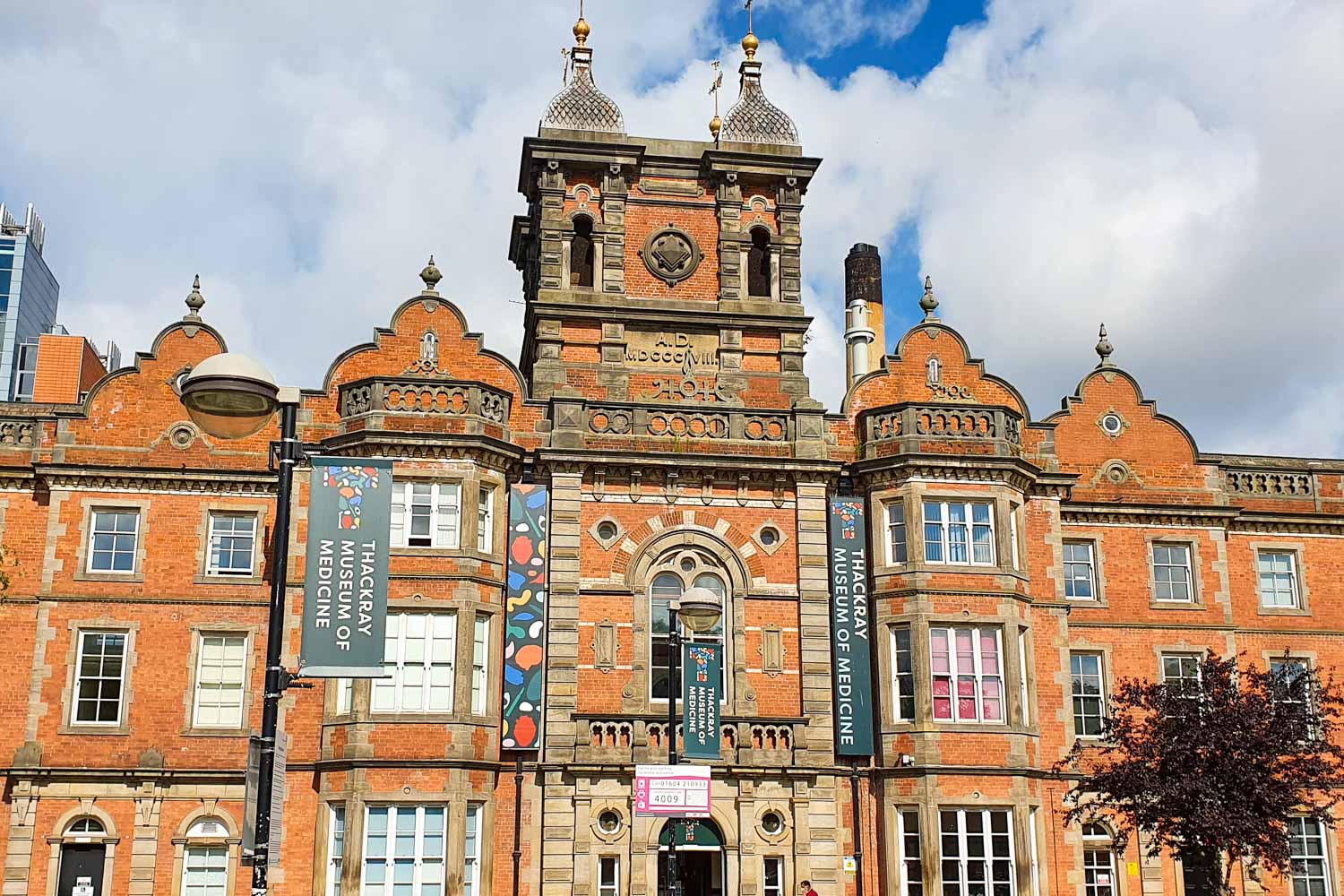
Reopened after a £4 million redevelopment, the Thackray Museum, Leeds, tells the history of medicine and public health – and if you think that’s not an obvious choice for a family day out, you’d be wrong.
Because while it’s something a bit different from the usual run of museums, it’s as family-friendly as it is fascinating, as we discovered on our own visit, writing this Thackray Museum review.
And while there are now some extra galleries and updated displays – including some information our own pandemic, naturally – you can still discover old favourites like Disease Street.
Wandering along this street, a recreation of Leeds in 1840 (complete with authentic smells), is a fantastic starting point if you’re visiting the Thackray Museum with kids.

At the very beginning, there’s a video introduction from Hannah Dyson, a young girl working in one of the factories – a sobering comparison for most children.
To get kids (and adults!) even more engaged, you can then choose a character and follow their life story – either spin the wheel to get a random option, or pick whoever you fancy (my own girl went straight for the seven-year-old daughter of the local bookseller).
Then you pick up a card with a little background, and what appears to be a jumble of words – as you explore, you’ll find lightboxes on the walls to slot the card into, revealing more of the story.


Finally at the end, another wheel to reveal their eventual fate: we had a bit of trouble revealing our own answers so needed to ask staff.
It wasn’t a huge surprise to discover my daughter’s pampered alter-ego lived to a ripe old age, while my seamstress – who’d been trying not to worry about coughing up blood, never a good sign – had succumbed to TB.
You never know what’ll spark a conversation though, as this led to us both chatting about vaccines, and me rolling up my sleeve to show off my BCG scar!
The street itself is fascinating, peering into people’s windows, getting a taste of what conditions would have been like: one unforgettable fact was that a street with over 350 people would have had only two shared public privies, for example!


Fortunately, you’re whisked relatively quickly onto some of the discoveries which still form the basis of medicine today, including germ theory – including a recreation of the water pump which helped Dr John Snow isolate the cause of cholera – and antiseptics.
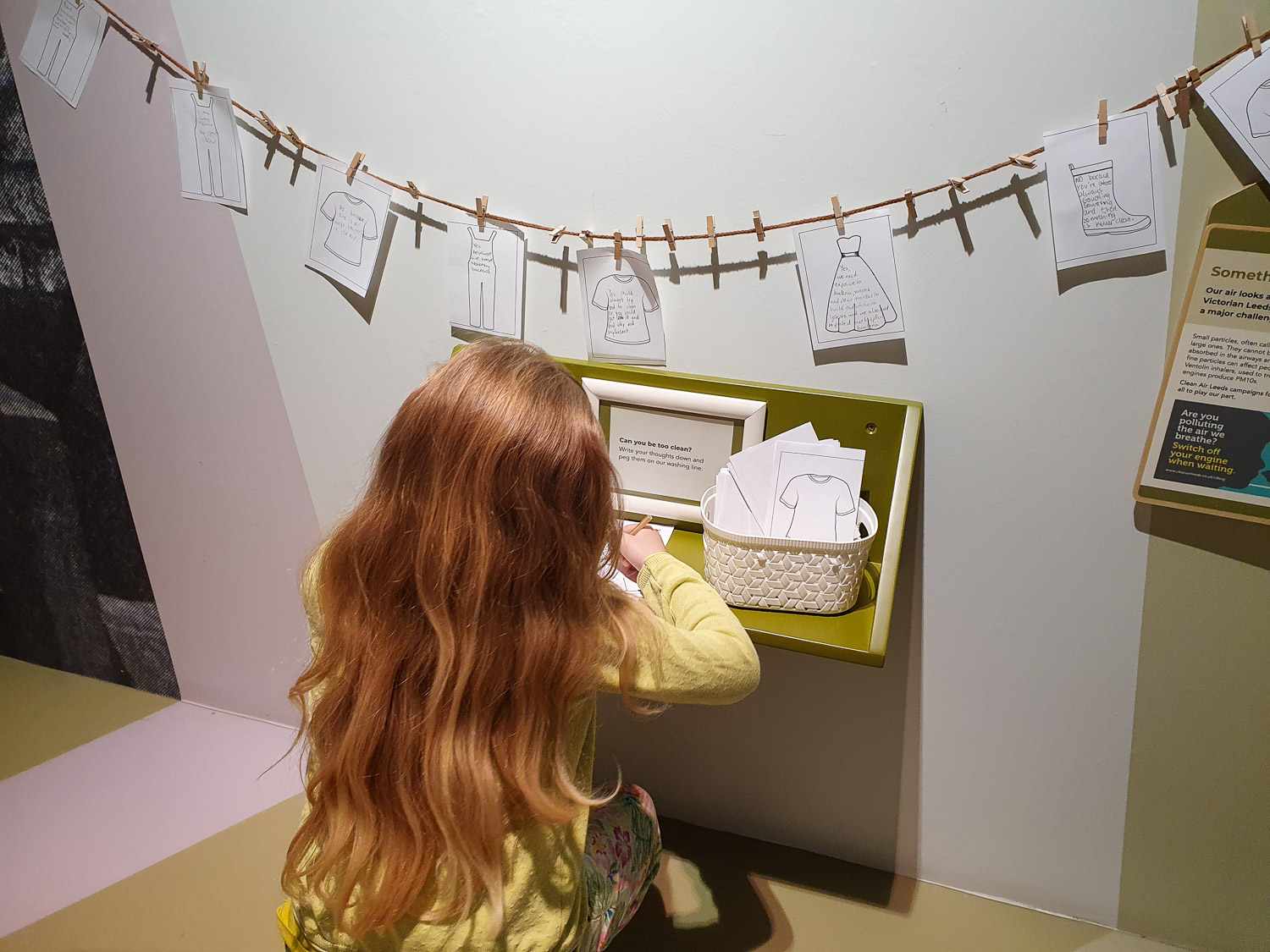
Even once you move out of Disease Street, there are more activities and interactive options – challenging kids to answer whether you can be ‘too clean’, for example.
The irony of answering that while sanitising madly (and wearing masks) wasn’t lost on us…!
It’s also laid out cleverly so that if you think your kids might be unnerved by some of the more graphic exhibits, it’s easy to skirt around them.
I assumed my daughter wouldn’t want to watch the recreated amputation, sitting on the tiers of seats in a mock surgical theatre, but she insisted we do (nothing is too graphic, incidentally) – but scurried on speedily after spotting a skull in another case.
It’s easy to appreciate all the information on different levels too, which is ideal for a family day out.
If you’re visiting the Thackray Museum with kids, you’ll find little bios of the ‘Disease Detectives’, some of whom my daughter was delighted to discover she had come across in school before trying her hand at a quiz about germs on the screen in front of her.

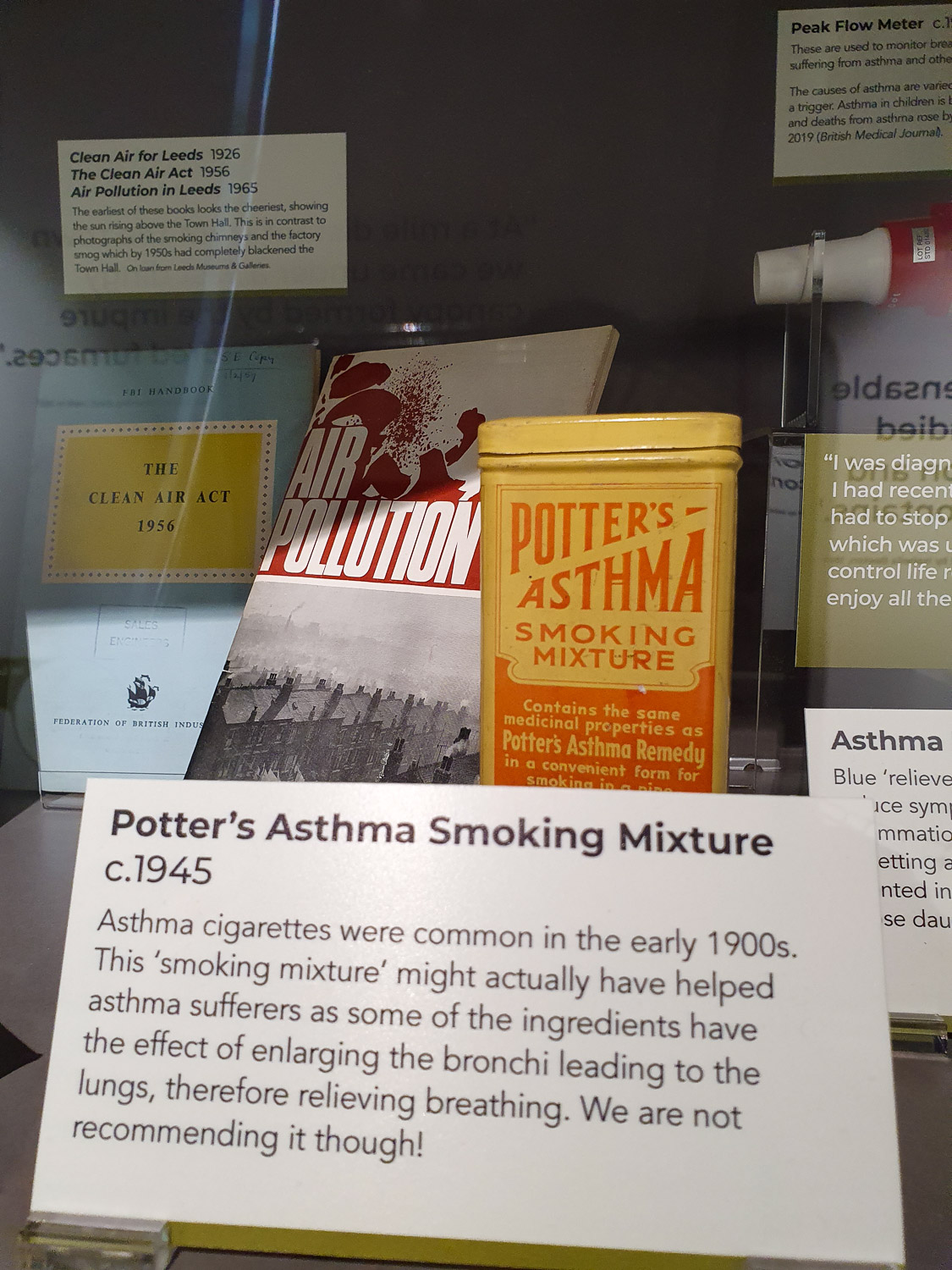
Or marvelling at some of the quack medicines which were sold to cure all ills – asthma cigarettes, anyone?
From here, we wandered into the apothecary’s shop with its incredible collection of ornate jars – and weirder ingredients, including what looked like a stuffed alligator.
Along the way, we had also been following a little trail based around their current theme: during our visit during the school holidays, that focus was on the brain – did you know that the brain is the fattiest organ in the human body? Me neither.
In here, we spotted various herbs and spices to keep your brain sharp, as well as practising our pestle and mortar skills, crushing up an array of aromatic leaves.

And you’re introduced to more ancient medical theories – the four humours, where everyone’s personality was thought to fall into one of four groups, and whose treatment was linked to this.
With a list of all the different characteristics, we tried to work out which one we thought we were, and thanked our lucky stars we didn’t live in an age where bleeding was the answer to most ills.
There’s even a few live leeches nearby (they depart at regular intervals to be fed – not on museum staff, we were assured) but I was speedwalked past those very quickly by my daughter.
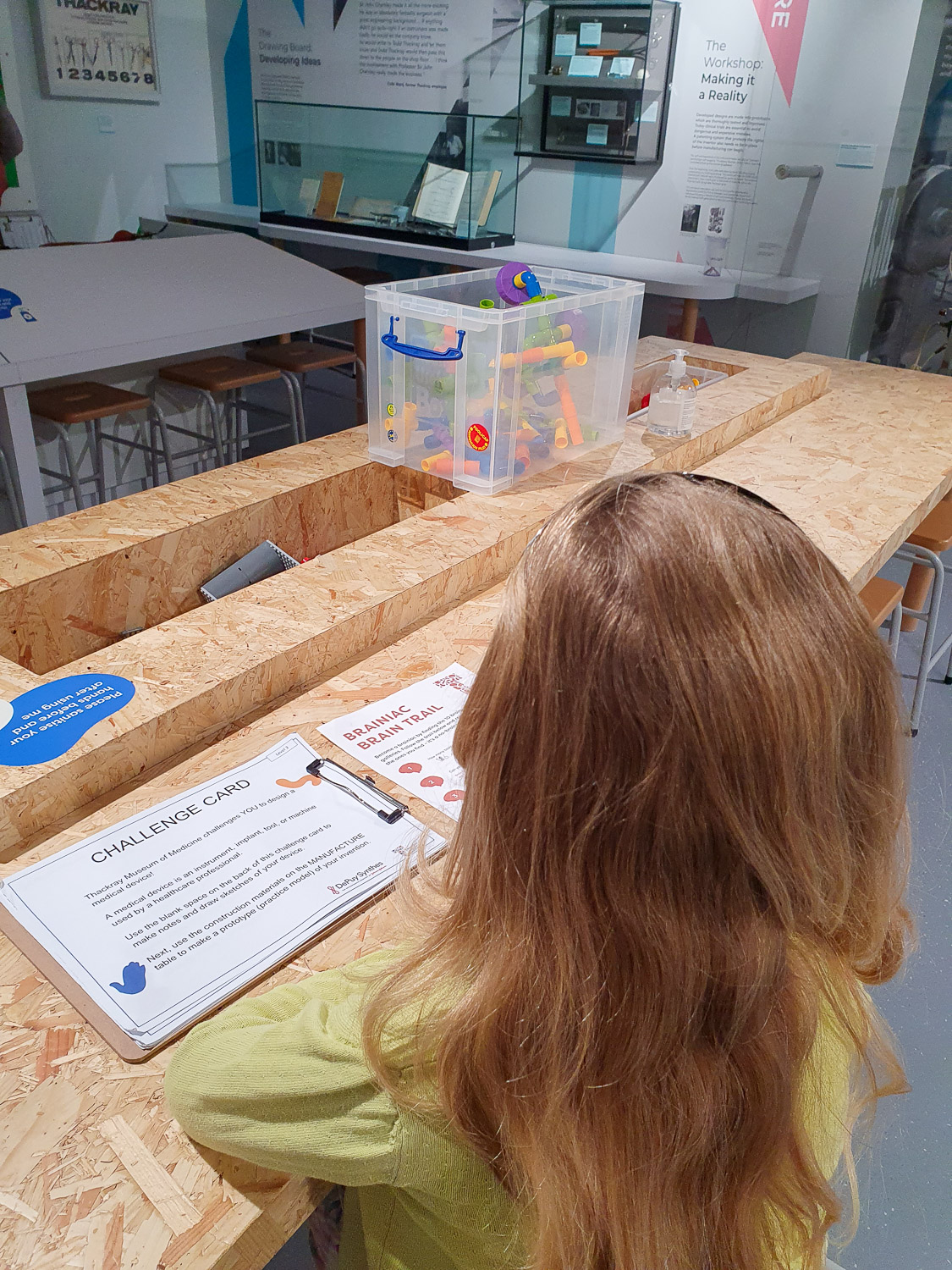
Instead she took on a different challenge: there are a string of suggestions for kids to tackle, including inventing their own useful device – Charles Thackray originally set up his chemist shop in Leeds in 1902 before supplying medical instruments and equipment around the world.
With blocks, Lego and other items to build your own, you can then display your finished creation on a shelf.


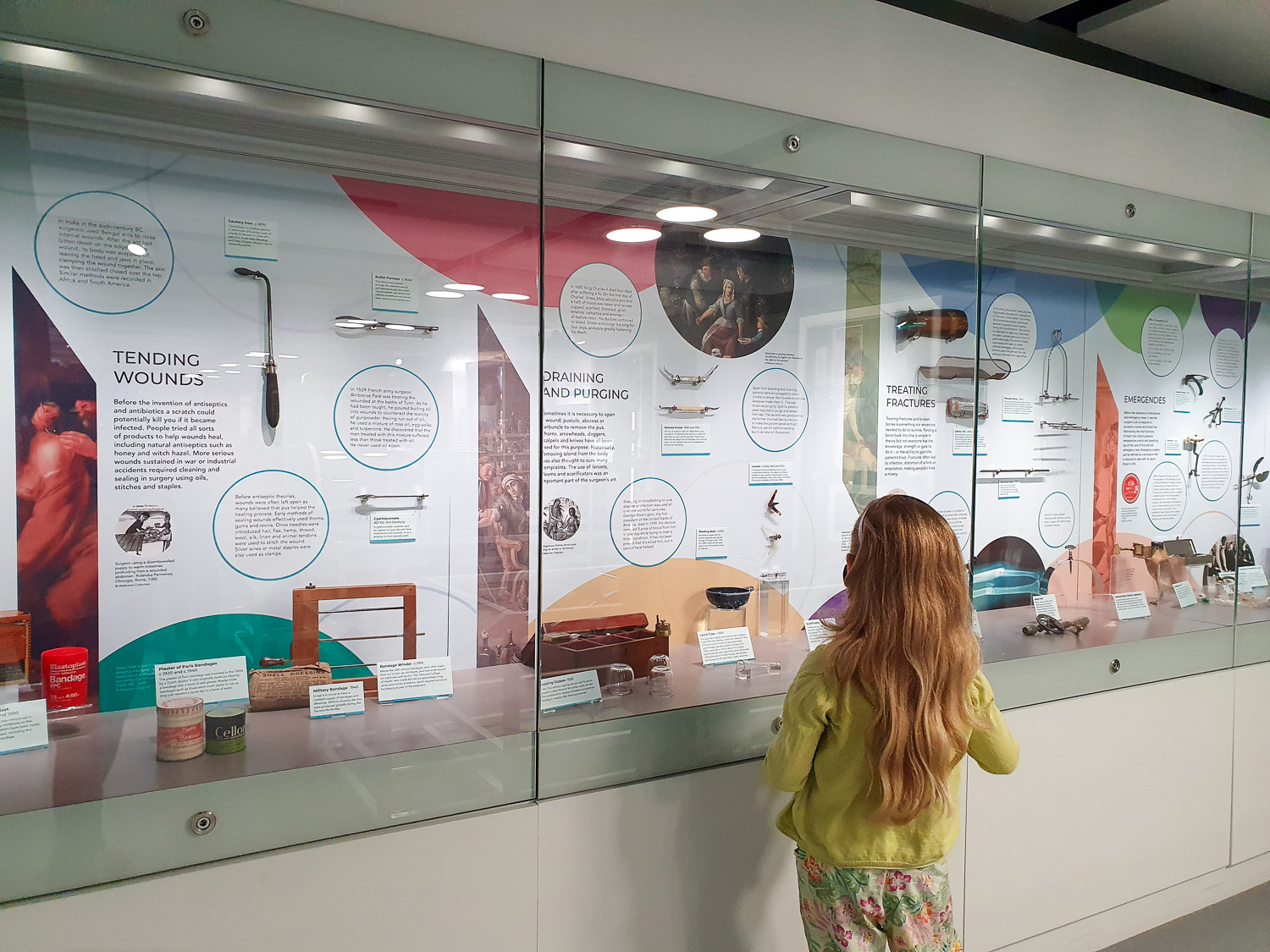
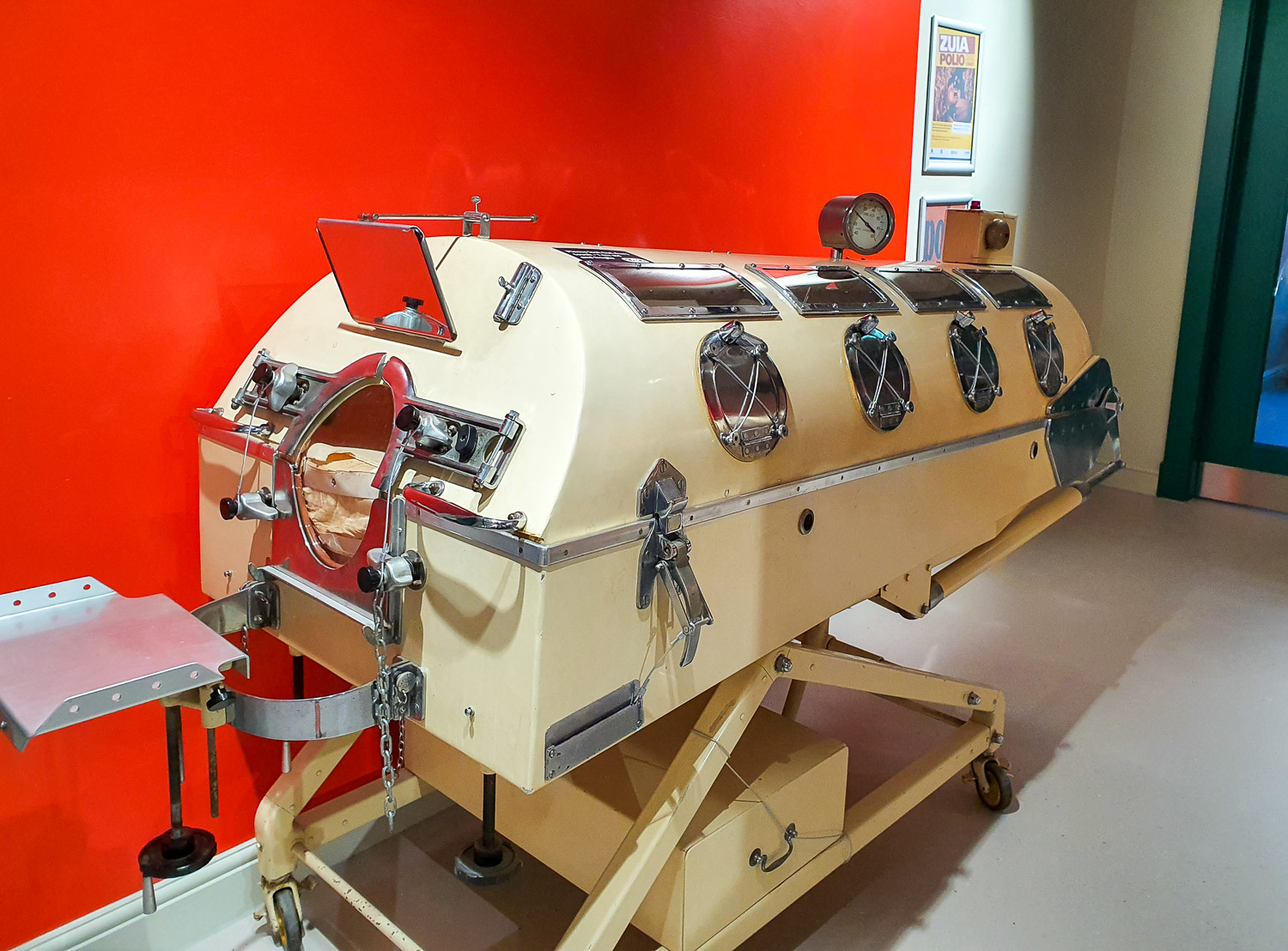
Along the way, there are some more recent medical advances, everything from prosthetics and transplants to X-rays, vaccinations and the discovery of DNA – plus the end of iron lungs, thanks to the polio vaccine.
The big question? Which discovery was more important? With different colour-coded magnetic circles, you can vote on which you think was the most vital, whether that’s earlier discoveries such as antiseptics and anaesthetics, or those developed in the past generation or two.
Skipping ahead in time, the next stop is a 1970s sexual health clinic (you can detour around this with younger kids if you prefer), as well as displays about how the world wars resulted in other medical advances, including the origins of plastic surgery.
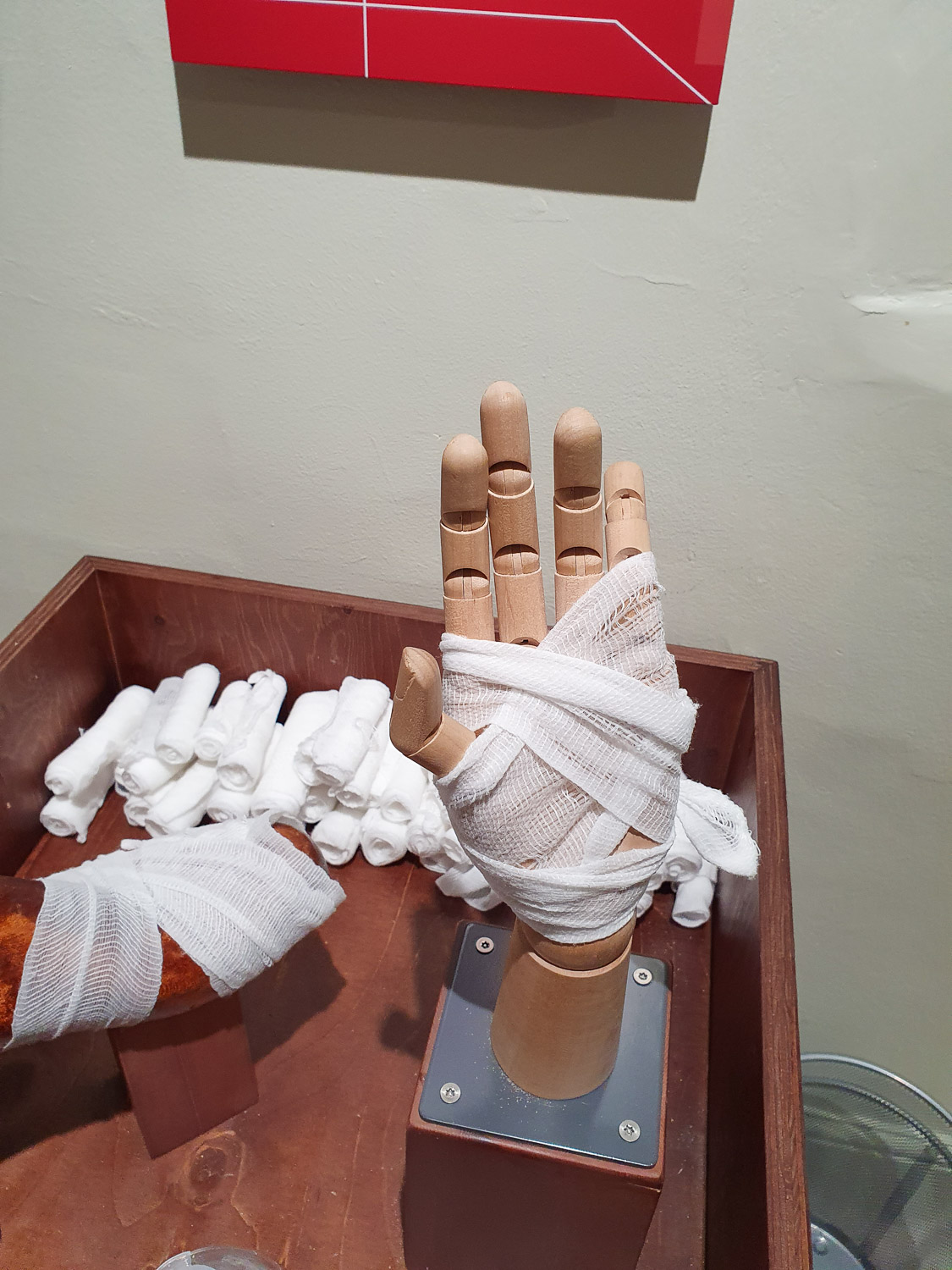
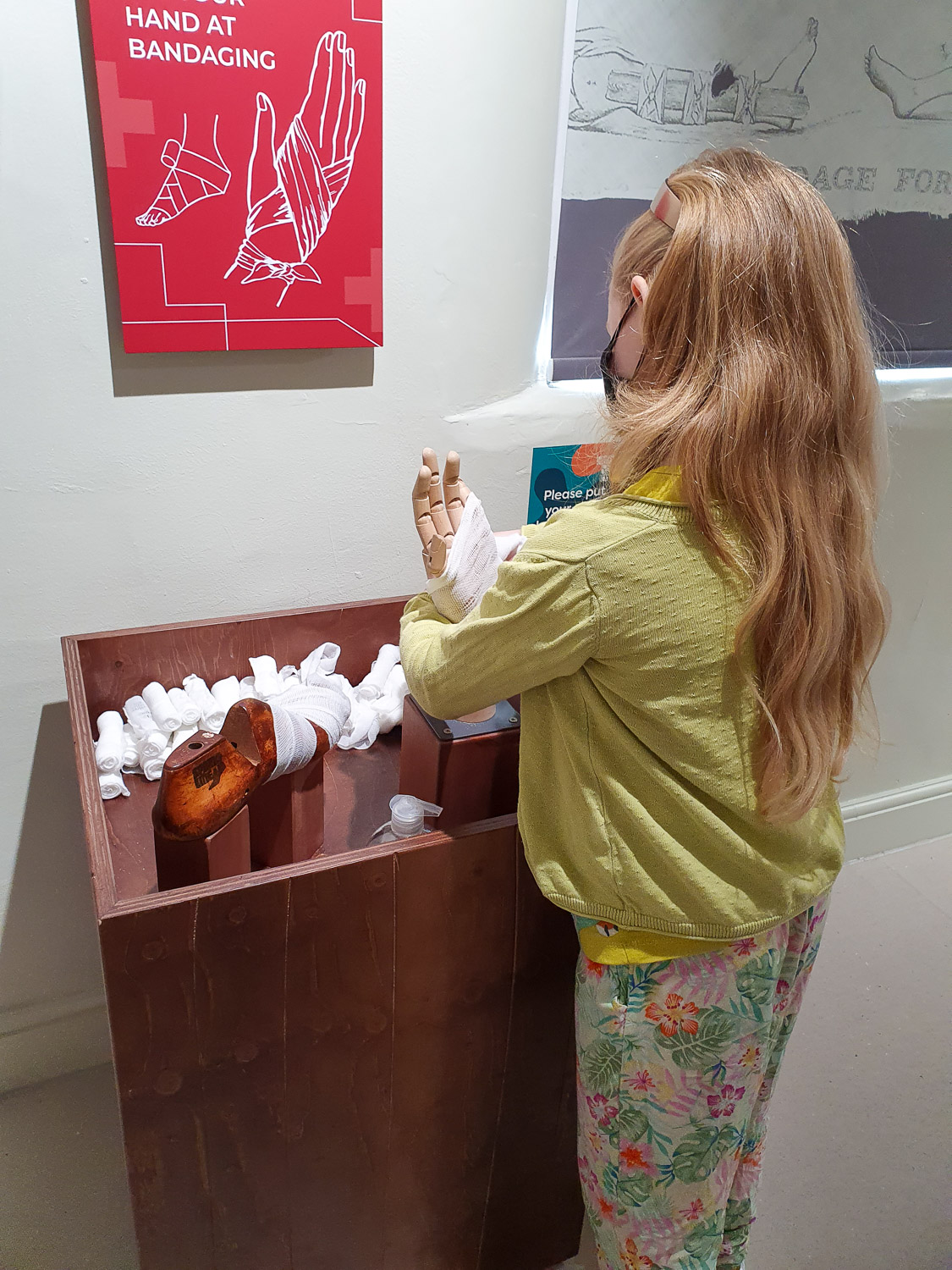

Pausing only to try her hand at treating a wound by wrapping up a model hand in bandages and ponder if there really is any such thing as a ‘normal’ body, we headed off to trick our brains.
As well as convex and concave mirrors, there’s a fun trick about fooling yourself into believing a prosthetic hand is really your own, as well as visual tricks – perceiving different coloured shapes against coloured backgrounds, and working out how many shades of colour are in a pattern.
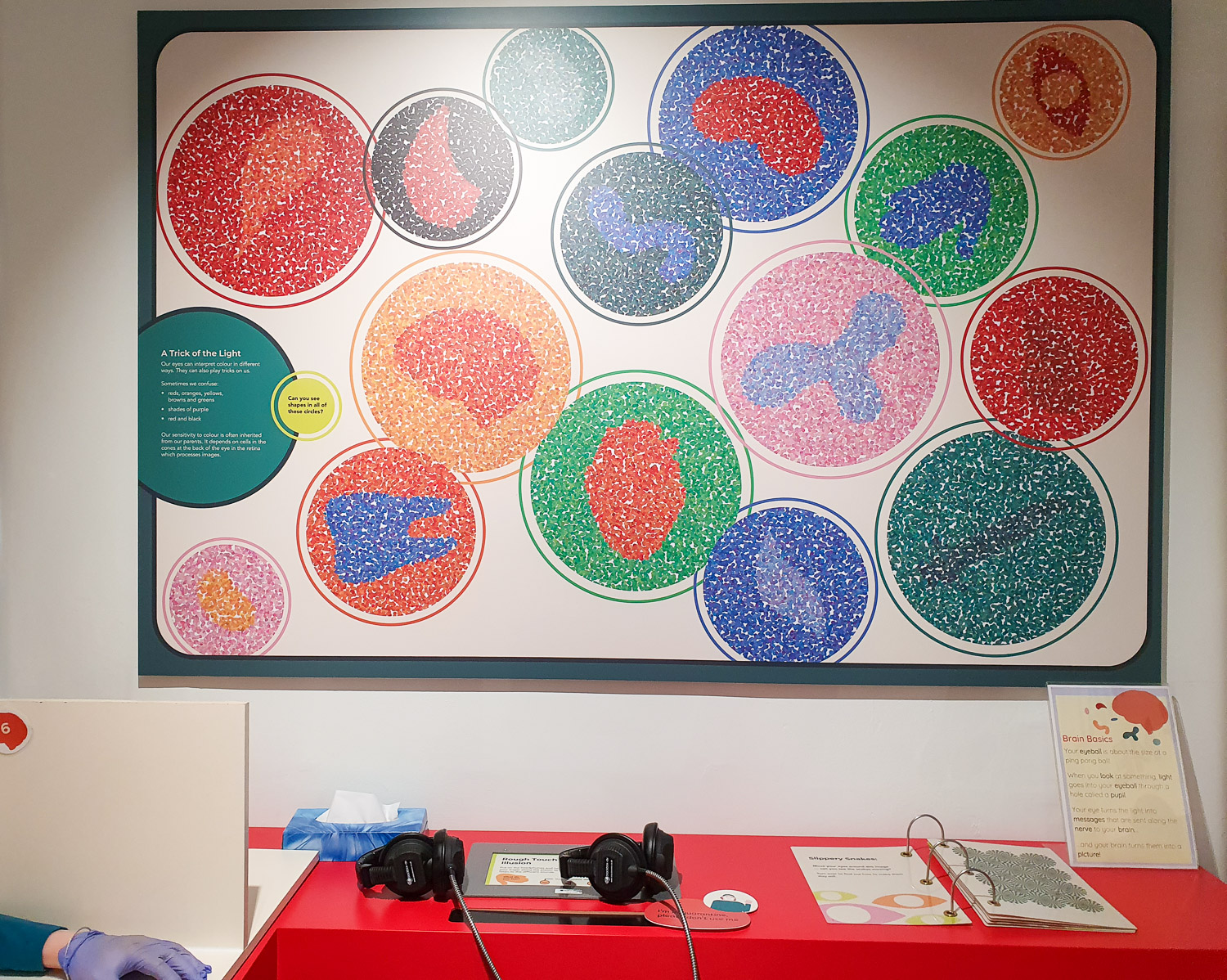
Not to mention the explanations of how these work – and a lot of giggles at our weirdly stretched and squashed figures in the mirrors.
There’s so much to get you thinking along the way but I liked the way it ended, looking at the medical professionals who help look after us and how their role has changed, and how we can help by looking after ourselves.
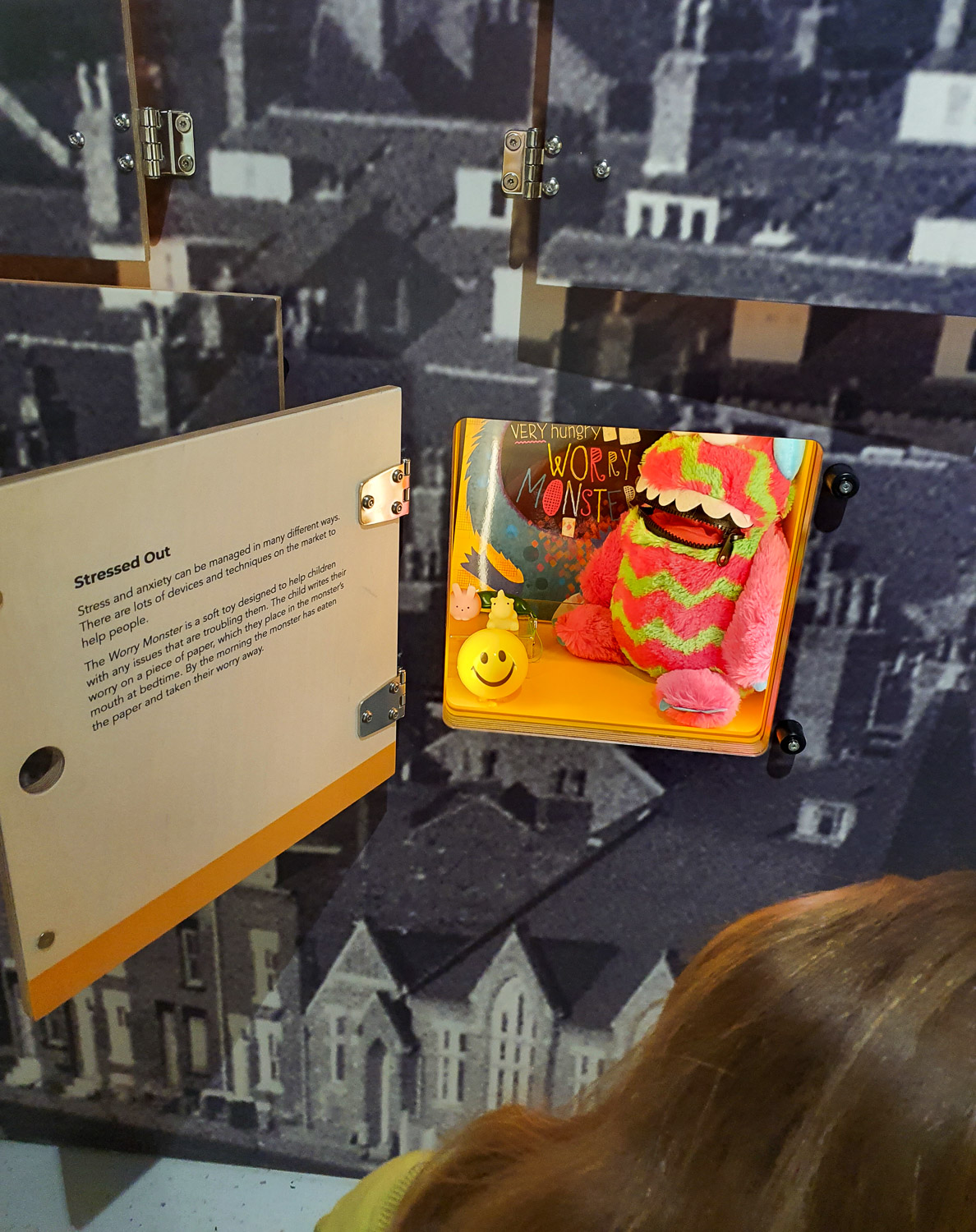
My daughter wasn’t thinking quite so deeply admittedly, more intrigued by the old-fashioned nurses’ outfits and chance to open a whole string of hidden boxes, revealing various over-the-counter medicines and a worry monster.

I’ve never visited another museum quite like it before, but if I lived closed to Leeds, I’d definitely be making the most of the fact that tickets are valid for 12 months.
Because this voyage from ignorance to the wonders of antiseptics, anaesthetics, germ theory, vaccinations and antibiotics, is unexpectedly enthralling.
And as well as appreciating just how far medical science has come in less than 200 years, I need to see if I have more luck on Disease Street next time round.
For more things to do in Leeds with kids, check out my top picks
Need to know: Thackray Museum, Leeds
Tickets for the Thackray Museum cost £11.95 for adults, £8.95 for children aged five to 16 (under fives are free), and are valid for 12 months.
There are also family tickets available. Prebooking is advised but not essential. The museum is open from 10am to 5pm daily (last admission is at 4.15pm).
If you want to see all the galleries, allow at least two hours at the museum, but you could easily spend longer.
There’s a car park right next to the museum, which costs £1.50 per hour: you can pay using the RingGo app, as well as using cash or cards.
Buses 16, 42, 49, 50 and 50A also run from Leeds city centre to the museum (which is next door to St James’s Hospital)
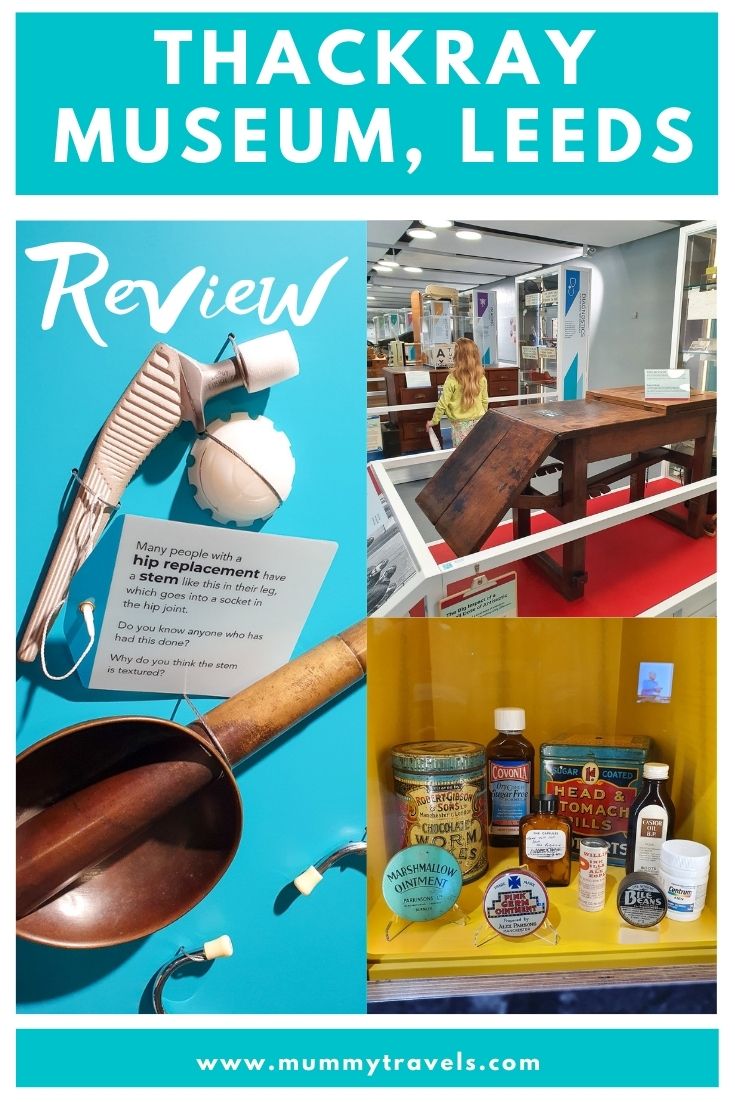
PIN FOR LATER: THACKRAY MUSEUM REVIEW
Disclosure: Our visit was free for the purposes of review – all opinions on visiting the Thackray Museum with kids are my own
Images copyright MummyTravels
LIKED THIS? SIGN UP FOR MY EMAIL NEWSLETTER