
Review: KGB Museum Tallinn at Hotel Viru
In Tallinn’s new town, a short walk from its picturesque historic centre, stands a hotel. According to the Soviets, Hotel Viru had 22 floors – but even my five-year-old could count the windows and tell you there are 23.
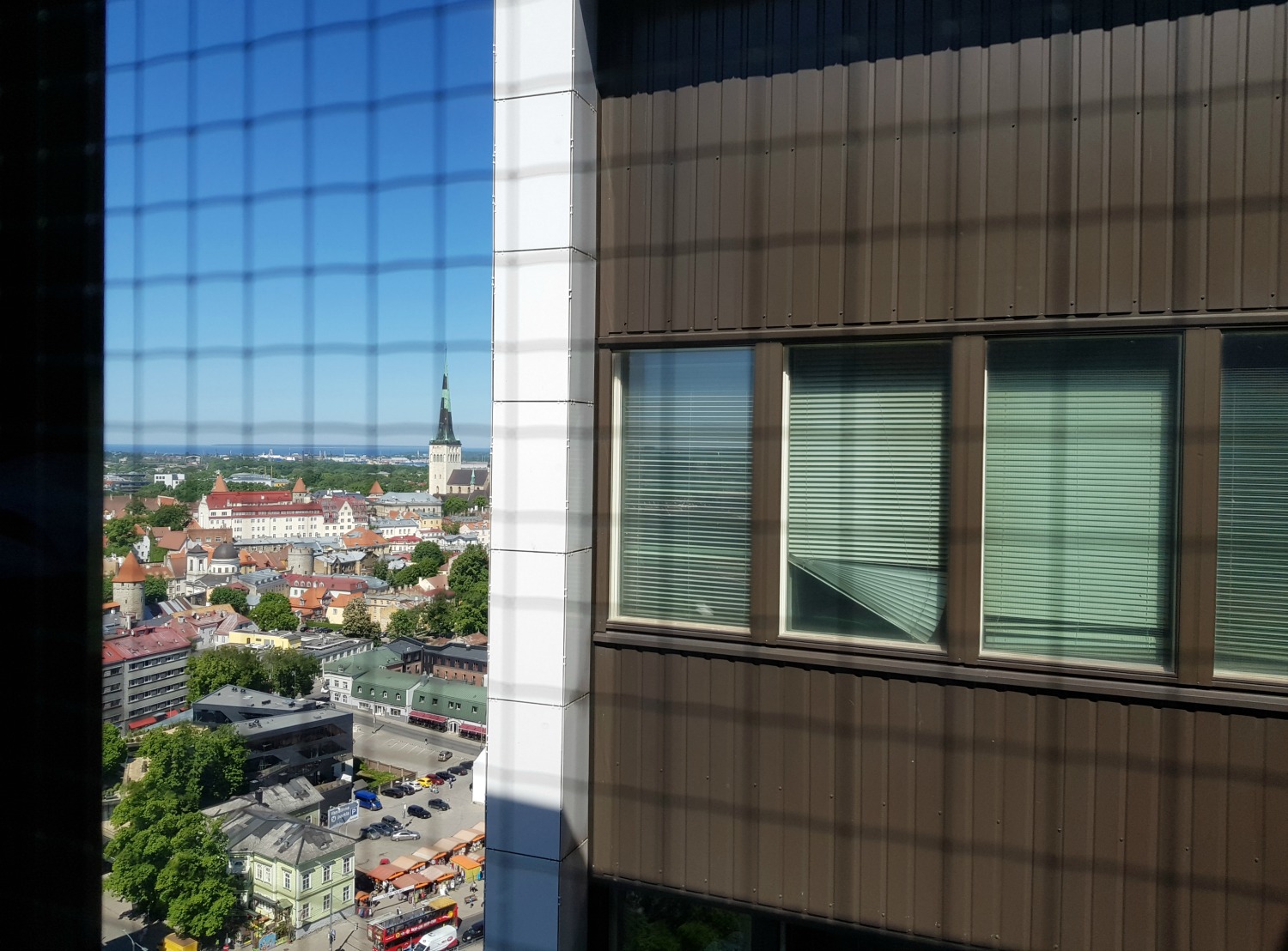
And stepping into that mysterious 23rd floor, the one which everyone denied existed, opens a window onto life as part of the USSR, until the collapse of the Soviet Union and Estonia’s independence in 1991.
Because those small rooms, now a KGB museum, were once one of the KGB’s listening stations inside the hotel.
As the old joke went when the hotel was built in 1972, it was 50% concrete and 50% microphones… except when the KGB left in a hurry in 1991, it turned out to be not too far from the truth – there were even microphones in the sauna.
Built for Western visitors, in particular Finns who visited by ferry, providing a bed for the night seemed to be the least of the hotel’s functions – it allowed the Soviets to get access to hard currency, it provided work for some of the citizens of Tallinn, attempted to project the appearance of the supposedly idyllic life behind the Iron Curtain, and allowed the KGB to keep tabs on pretty much anyone.


Not just those staying there, of course, but those who worked there – around 1,000 in total for about 820 guests, compared to 250 today – and Estonians who came to meet the guests too.
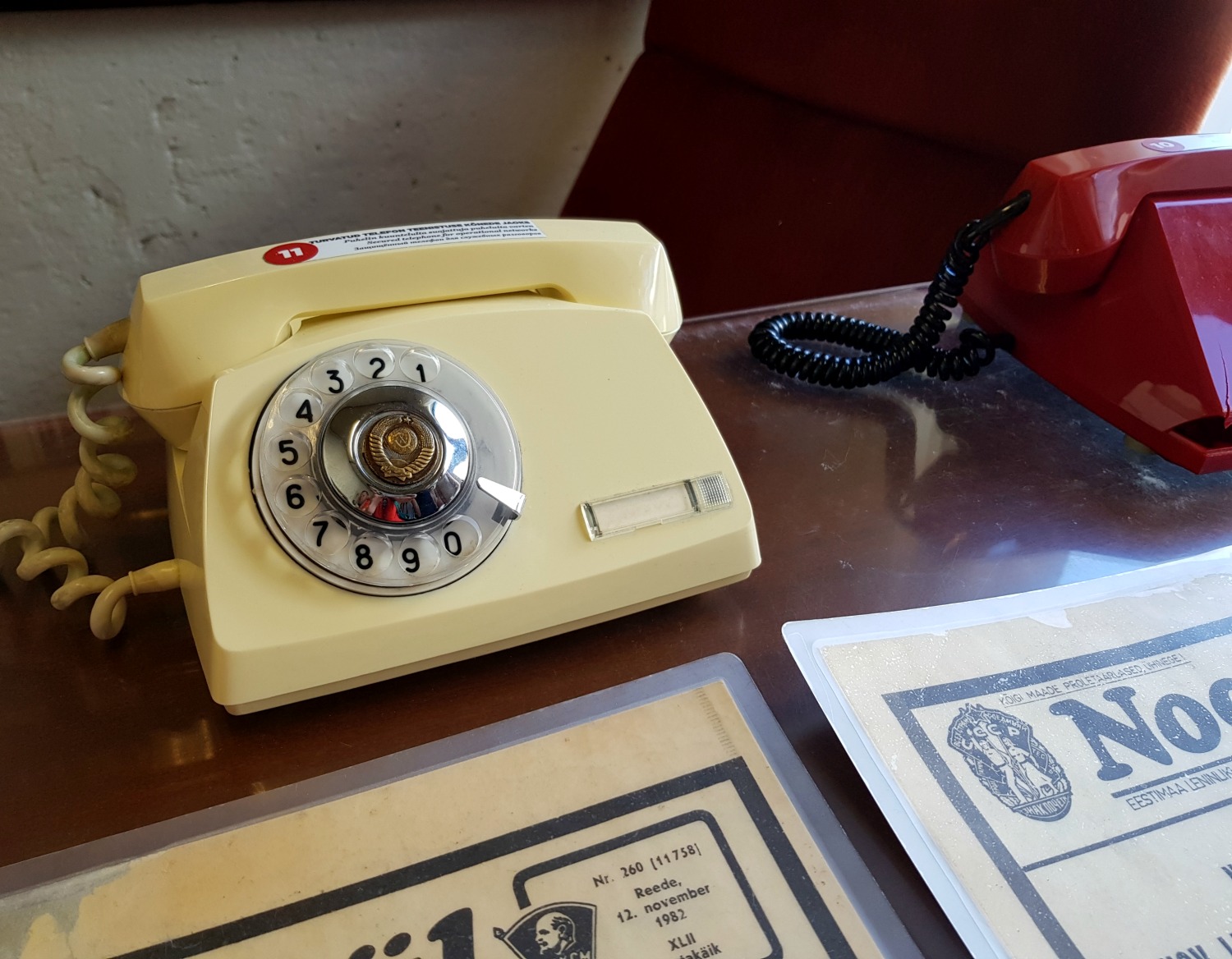
At times, it feels like you’ve strayed into a Bond film with microphones in restaurant plates and ashtrays, cameras hidden in walls, even a red phone with a direct link to KGB headquarters in Tallinn.
But the atmosphere of fear and paranoia which the Tallinn KGB museum and tour tries to capture was reality for decades.
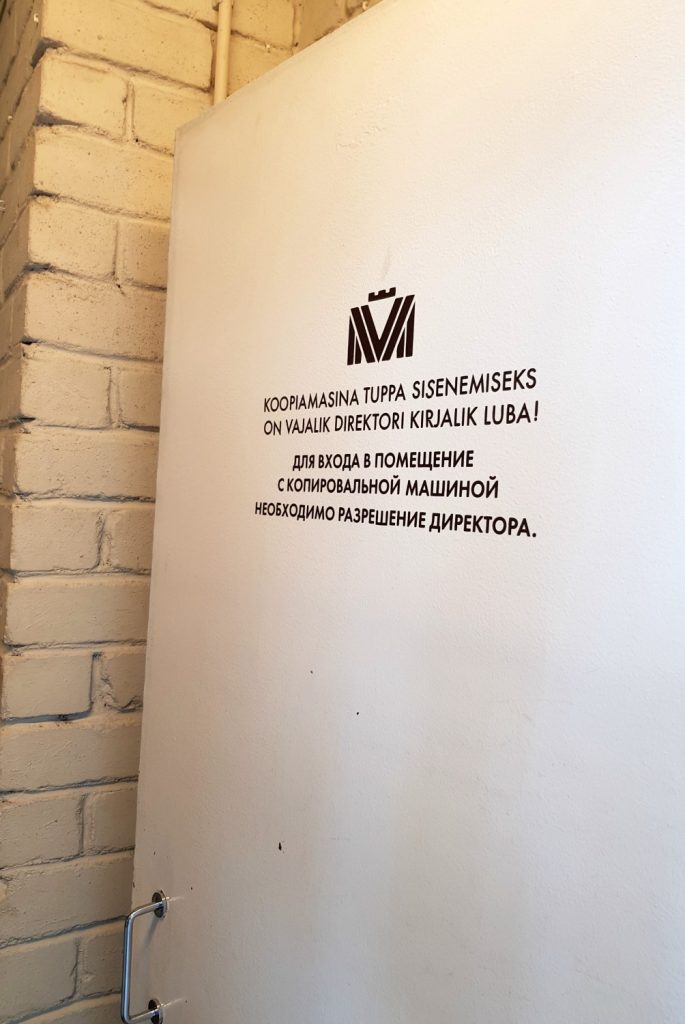
Even the little details help to bring home the clash between appearance and what actually went on, such as the museum’s sign as you walk in to the 23rd floor: in English, it points out the museum entrance… but in Russian and Estonian, it states entry forbidden.


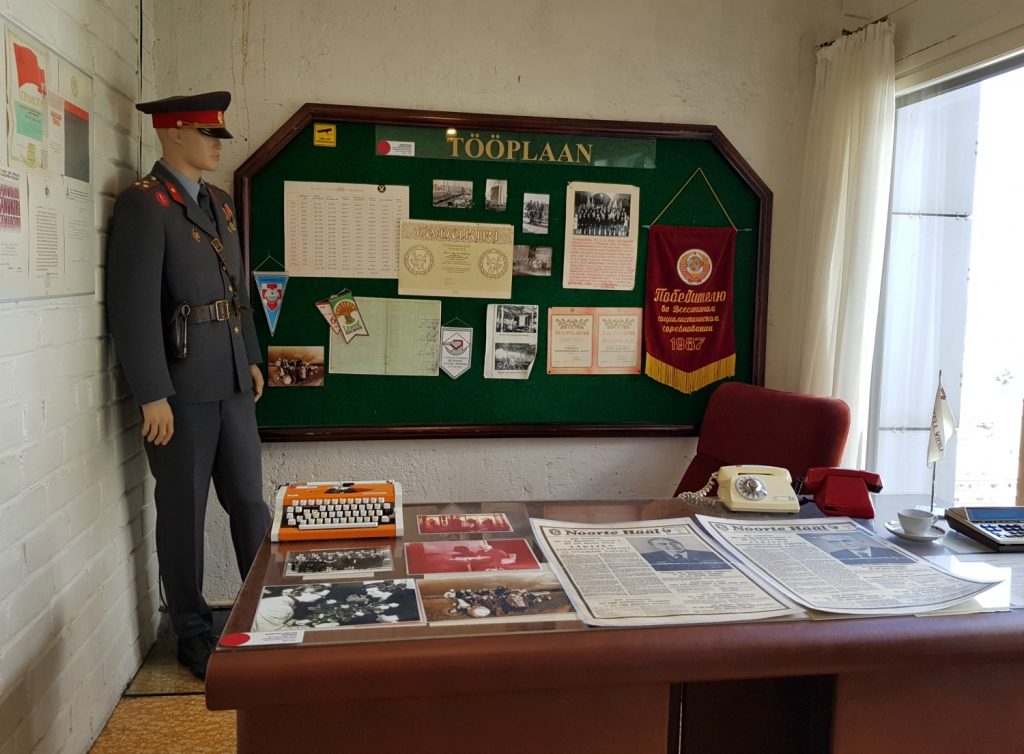
Inside the museum, are photos of workers enjoying ‘volunteer obligatory work’. Forget Bond, this is George Orwell doublespeak territory.
You might think that the city’s citizens would want to steer very clear of the hotel – it wasn’t just the officially invisible 23rd floor which was something of a giveaway. But a job working at Hotel Viru was a coveted position.
Staff could buy unlimited cakes from the kitchen, for example, to then swap with friends in Tallinn who worked in different shops, rather than the restrictions faced by ordinary residents.
And while they weren’t allowed to talk to guests, of course they did… and were sometimes given Western products and money, which could also be swapped.
But they couldn’t be caught doing it – and the KGB was always watching.
From the doorman, usually retired KGB and army, who decided who came in, to the drivers (also KGB) helpfully provided for anyone venturing beyond Tallinn, to the floor guards, there were eyes almost everywhere.

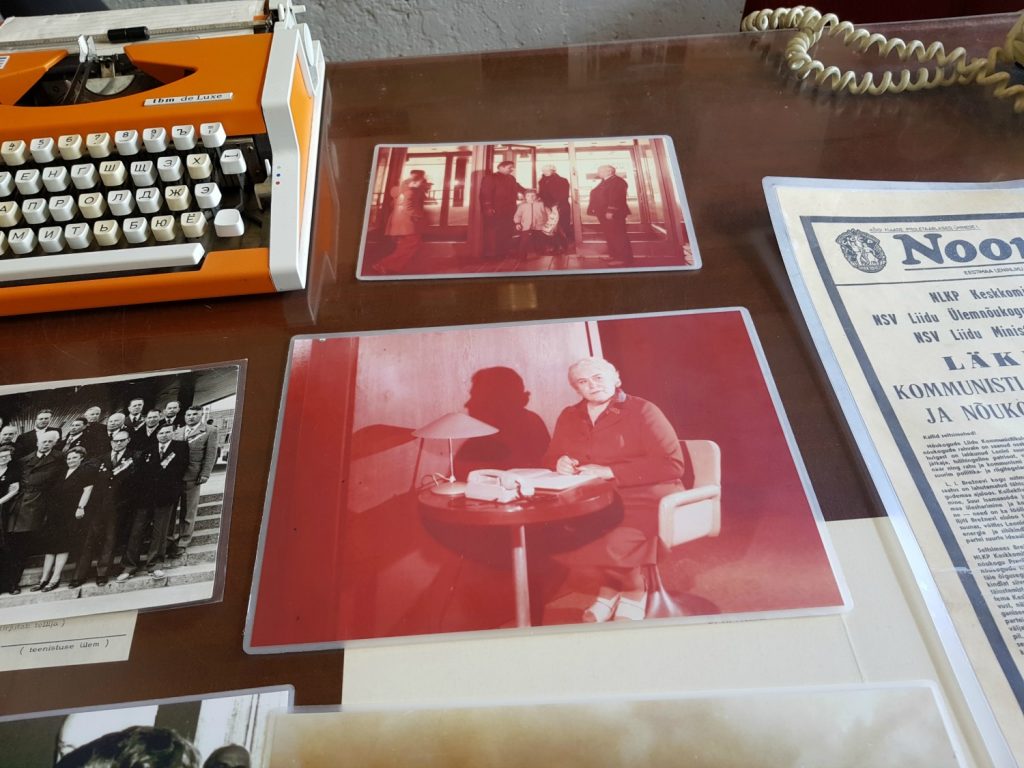
These ‘babushkas’ who sat by the elevator on every floor noted and recorded who came, who went, when and who with, and passed it on to the KGB. Except, perhaps, when a present might encourage them to look the other way.
As to why they were babushkas – the Russian name for a grandmother or older woman? As we quickly discovered from our tour guide, nothing happened by accident. For women were only allowed to emigrate if they married a foreigner: which was why older married women were usually chosen for the job.
Even if they later divorced, their children and grandchildren belonged to the state, and they would have had to leave them behind. In those circumstances, who would take advantage of contact with Westerners?
And when there were no people present, the KGB’s eyes and ears still went everywhere.
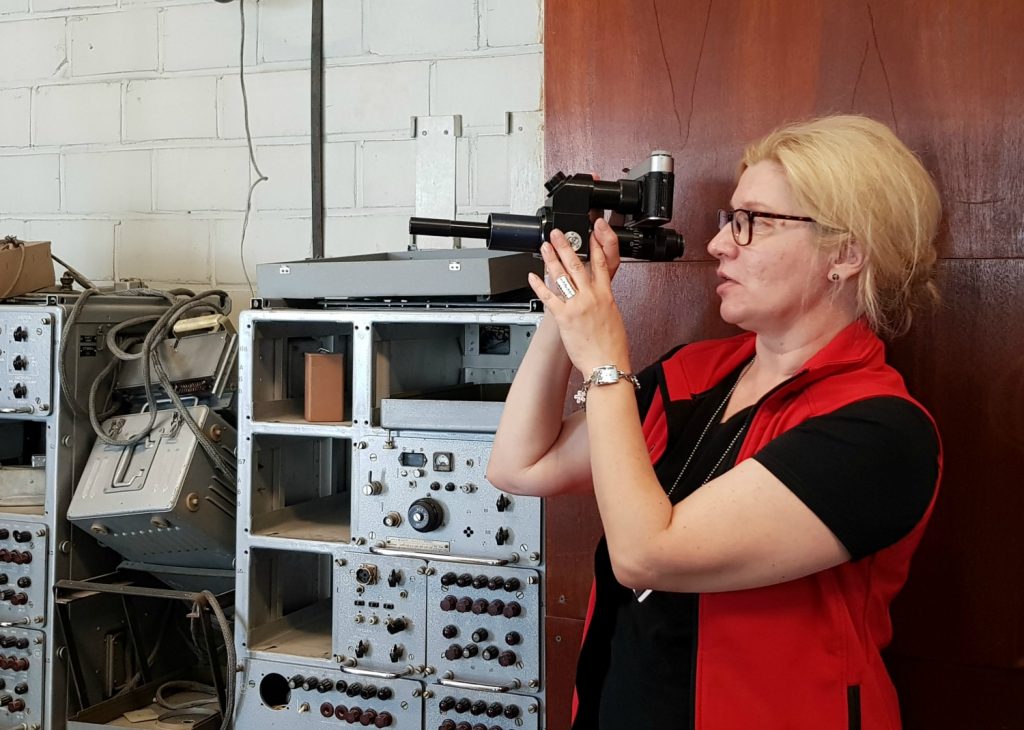
Around 10 officers worked in the hotel’s listening posts (another was situated on the 2nd floor), along with their helpers and agents, and today Tallinn’s KGB museum is full of items which were broken and left behind, from transmitters to cufflinks with microphones in.
Hotel rooms next to those foreigners of most interest had microphones embedded in the wall, later technological advances meant they could be hidden in lamps and vases along with cameras dotted around to try to pick up information for blackmail.
Sitting in the restaurant, you could expect an ashtray to appear on the table – if you didn’t smoke, and tried to move it, the waiters would helpfully keep returning it. Every single time.

Nobody was fooled about the real reason, of course, and both guests and KGB made the most of this. We heard tales of guests who would helpfully ask ‘Comrade, is this working?’ to a lamp as they entered the room, or furniture in a room full of Estonians suddenly speaking Russian – a technological glitch perhaps… or perhaps not.
And everything was designed to reinforce the idea of how wonderful life was in the Soviet Union. Discovered your toilet has no paper and complained out loud to yourself? You could expect a knock at the door and a new roll from the floor guard almost before you’d had chance to wash your hands.
Even the KGB were paranoid. Their own phone, a direct link to Moscow emblazoned with the KGB crest, was protected with metal inside so no-one could listen in to their calls.
But the scale of the operation only became clear when the KGB abandoned the post and left.
And one final fact remains to send a shiver of fear into the present: while the museum displays are made up of original exhibits, to accompany the guide’s engrossing hour-long commentary, no-one knows for sure what happened to all the paperwork they gathered over two decades. When staff gingerly ventured up to floor 23, not a single file remained.
KGB Museum Tallinn review: Need to know
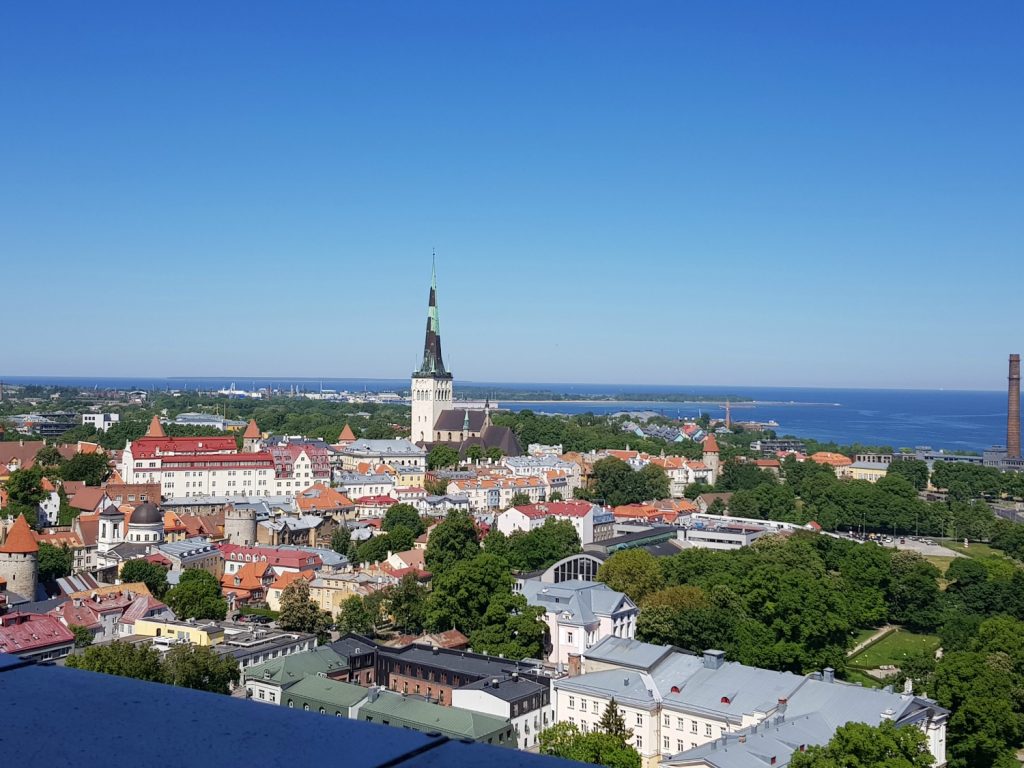
The tour takes place six times per day in Finnish and English (only twice in English) and the museum – in what is now called Original Sokos Hotel Viru – is closed on Mondays from November to April. There’s also a great view from the top floor onto the city.

Other languages may be available for groups if booked in advance. It’s recommended to book tickets in advance – travelling at the end of May, and visiting on my own, I didn’t have any trouble finding space on a tour shortly before our visit, but numbers are limited.
Tickets to the KGB Museum Tallinn cost 14 Euros, depending on the date you visit. Children aged nine and under are free, 10-16-year-olds pay 7 Euros.
It’s certainly suitable for teens (and babies in a carrier if you think they might doze through). I wouldn’t recommend this for younger children though as the tour is mostly standing around listening to the guide and looking at displays – I’d have been more worried about my five-year-old being bored/baffled than her having nightmares, as even with basic background knowledge, most of it would have gone straight over her head.
For my top things to do in Tallinn with kids, check out my suggestions with options for all ages
PIN FOR LATER: KGB MUSEUM TALLINN REVIEW

Images copyright MummyTravels
LIKED THIS? SIGN UP FOR MY EMAIL NEWSLETTER
My husband would love this – all the secrets and espionage. I do wonder though what happened to the files – and if anyone has tried to find out…
I believe that officially they no longer exist. Hmmm… like the 23rd floor didn’t exist?
Fascinating! So people knew they were staying at a spy hotel, but stayed there anyway? It’s amazing how much has changed, but how much has stayed the same, they’re just better at it now, aren’t they? #farawayfiles
There wasn’t really any choice – should have made that clearer. If you were from the West and wanted to stay in Tallinn, you were only allowed to check in to Hotel Viru… for that very reason. And absolutely, between giving away our data, CCTV and everything else, they don’t need bugs any more!
Wow, Cathy, I would REALLY like to see this. As Hilary says, it’s absolutely fascinating and frighteningly close to the bone. It really reminds me of that fantastic film, The Lives of Others, about life in East Berlin. Great read for #FarawayFiles
It was such a fascinating place – I find it so hard to believe this was still going on during my lifetime, it always feels like something straight from the pages of history.
How cool! Sounds like a really interesting place. I love all that espionage, double-agent, cold war stuff, I’d be engrossed for hours I’m sure. Thanks for sharing, I’ve never heard of this place, but it’s going on the list. #farawayfiles
Thanks! Tallinn is a gorgeous place anyway, but this was such an intriguing little museum and we had such a great tour guide – definitely one to visit if you can.
What a fascinating read! I thoroughly enjoyed reading 1984 so I would really find this little museum intriguing! It’s so strange to think that at one time people were listening on everyone’s conversations, even on something as petty as toilet paper! Pinned! #FarawayFiles
Yes, it made me want to read it again too – it’s so strange to think every move, every whisper was under surveillance. Thanks!
What a fascinating place! And that bit about the loo roll! I love cold war stuff so this would definitely make the list if we visited Tallin. Thanks #farawayflies
Definitely – and yes, I couldn’t decide whether that story was insanely sinister or made me laugh. Imagine!
Wow, this is exactly like the spy movies during the Cold War!! Truly unbelievable but that’s how it was back then. Every move, every step and every word uttered is closely monitored. One wrong move and you’re dead or sent to a death camp in Siberia. Amazing post, Cathy! #FarawayFiles
Thanks! And it really was – that level of surveillance and the potential punishments are terrifying to think of.