
London Museum review – reopened, bigger and better
It’s been almost four years since the former Museum of London closed its doors, but with the doors opening on its new Smithfield home, I was one of the first in line to check out the transformed site for my London Museum review.

review visit*
After a £437 million revamp, it’s bigger (much bigger) and better than ever, complete with a new layout, some items which have never been seen before, interactive and immersive elements, plenty of quirky touches and lots for families. And it’s all still free.
In fact, there’s so much to discover that one visit doesn’t do it justice – so, needless to say, my London Museum review can’t possibly cram everything in either. But if you’re planning a visit to the London Museum with kids, here’s what you need to know, and some of the biggest highlights.
Contents - click to jump to a section
London Museum Smithfield
The first thing that hits you when you walk into the converted meat market building is the space.
The old museum wasn’t small (even if it wasn’t vast), but the sprawling hall that greets you on entry feels far more open and airier – and that’s only half of what there is to see.

The new London Museum is split into two main sections – Our Time, which focuses on London in living memory, including the present day, and Past Time downstairs, which traces the city’s history from prehistory until 2012.
There’s also Real Time at the entrance, with screens showing data about London and Londoners today, alongside the last bell cast at the historic Whitechapel Bell Foundry.

Past Time itself also divides down into five main chapters which feed chronologically into each other, so you travel forward through time as you walk.
And along the sides, each period has an additional, more immersive room to allow you to delve a bit deeper – two are particularly family-friendly, focusing on Roman London and on the Great Fire of London, while others look at everything from the spectacular Cheapside Hoard to the Suffragette Movement.
Continue beyond these displays, and there are two more themed areas looking at London Life – covering everything from religion and entertainment to work and home – and London Landscape, from natural spaces to the built environment.

Everywhere there are chances to get hands on, with some interactive exhibits, plus video and audio – you can even step virtually into the Fleet Sewer, which runs behind the museum wall, along the route where the Fleet River once flowed.
And watch out for the animals as you go. People aren’t London’s only inhabitants after all, so if you keep your eyes peeled, you’ll find stories of some of London’s animals.
Some are more general reminders of how humans and other creatures have lived side by side for centuries, along with a few specific animals who’ve played a part in London history, all accompanied by poems from Michael Rosen.
TOP TIP: The sheep which you’ll see dotted around each have names, and they’re designed to be sat on – they’re surprisingly comfortable too

There’s a lot to take in – not surprisingly, as there’s a lot to London, from centuries of history to culture, people, events, life and more. And while the work involved has come at quite a price tag, I think the curators have judged it brilliantly.
Everyone will find something here, from primary school age kids to teens and adults, plus there are some outstanding items on display. Although it would feel overwhelming to try to take in every detail in one visit, it’s easy to navigate and easy to focus on specific areas that interest you.
With regular family activities at the sister site, London Museum Docklands, there are more planned here too – the old site at London Wall had activity sheets and trails, while Smithfield is due to have storytelling sessions to bring history to life, along with weekly family experiences from immersive theatre company Punchdrunk Enrichment.
So before you visit for real, here’s my virtual walkthrough with a bit more detail on the different areas.
Our Time
Your journey through the museum starts here in the Linbury Hall, unless you decide to head straight downstairs into the past.
This is all about London in living memory, and looks particularly at the ways things have changed over the past 50-100 years, as well as some elements which never do. The displays are designed to change with the current set inspired by taste.

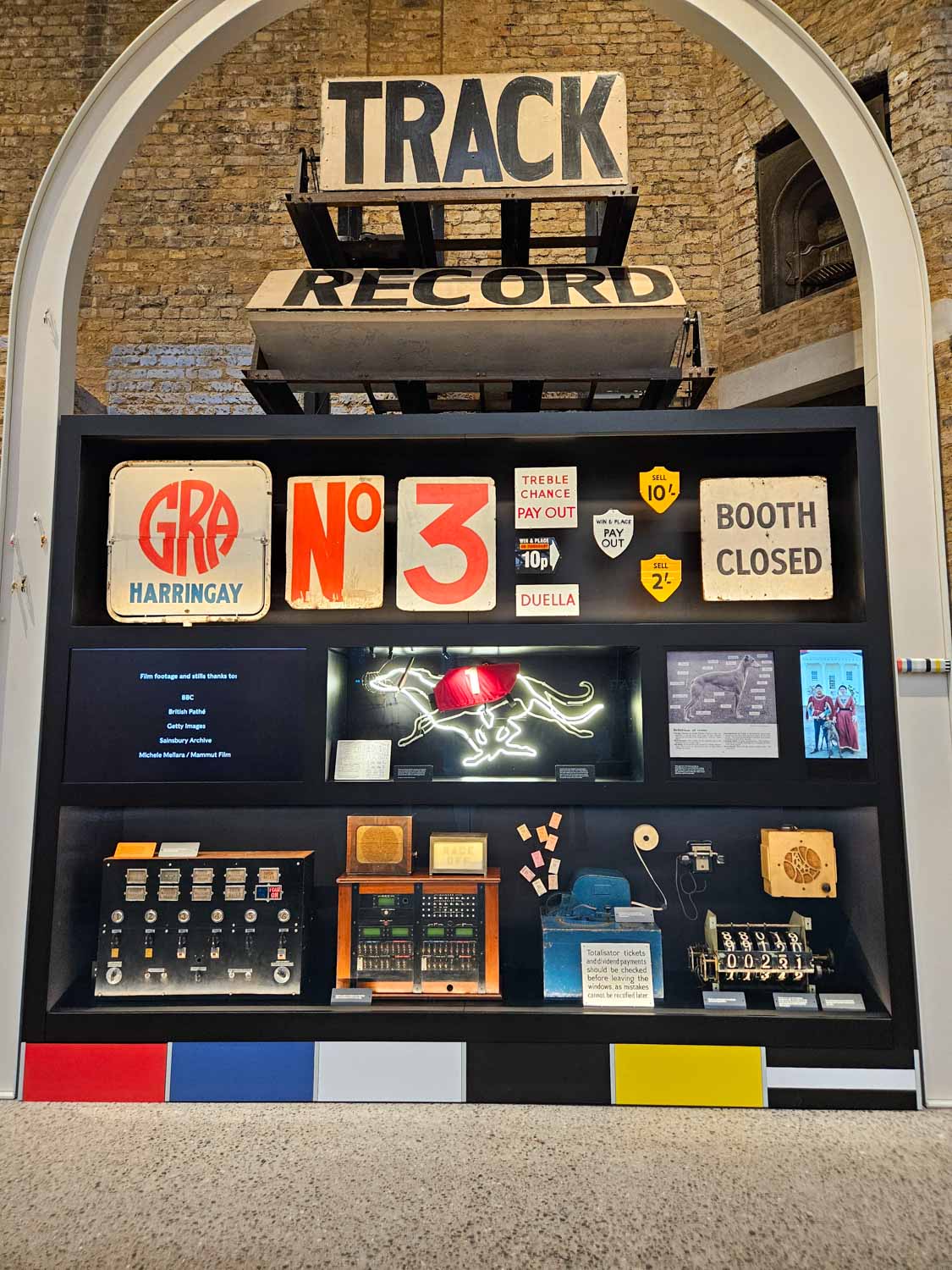

For example, one area focuses on Brick Lane and food in London; once a centre for Jewish immigrants, with long-running spots like Beigel Bake still going strong, over time the Bangladeshi community replaced them, resulting in the curry houses that Brick Lane is still famous for.
And more recently, it’s become a hub for Chinese students, with Yunnan Chinese food joining the restaurants dotted here.
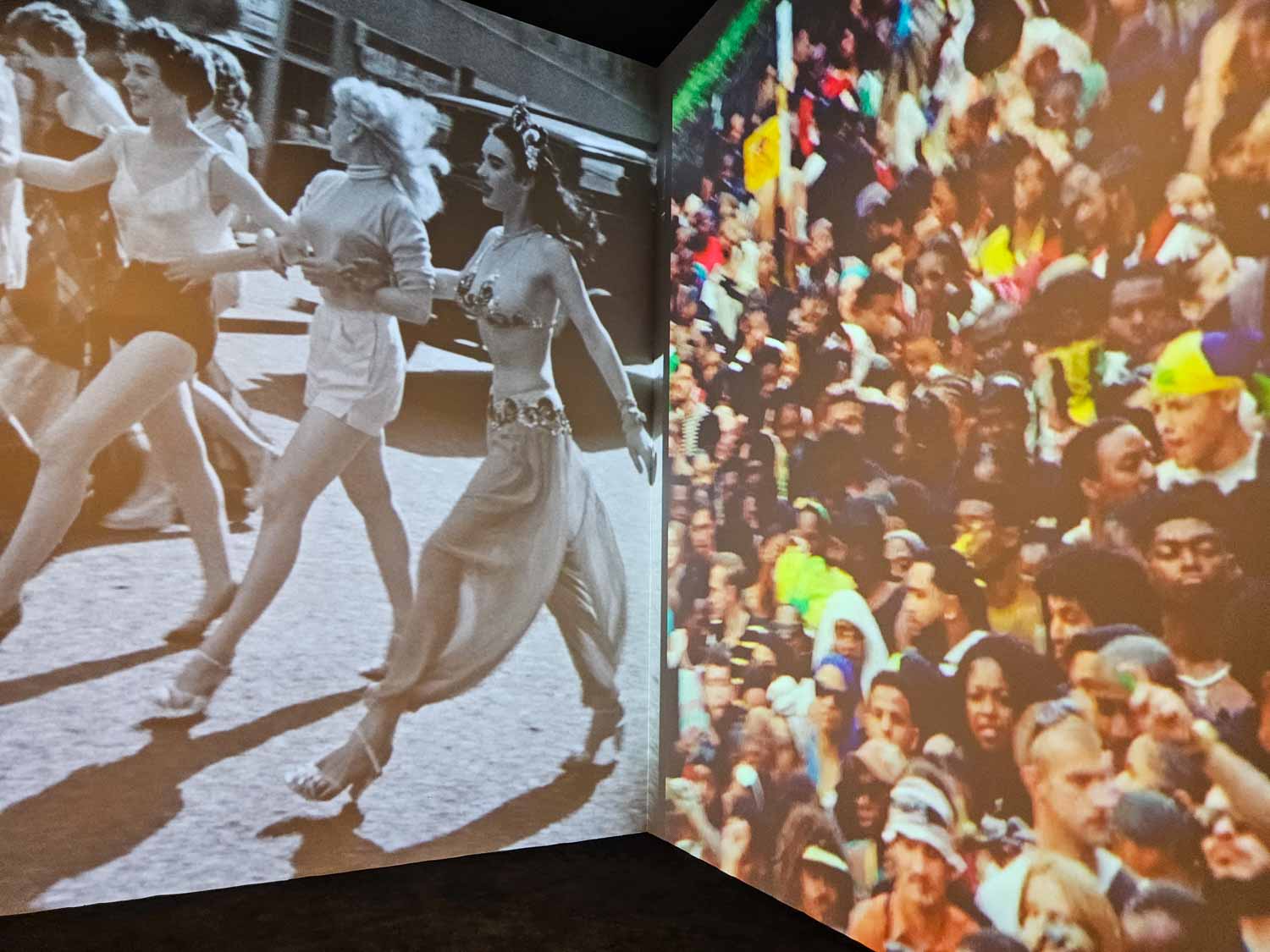

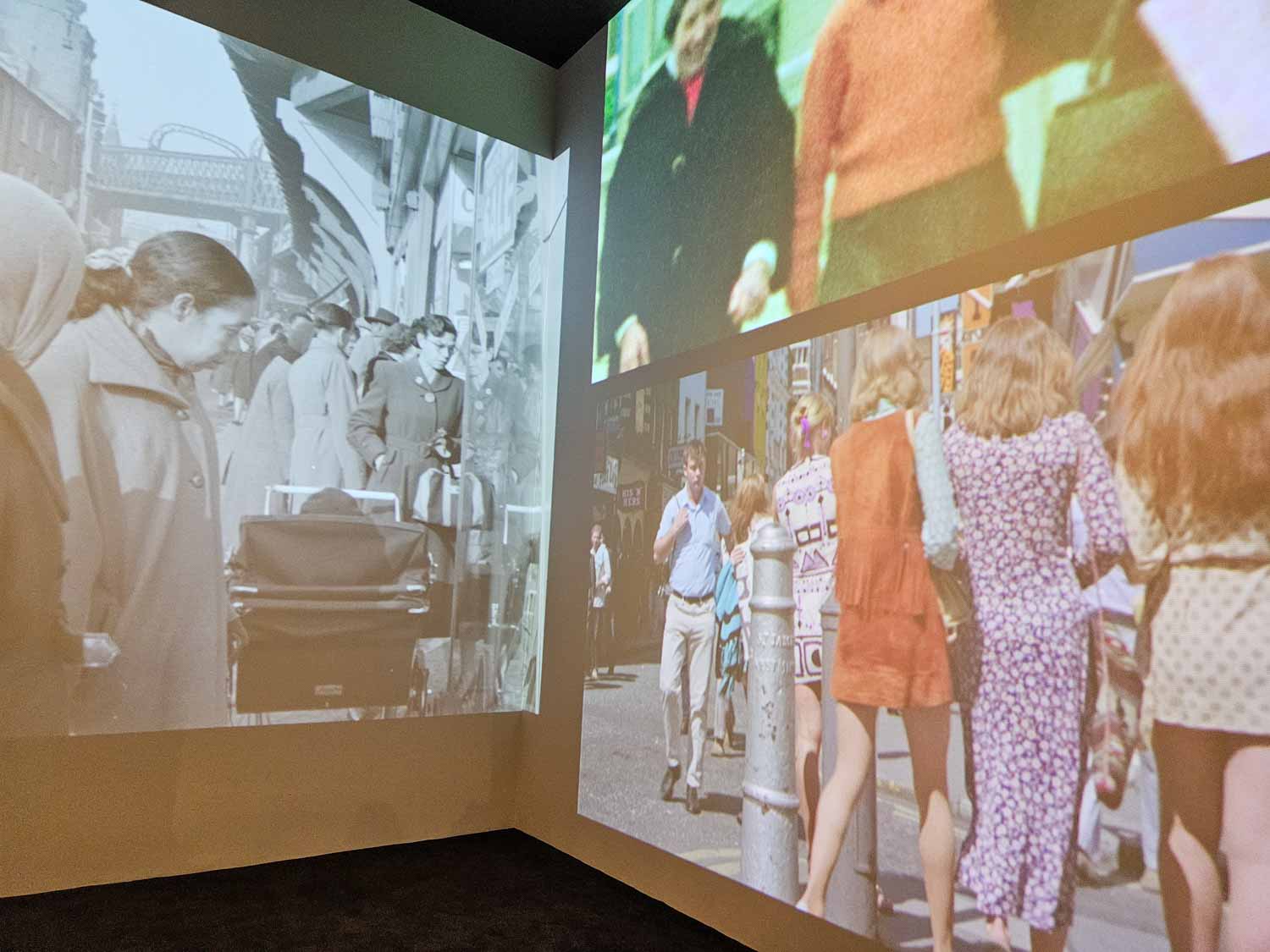
Other areas look at how traditional pie and mash shops have been replaced with chicken shops, but how both fulfil a similar purpose for Londoners.
And elsewhere you can learn about everything from the rise of Indian ready meals to the decline of dog racing tracks, or watch video footage showing scenes of Londoners over the past decades.

A few highlights include the ornate gold Lord Mayor’s State Coach, the oldest ceremonial vehicle in regular use in the world, and the intricate Buckingham Palace phone switchboard, which once connected the various rooms and offices – and allowed the royals themselves to chat.


This is one of the fun chances to get hands on too, as a touchscreen lets you pretend to put calls through between various people in the palace and listen in on their conversations.
Pre-London
The first stop within Past Time, this takes you back to before London ever existed. There have been people living in the area we now know as London for around 400,000 years, and the museum whisks you through this period to get a glimpse of prehistoric life.
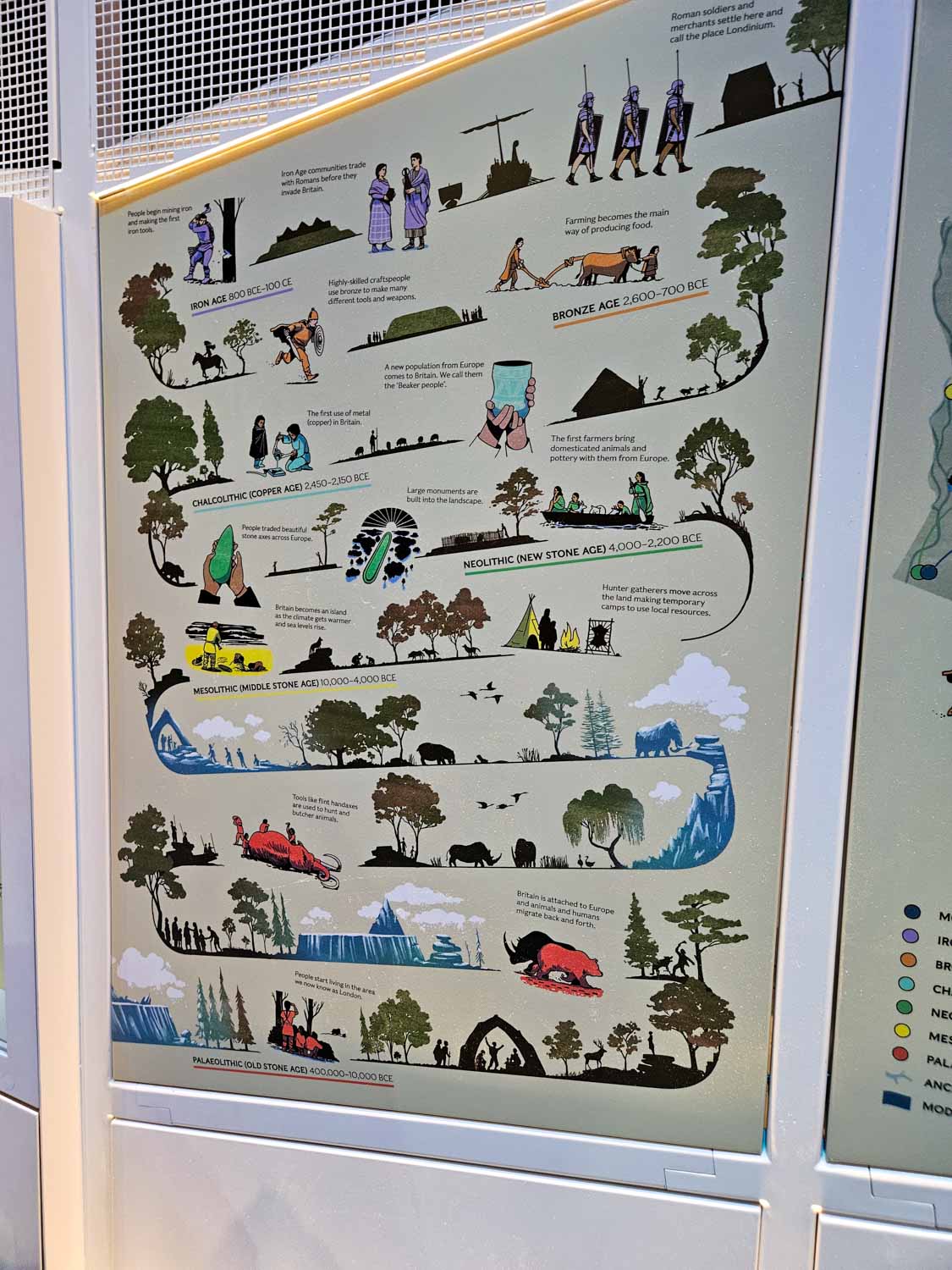


A cabinet of axes shows the development from the Paeolithic to Mesolithic and Neolithic, while there’s also a colourful timeline showing how life changed over the millennia, including Britain becoming an island, changing techology and trade – including with the Romans.
Don’t miss the collection of blades, including daggers and swords, many of which would have been thrown into the Thames as offerings. There are also several skulls in this area, both animal and human, if your kids would prefer to avoid those (or would be fascinated by them).
The first Londons – including Roman London
Then on to London’s history proper with the arrival of the Romans in 43CE, who established their new town of Londinium, until 900, covering the Saxon settlement at Westminster.


You’ll find gold coins from a dozen different emperors, everyday items and other highlights such as the statues from the temple of Mithras.
Fun fact – the Past Time Gallery is actually at Roman Street level.
Don’t miss: The recreated Roman shop and home
These areas are designed to appeal to kids, with video helping to bring it all to life. It’s helpfully colour-coded so anything dark blue is a replica, to distinguish these from the original Roman artefacts.


There are also have a couple of items on display here which have never been seen before, including some pieces of painted Roman plaster which would once have decorated a Roman home, and a section of floor mosaic.
Or challenge your family to Terni Lapilli, a game similar to Noughts and Crosses, except you can move the counters more than once to try to get your line of three.
Capital London
England’s capital shifted to London during the 12th and 13th centuries, replacing Winchester and becoming the most important city in the country once more – after a brief period of 11th century Viking rule.

Focusing on the medieval and Tudor periods, this section focuses on the key players during these centuries – the crown, the church and the merchants, whose growing power and wealth made them a force to be reckoned with.
Keep an eye out for the huge chest which once held seals, charters and other legal documents. Six people were each entrusted with a key to one of the six locks, and each one had to be present to unlock this medieval safety deposit box.


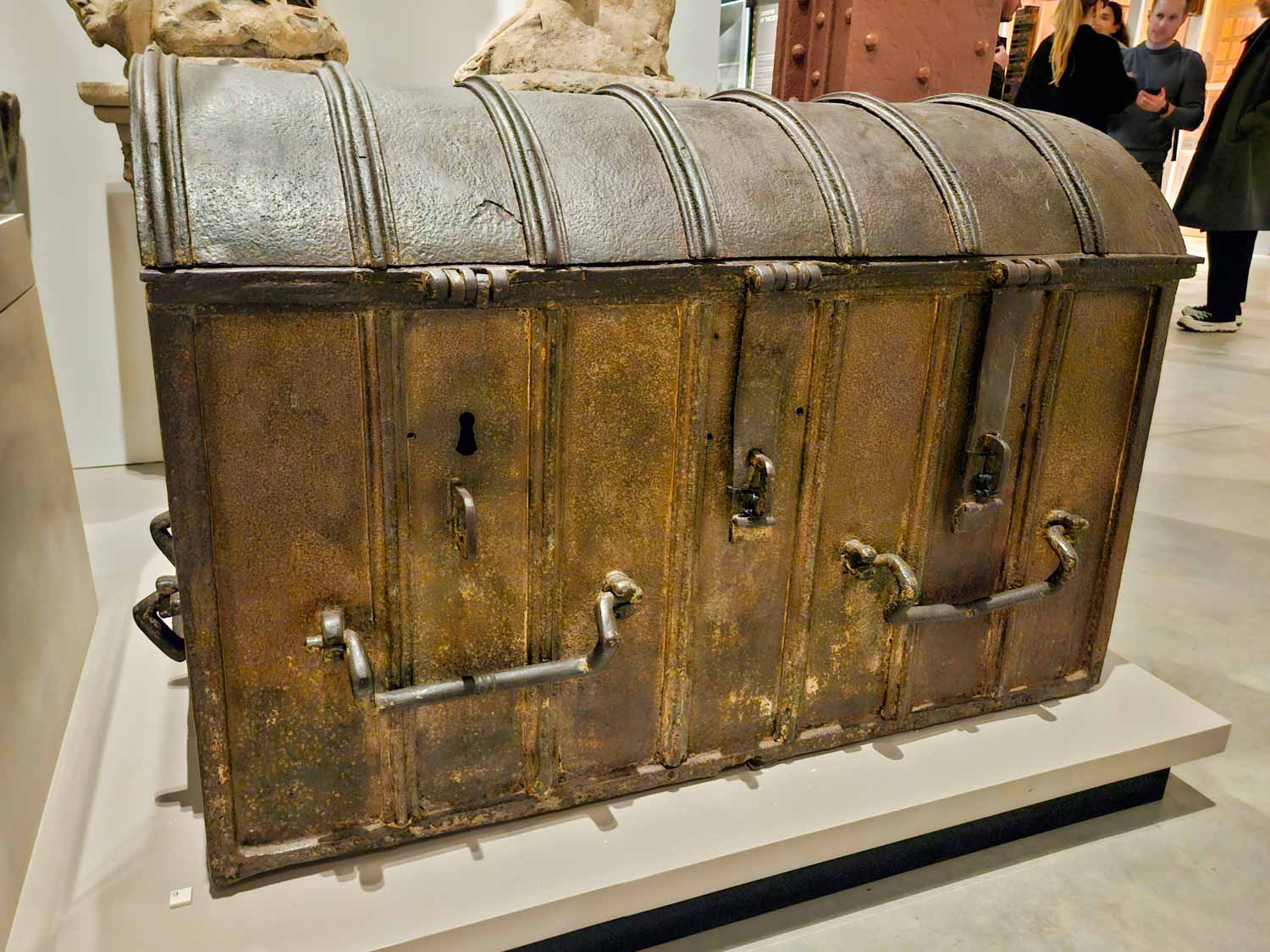

Elsewhere you can see statues of the virtues stamping on representations of the vices, taken from the Guildhall, plus other child-friendly winners like a knight’s chainmail and sword.
Keep an eye out for the array of fearsome Viking weapons too, including axes and swords – plus a chance to get hands on with some replicas (thankfully blunted compared to the terrifying originals).
Don’t miss: The Cheapside Hoard.
At some point in the 17th century, a goldsmith buried most of his stock during the cellar – it’s thought this was in the early 1640s during the English civil war, but was done by 1666, when Londoners had faced Plague and then the Great Fire.


The location was forgotten until June 1912 when workmen excavating a cellar found the stash of aound 500 pieces. One of the stand-out items is a pocket watch housed in a huge Colombian emerald, an enormous status symbol.
But there are other precious stones such as rubies and diamonds from India, turquoise from Persia and lapis lazuli from Afghanistan, used for jewellery or carved into portraits. You can also learn more about the goldsmith’s trade, as well as peer into a recreated workshop.
Commercial London
London’s next transformation was into a more globally connected city, becoming the capital of what would eventually be an empire.

Covering the period from around 1600, with the foundation of the East India Company and other merchant trading companies, until 1815, new lands were being discovered and old foundations were being shaken.
Keep an eye out for the waistcoat that it’s believed was worn by Charles I to the scaffold for his execution, but also the displays on the trade in enslaved people and the abolitionist movement – portraits of 18th century abolitionists have been recreated using modern-day activitists.


Elsewhere, there are reminders of how involved London was in this trade: you’ll see details of a business set which created clothing specifically for enslaved people to wear on plantations, while another made glass beads intended to be taken to Africa and traded for more people destined for enslavement.
Don’t miss: The Great Fire Gallery
Another of the most family-focused areas, the Great Fire Gallery has been designed to be like a walk-in graphic novel.

The text on the walls is taken from historical evidence and accounts of those who lived through the conflagration, with separate smaller areas for kids to explore, such as the Post Office where staff attempted to save the letters from burning.
You can also see one of the original fire marks, dating from after 1666 and showing a property was protected with an early form of fire insurance, and finds such as charred bricks and melted glass, which was damaged during the Great Fire itself.

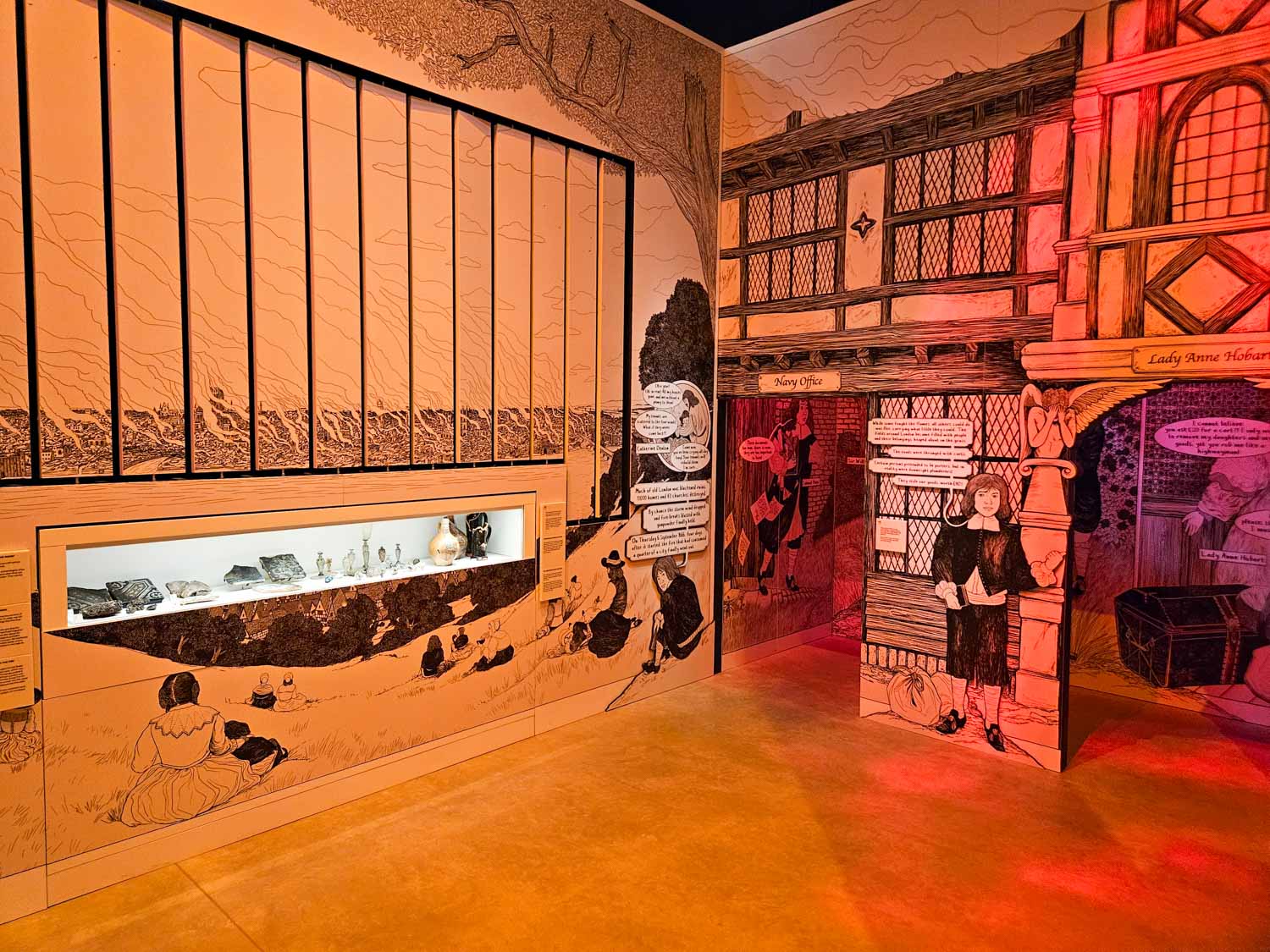

Imperial London
Running from the end of the Napoleonic Wars in 1815 until 1948, as the British Empire was beginning to break up, this area charts the huge social, economic and geographic transformation of the city.
Packing in the Victorian age and two world wars, some of the displays look at the gap between wealth and poverty in the 19th century, including some pewter tankards from a workhouse set alongside an armchair which once belonged to Charles Dickens.
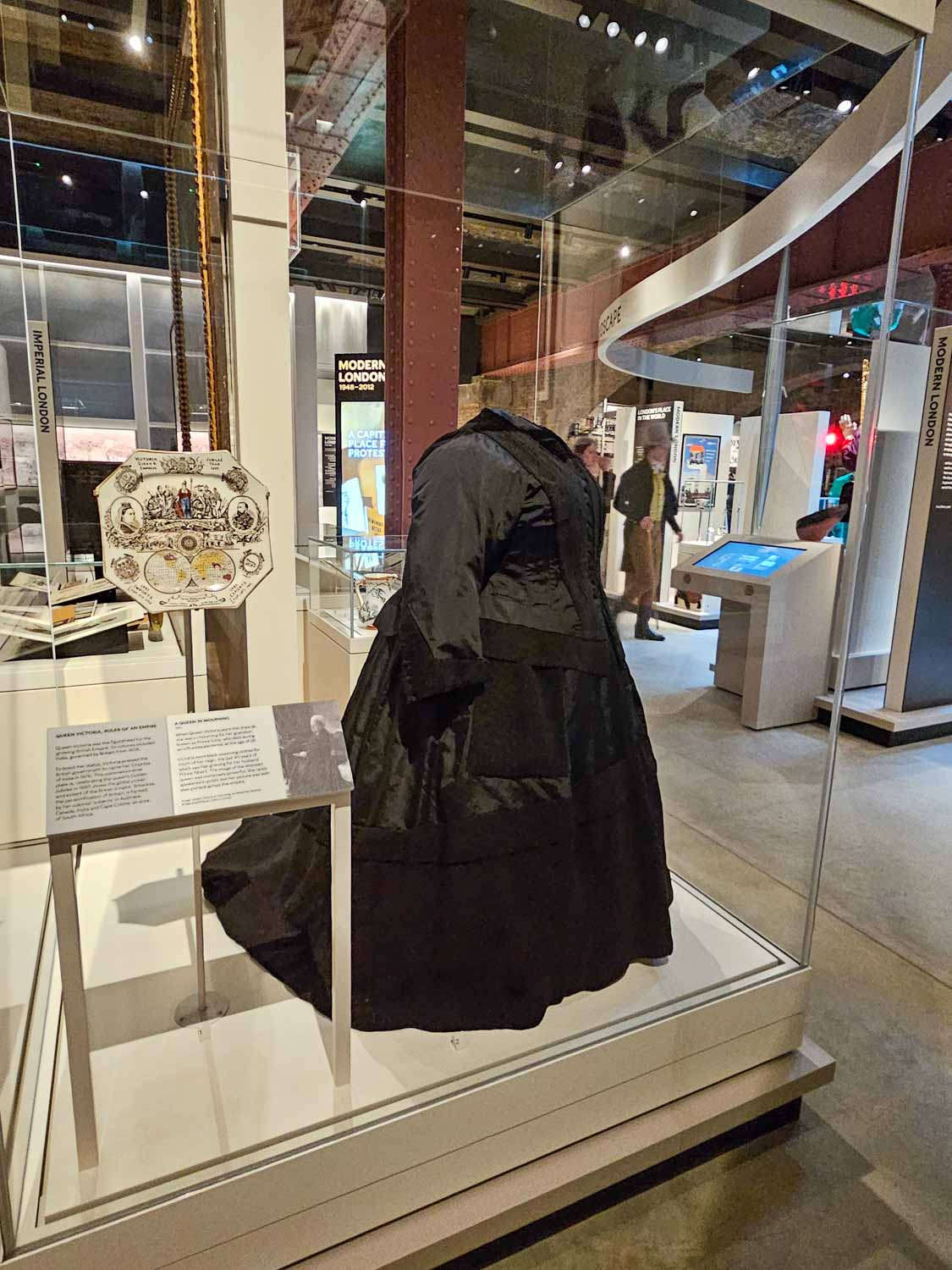


One of the most memorable items is a mourning dress worn by Queen Victoria after the death of her grandson Prince Eddy who died in 1892 during the Russian flu pandemic. The size of the dress reminds you of just how short the Queen really was, under 5ft tall, but still somehow projects a powerful sense of her presence.
Don’t miss: Votes for Women
Discover more about the Suffragettes and the fight for women’s right to vote in this separate area, including more background on the different sides of the movement.


The part with the biggest impact is those who were prepared to go to prison, but it’s a reminder that women from across class divides were involved. Look out for Emmeline Pankhurst’s hunger strike medal.
Modern London
Bookended by two London Olympics, in 1948 and 2012 (spot Tom Daley’s trunks), this final chapter of London history looks at the birth of modern London and how the city made a new name for itself post-war and post-empire.

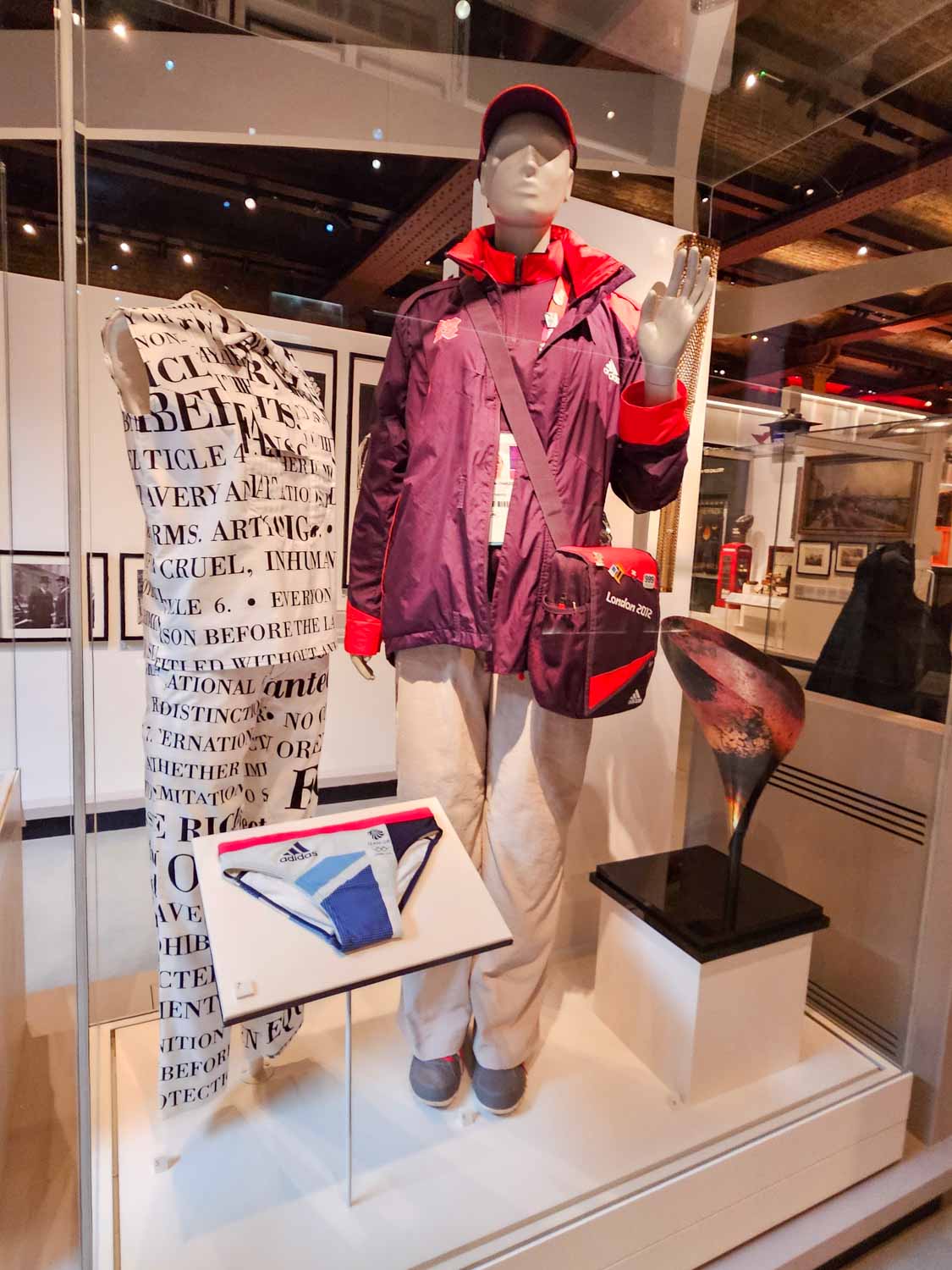

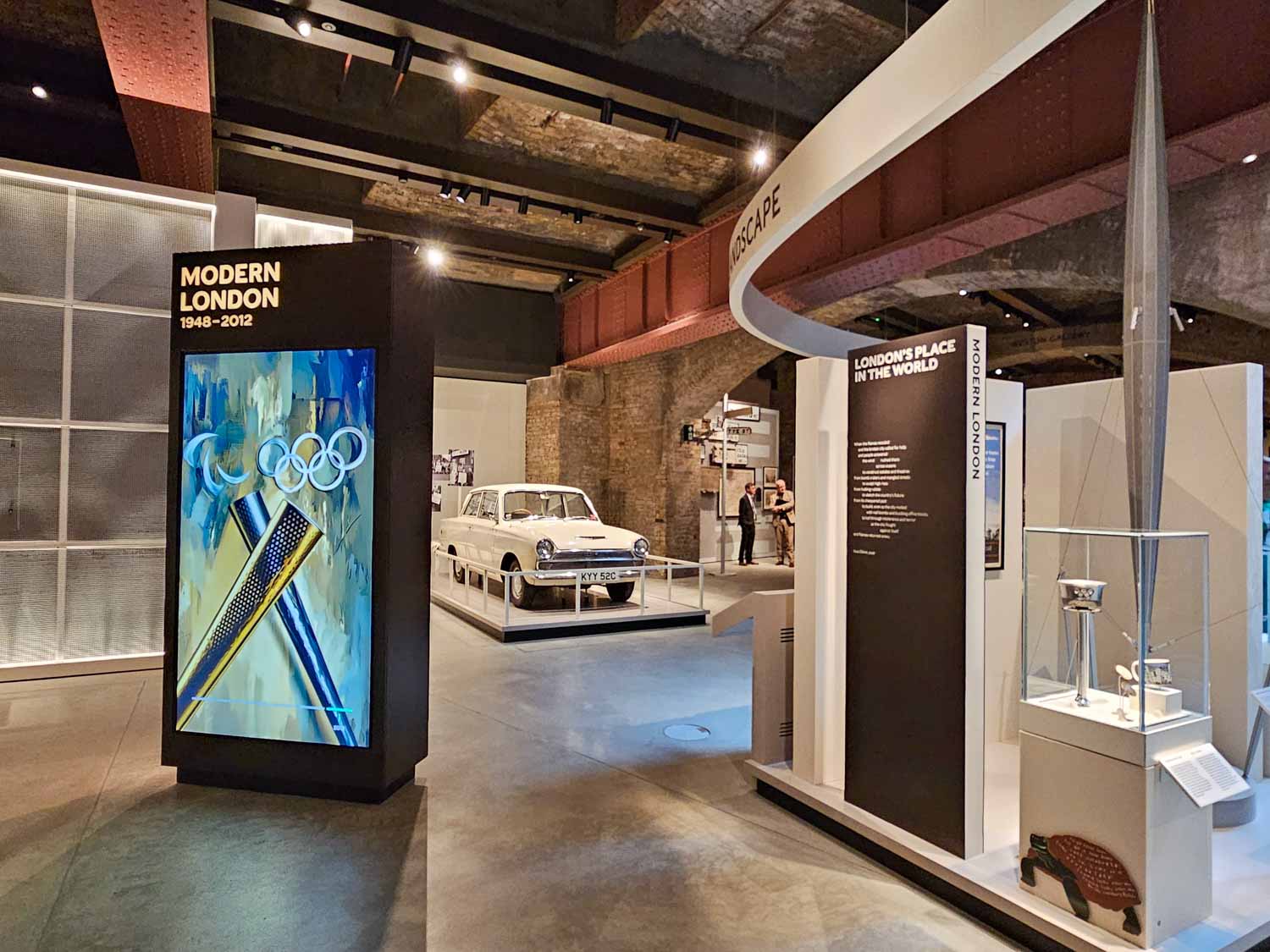
There are nods to London’s importance as a capital of creativity, from fashion to wider culture, as well as a financial centre – spot the old Nokia brick phone.
Over the past 80 years or so, it has also been at the centre of both protest and celebration, including the coronation of Queen Elizabeth II, as well as demonstrations galore.
London Life
If you’re feeling a bit overwhelmed by how much life has changed during the centuries you’ve galloped through, London life is a reminder that some things stay consistent.

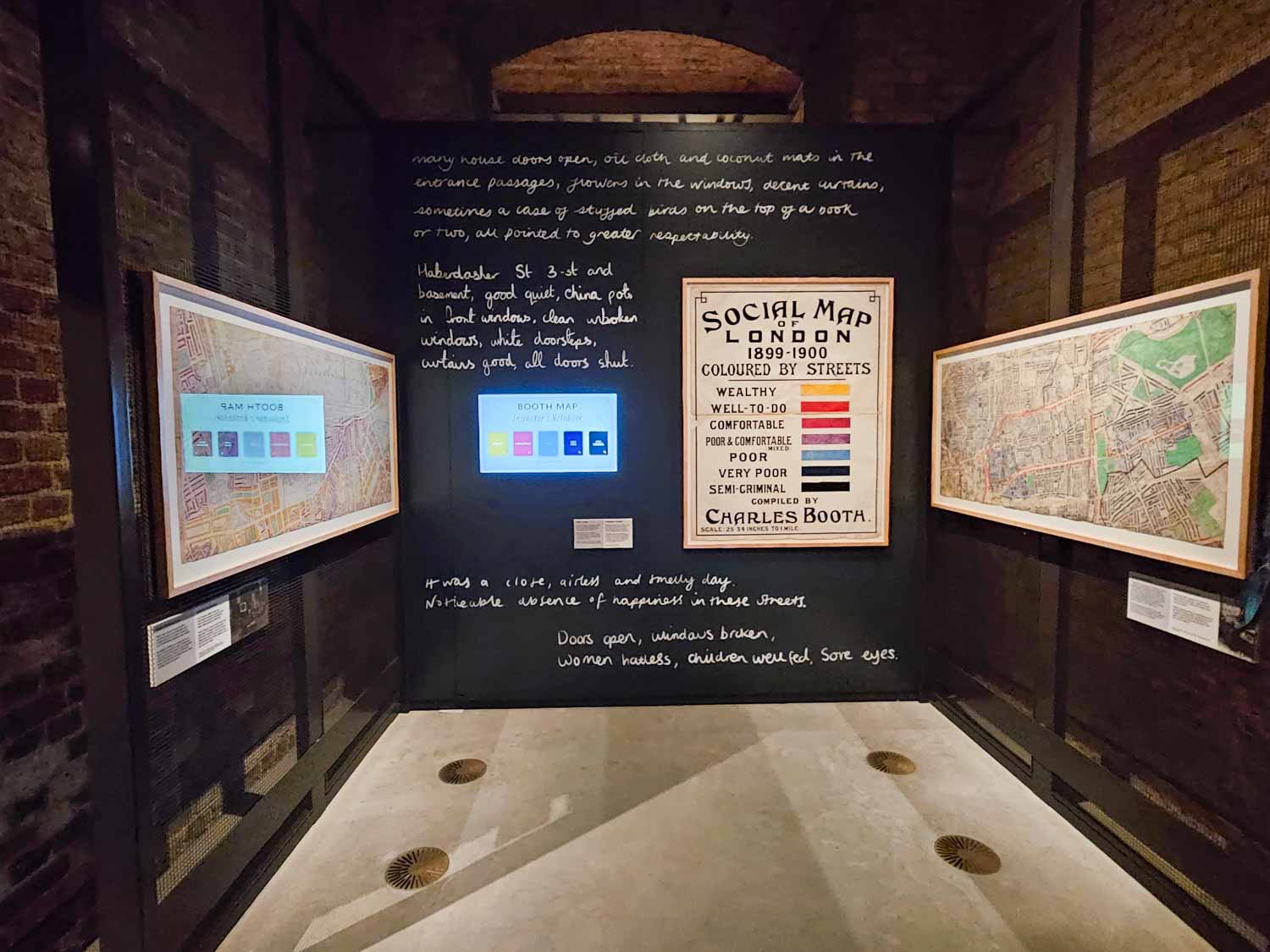
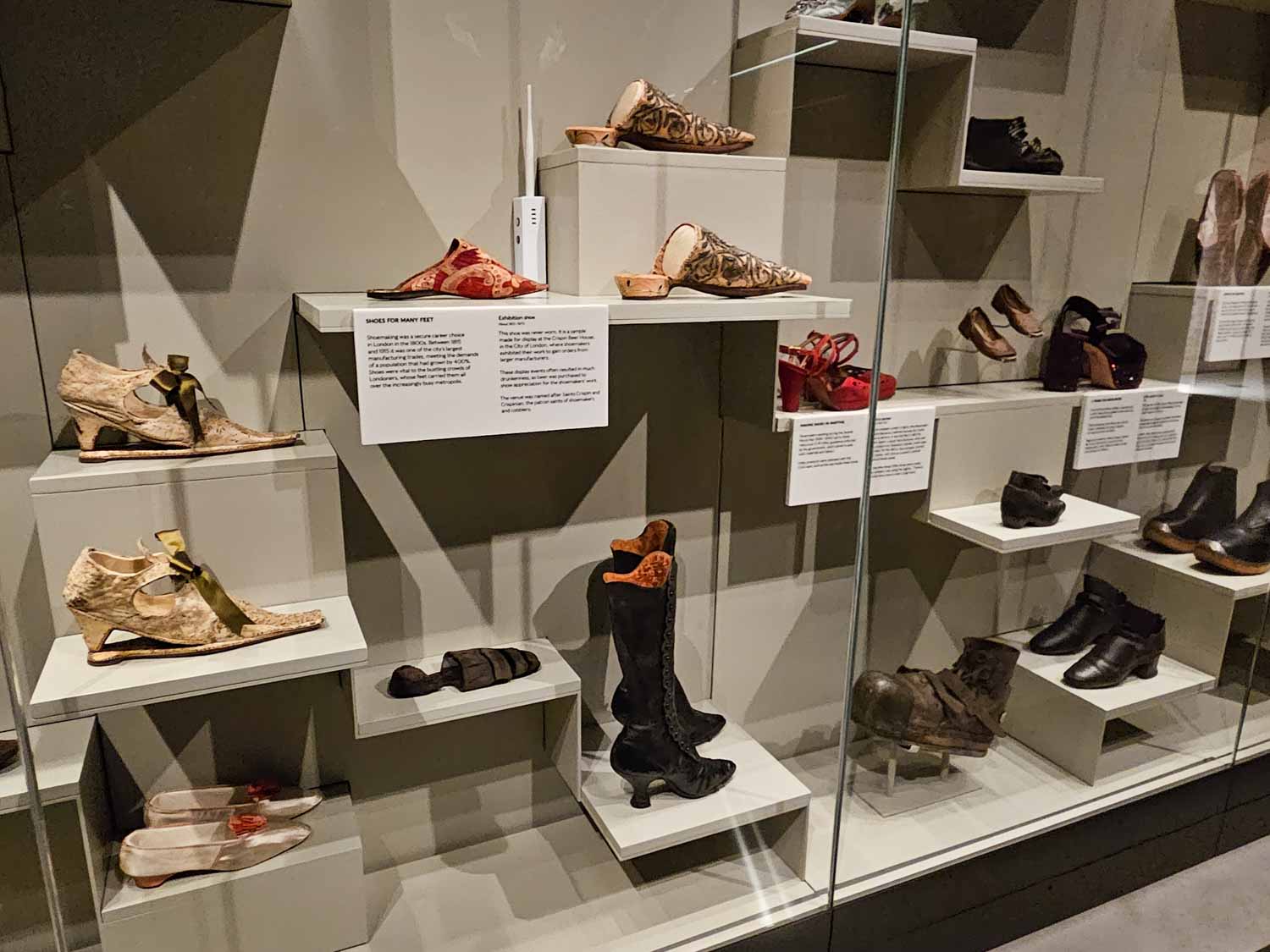
With four universal themes – religion, entertainment, work and home – all London’s history is brought together, so you can see a communal medieval toilet next to a then cutting-edge 50s kitchen, installed in the newest social housing, as well as the Booth map charting wealth and poverty across the city.
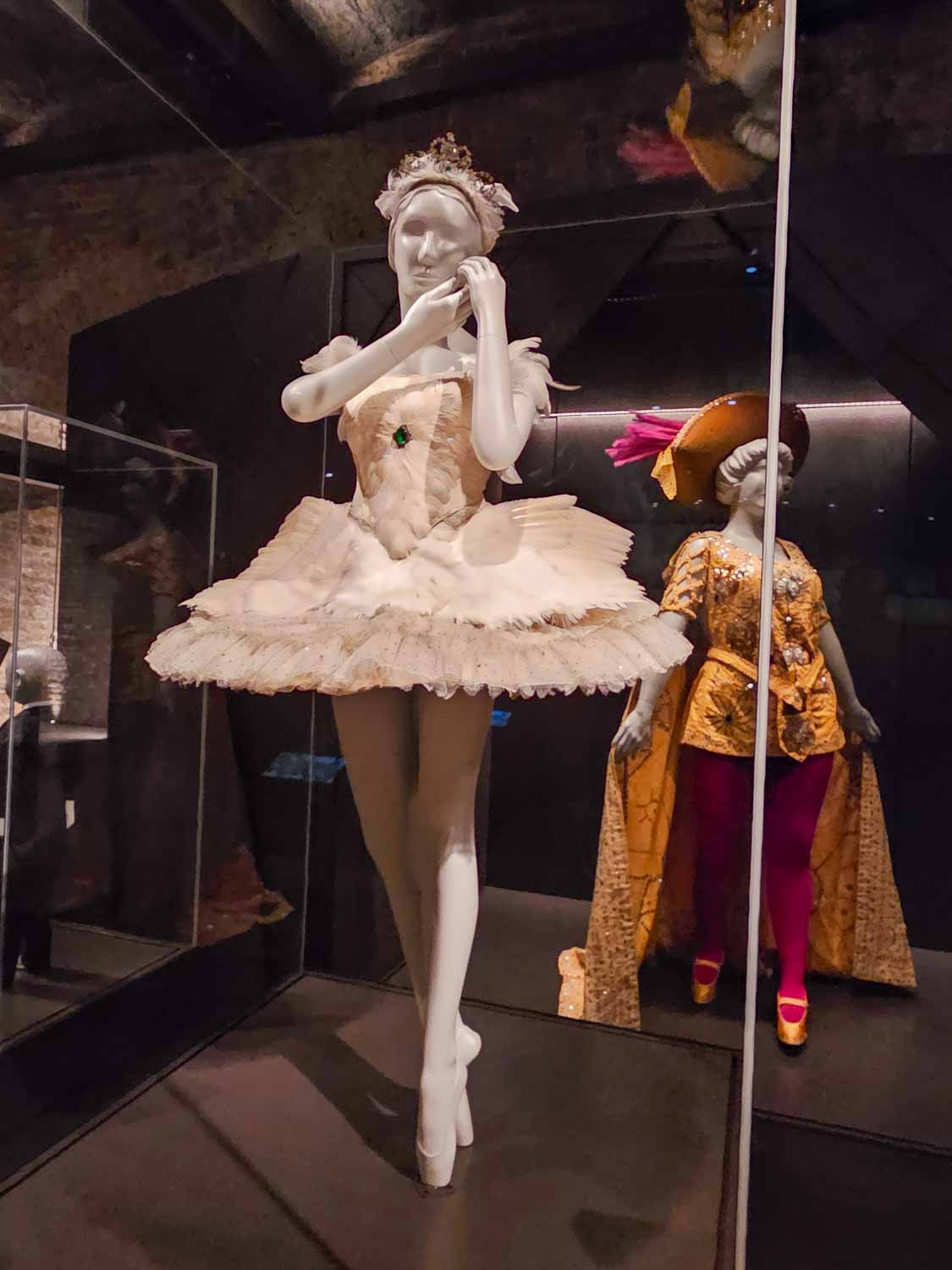
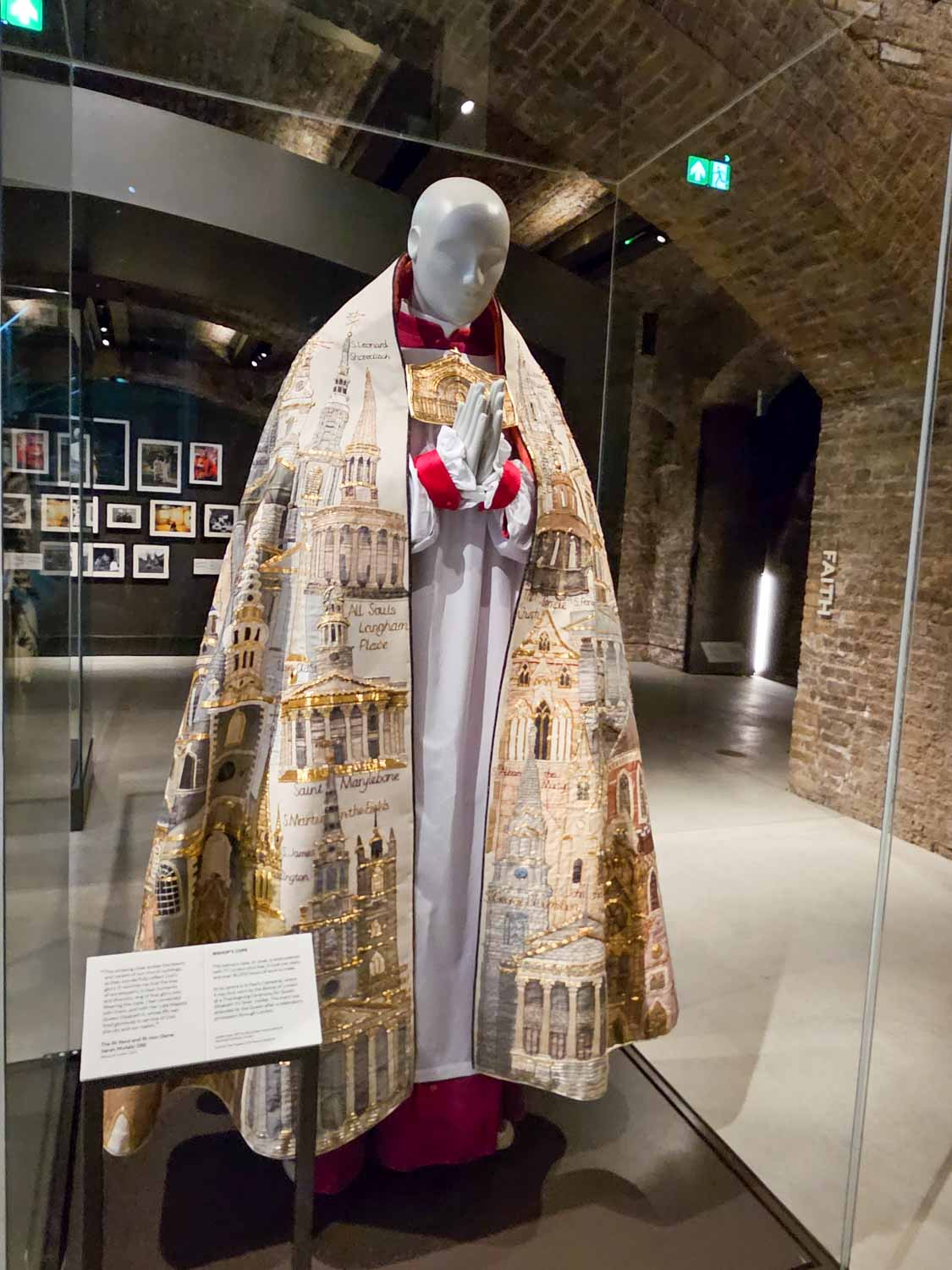
Or a display of shoes, from early leather remnants through changing fashions. There are some eye-catching displays along the way – religion includes an intricately decorated cope lent by St Paul’s Cathedral, showing London’s 77 churches, while entertainment has Anna Pavlova’s dying swan tutu.

Don’t forget what’s under your feet either, with a chance to virtually step inside the Fleet sewer, which runs behind the wall of the museum, plus a section of the Whitechapel fatberg, found in an east London sewer in 2017 and still the largest fatberg discovered.
London Landscape
This final section explores both London’s natural landscape and built environment, with everything from an iconic red phone box to Pride traffic lights which can still be seen at Trafalgar Square, a hopscotch grid and displays showing how the Thames has been changed by human intervention over the centuries.


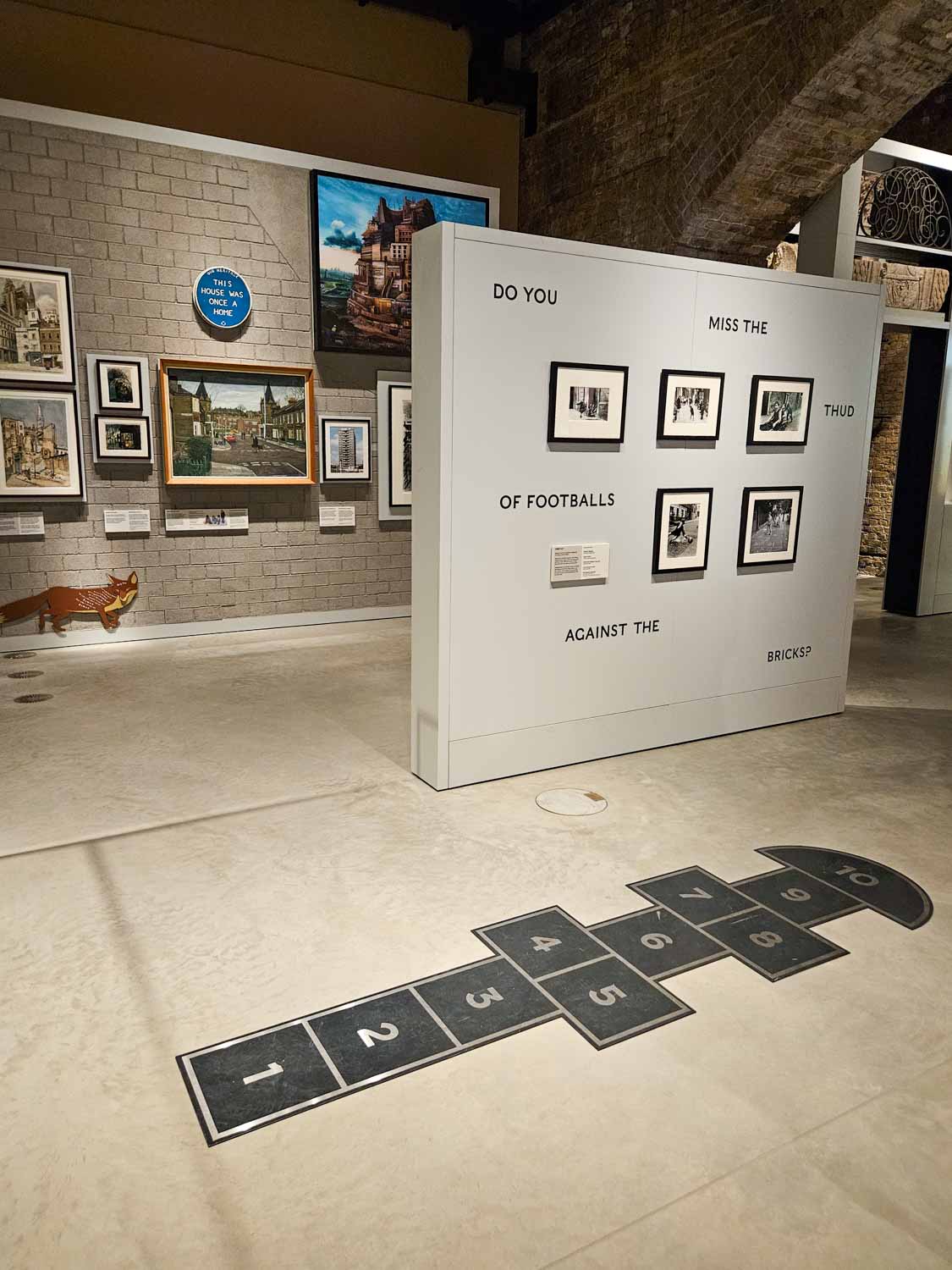
Other areas look at gathering places, from medieval Cheapside (including fragments of the Eleanor Cross erected by Edward I) to St Paul’s churchyard, a centre for political speech and dissent, and Trafalgar Square, where both celebrations and protests take place today.
Elsewhere, you can look at London’s boundaries – once easy to tell where the city began and ended, with physical walls or turnpikes demanding tolls, it’s far less easy today as the city sprawls ever further.
Tips for visiting the London Museum with kids
With so much to see and do at the London Museum with kids, here are a few ways to get the most out of your visit.
- Don’t try to cram too much in – I spent three hours there for the opening preview, and felt like I could easily have spent another three. It’s free to visit, so try to focus on one or two areas or time periods and enjoy that on each visit.
- Look out for the quirky details – you’ll spot lots of nods to the building’s former history as a meat market, from photos of workers to replica carcasses hanging in a corner.
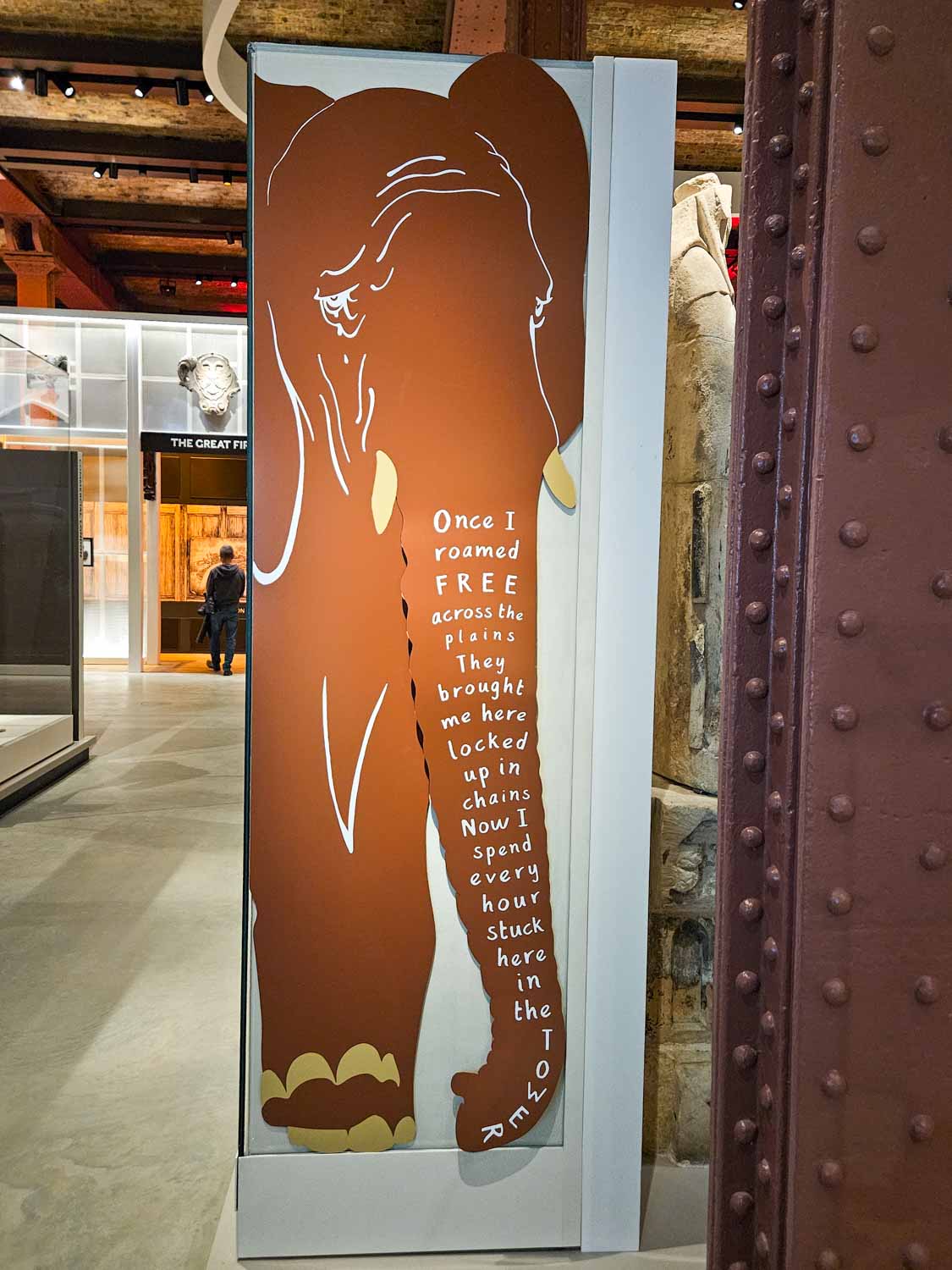
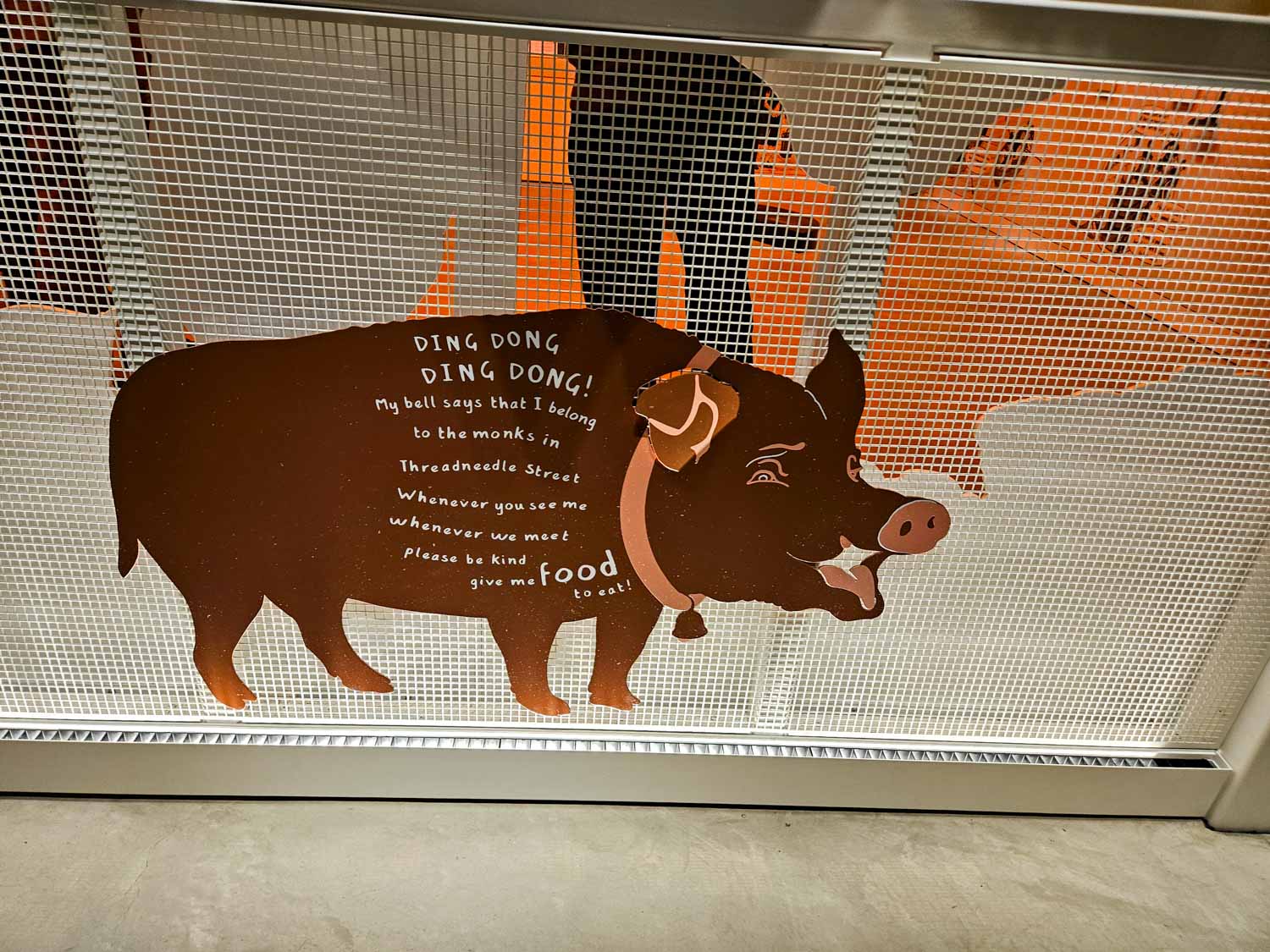
- Spot the animals – there are reminders everywhere about the animals who live or have lived in London, from the elephant kept in the tower and the king’s white horse in a painting, to monastery pigs who would forage in the streets and today’s urban foxes.
- Don’t miss a view of the train – the Thameslink tracks run right alongside the museum building, so you can look through a window and see the carriages pass. Apparently the passengers can’t spot you!

- Save time for a return visit – not only to fit in the displays you didn’t have time for the first time, but to come back and see the next area due to open in 2028 in the old poultry market next door.
London Museum with kids: Need to know
Entry to the London Museum is free – it’s a very good plan to book tickets if you’re visiting shortly after opening on November 28, with the first days booked in advance and December weekends going quickly.

Walk-ups are fine unless the museum is at capacity – once the initial excitement dies down, you shouldn’t have too much trouble strolling in.
Food, drink & facilities
There are several places to eat at the museum including The Temperance Cocoa Rooms, set inside the original 19th century Cocoa Rooms which opened as part of the temperance movement. There’s no alcohol here and it even keeps similar opening hours, but you can get several types of hot chocolate along with other hot drinks, soups and sandwiches.
If you want something fancier, Clerks has proper meals, often with a London twist. Fancy trying eels or beef and oyster pie? Here’s where to come. There will also be roasts on the menu but this one’s better with older kids or for special occasions. There’s even a cocktail bar, Bartholomew’s, downstairs.

The museum has toilets on both floors, including baby changing and accessible toilets (and some rather fun floral decorations), plus lockers (paid) on the ground floor. There’s also step-free access througout the museum.
The Contemplation Room is a quieter space for breastfeeding, as well as those with sensory needs.
How to get to the London Museum
The London Museum’s Smithfield site has multiple entrances, the main ones on Charterhouse and West Smithfield Streets.
The closest tube is Farringdon, which is less than five minutes walk from the London Museum – the Circle, Hammersmith & City, and Metropolitan lines all stop here, along with the Elizabeth Line and Thameslink trains (which connects Greenwich, London Bridge and St Pancras among other stops).
Alternatively, St Paul’s is less than 10 minutes away on the Central Line, while there are also a string of buses stopping nearby.
Images copyright MummyTravels
LIKED THIS? SIGN UP FOR MY EMAIL NEWSLETTER