19 things you didn’t know about Cape Verde
The usual reaction after I mention our trip to Cape Verde is either polite bafflement – or an enthusiastic, ‘I’ve been wondering about a trip there’. Usually followed by, ‘Where exactly is it again?’
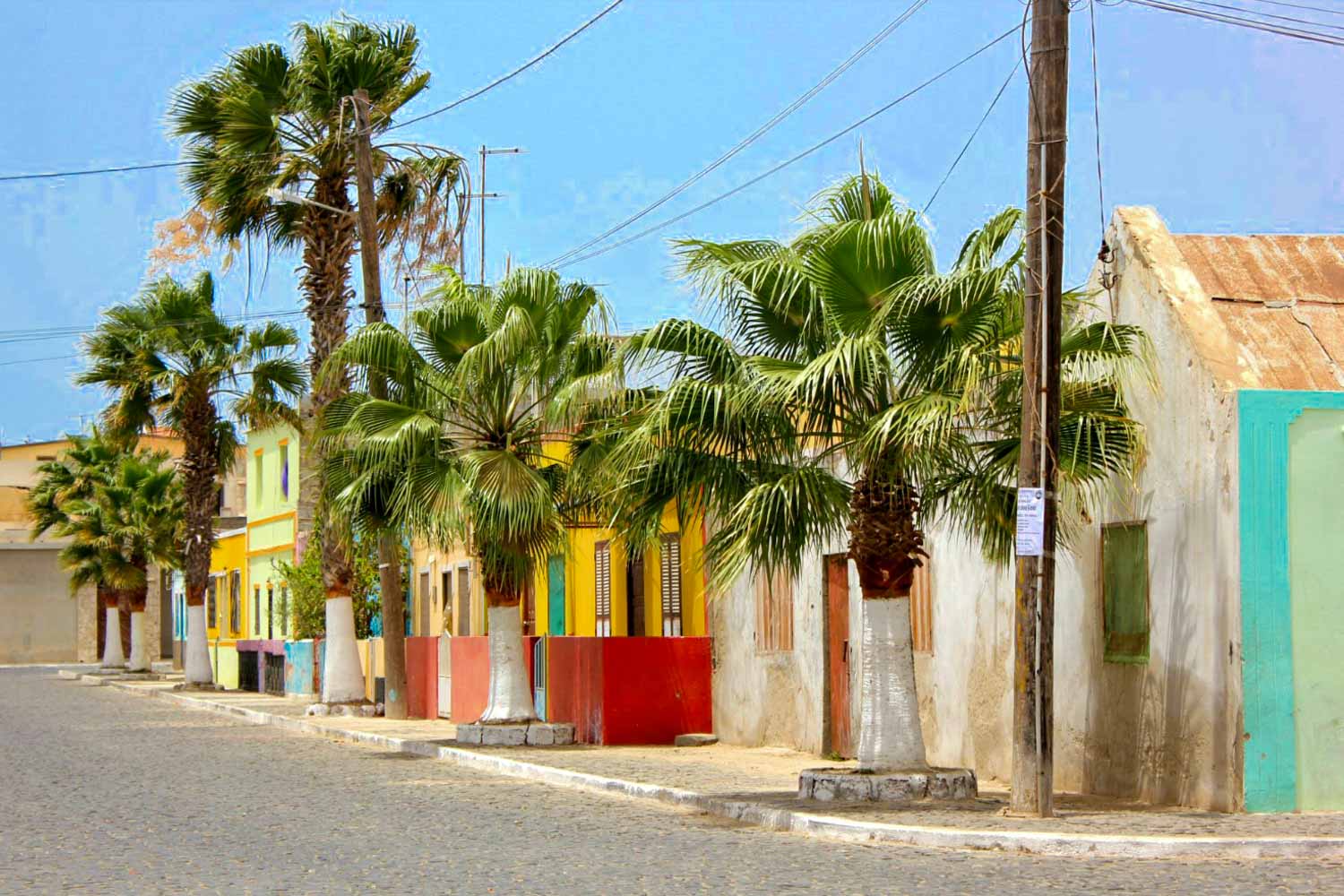
So I thought I’d draw together a few facts, figures, statistics, quirky trivia and essential bits of knowledge to have before you travel – my top 19 Cape Verde things to know.
Because with sun, sand, sea, some lovely places to stay, and quite a bit to discover, why wouldn’t you want to travel there?
1. There are 10 islands
Cape Verde (or Cabo Verde) is made up of 10 islands – nine are inhabited, one is not – as well as a string of islets off the coast of Africa.
The entire land area is only slightly larger than Suffolk.
2. The closest land is in West Africa
The islands are 300 miles off the west coast of Africa, to be precise, sitting between the Tropic of Capricorn and the Equator.
Closest to Senegal and The Gambia, they’re named after Cap Vert in Senegal, the westernmost point of continental Africa.
Keep going west and you’ll hit the Caribbean – Dominica or Martinique.

3. The islands were once Portuguese
Cape Verde was a Portuguese colony until 1975 – first discovered by them in 1456.
It’s now an independent republic but Portuguese is still the official language. Creole is widely spoken, although in the tourist centres you’ll find plenty of people speak English too.
4. They’re not like the European Atlantic islands
Despite the Portuguese influences, there’s definitely far more of an African feel than the rest of Macaronesia.
The Canaries (around 1,000 miles north) have their own cultural heritage but are still distinctly Spanish, the Azores have their own volcanic side but again are very European. Don’t expect that here.
5. You don’t need a visa
You no longer need a visa if you’re travelling from the UK, for stays of up to 30 days – as of January 2019, British Citizens can enter visa-free.
However, you do need to fill in a traveller entry form at least five days before you arrive, including an airport security fee (TSA) of 31 Euros. For now, you can still pay in case at passport control, but it’s recommended to pay in advance online with the Cape Verde authorities on the EASE website – not least to speed up immigration.
The fee is often included in the cost of a package if you’re booking with a tour operator.
As you might expect from the name, this charge only applies if you’re arriving by air. Although for most people visiting Cape Verde with kids, that’s pretty likely…
6. You can’t get currency before you arrive
The local currency are escudos – it’s illegal to take this out of the country (and you can’t buy it elsewhere and bring it in either).
However the Euro is widely used across the islands, so it’s well worth bringing some Euros in cash.
7. Sal is the original tourist destination
Sal was the first to open up to tourism, with the crews of the first international flights from South Africa to Germany stopping over there in the late 60s.
Check out my review of Melia Dunas where we stayed on Sal
8. The eastern islands are sandy
Sal, Boa Vista and Maio are the easternmost three and have similar climates and landscapes – flat, dry, with golden sand blown in from the Sahara.
Boa Vista has 55km of beach, while Maio has far less tourism than the others.

9. Fogo is the volcanic one
Fogo is for thrill-seekers with an active volcano that erupts anywhere between every few years and every century – last in 1995 and 2014.
The rich black volcanic soil that results makes it great for growing grapes and the islanders have made wine for over a century (between eruptions), while coffee also grows here. It’s not unusual to see lighter skinned, blue or green-eyed islanders here.
10. Santiago is biggest
Santiago is the biggest of the islands, around twice the size of the Isle of Wight, and is home to Cape Verde’s capital Praia. Each of the islands has its own mayor and some their own capital ‘city’.
11. Sao Nicolau is the traditional one
Sao Nicolau is known as one of the most traditional islands, home to the oldest seminary in West Africa.
12. Santa Luzia is smallest
Santa Luzia is the group’s smallest island and also uninhabited for almost all of the past two centuries. Today it’s a nature reserve, and home to a lizard found only here.
13. Santo Antao is greenest
Santo Antao is the greenest of the island group, lush and mountainous, where sugar cane is grown to make the local ‘grogue’ along with plenty of fruit.
It also has its own Jewish heritage since the 15th century thanks to Portuguese and later Moroccan Jews fleeing persecution. Today there are no practising Jews on the island, although this history is remembered in the name of the village Sinagoga.

14. Sao Vicente is the cultural one
Sao Vicente is the cultural hub, home to some of the island’s greatest musicians and writers, especially in Mindelo – the perfect place to go if you want to discover Cape Verdean music and art, as well as colonial architecture.
15. Brava is the smallest inhabited one
Brava is known as the island of flowers, the smallest inhabited island in the group with dramatic mountainous scenery.
16. Cotton was grown here
Cotton was once cultivated on the islands, and you can still see plants with their fluffy seed casings and yellow flowers by the side of the road in Sal.
17. They’re packed with sharks and turtles
A total of 15 species of shark live in the waters around the island, including lemon sharks which come to the warmer shallow waters off Sal – if it’s quiet and you’re lucky, you can get within wading distance of them.
You also find five species of turtle, with protected loggerhead turtles nesting on Sal, Boa Vista and Santiago.
18. Kite surfers love it
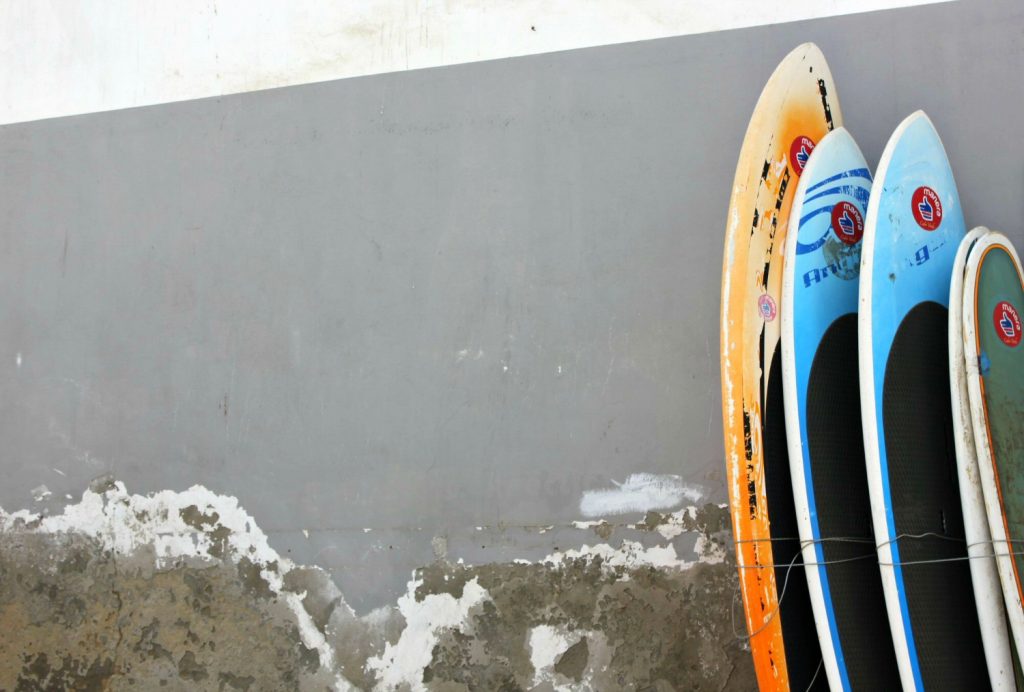
The strong regular winds which blow make this a haven for kite surfers too, especially on the beaches of Sal and Boa Vista, with the world championships held here.
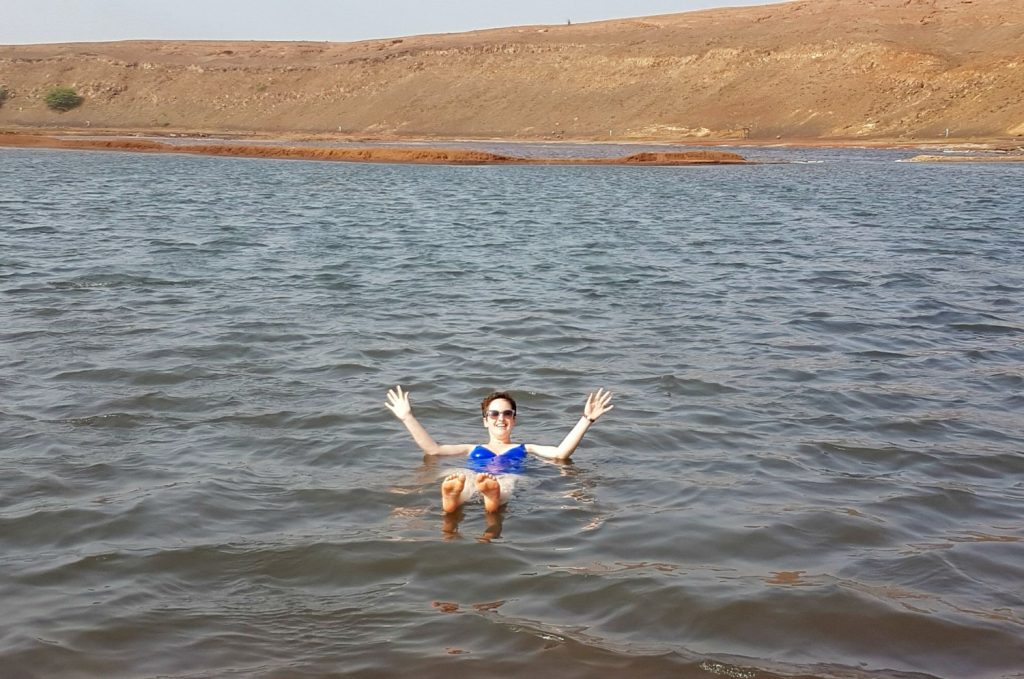
19. Sal’s name comes from salt
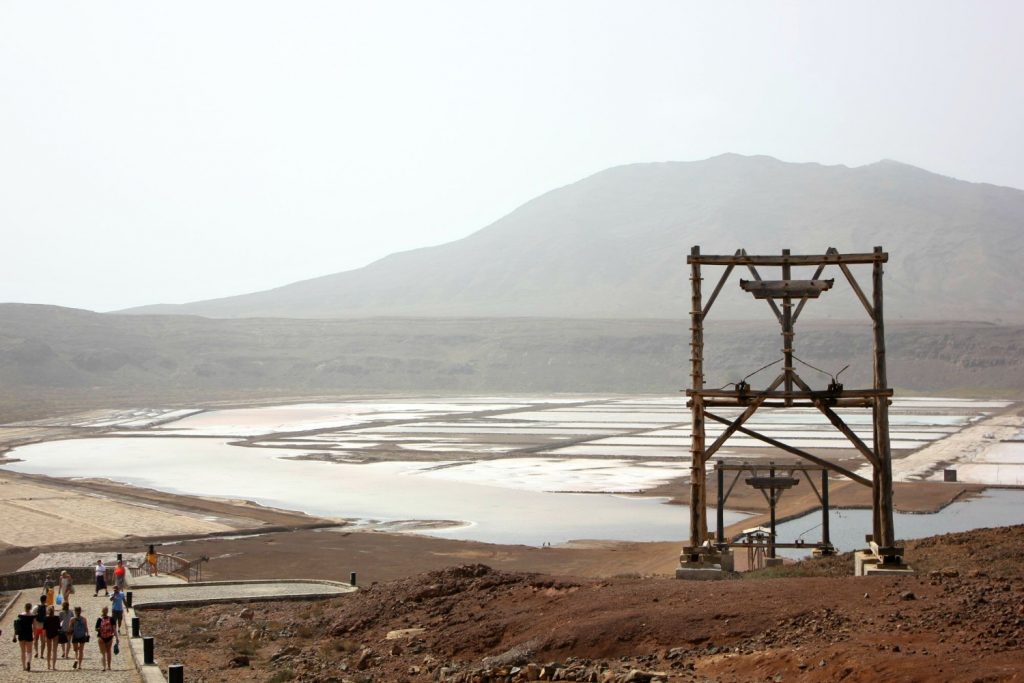
Sal gets its name from the salt lake in a volcanic crater where the water is 26 times saltier than the sea. Pedra de Lume once supplied salt to Brazil but now it’s just for the island, taking three months for the spring water to evaporate in the salt pans.
In the meantime, you can float in one of the pools, which promises all kinds of benefits for your skin too.
Click here for more tips on visiting Cape Verde with kids as well as things to do on Sal.
*first published 2017, updated 2025*
PIN FOR LATER: THINGS TO KNOW ABOUT CAPE VERDE
Images copyright MummyTravels
LIKED THIS? SIGN UP FOR MY EMAIL NEWSLETTER
Pinned to my bucket list, thank you 🙂 I knew it was off Africa but until recently I wasn’t truly sure where. The islands look truly beautiful. I really hope to visit one day and your post will be a great help. Yikes to needing a visa!
Thanks! And I did have a brief panic about the visa, but it was really easy to sort – in fact the visa queue was shorter than normal immigration.
Cape Verde sounds so cool. I’ll admit, I hadn’t even heard of it before now. The islands sounds like they are so full of interesting culture. Thanks for sharing.
There’s certainly a lot to discover in a relatively small area.
We are traveling in once week to Sal! Researching more found your post! Thank you now I am more excited that I was before. Reading. Thank youuuuuu
Have an amazing time! And thanks for reading – so glad it’s got you even more excited for the trip 🙂
I found this really useful and interesting, Cathy. I knew where Cape Verde was but very little else – I like the comparison you made with the size of Suffolk and the descriptions of the different islands. Your colourful photos make it look so appealing. I shall definitely be adding it to my travel wish lists 🙂
Thanks! I find it very hard to visualise area if someone just gives me the figures, so I do like a comparison (Wales is always handy but far too big this time 😉 )
Hands up, I’m one of the people who had no idea where Cape Verde was. Geography has never been my strong point! Thanks for the whistle-stop factual tour!
What you need is a new house with lots of blank walls for maps 😉 Actually my geography is particularly shaky for Africa unless I’ve visited: for some reason we never seemed to learn where countries actually were at school.
I really really would like to visit Cape Verde, have often thought about going with my little ones. An interesting read, and those waves are something else! … We all know how much I love the sea. Thanks for sharing x
Thanks – the waves were hugely impressive. Apparently they’re not normally quite so dramatic by April but they certainly put on a show for us.
Love this factual tour of the Cape Verde islands. I have visited for only a very short period of time, for a one day cruise ship visit, I was on an excursion that visited the fish market and watched local dancers performing on the beach! I clearly need to return to experience more of the island;)
You do! You can see quite a bit in one day but it’s a lovely destination
Like others I have to admit that, until I heard you were going, I didn’t know where it was either! My first guess would have been America. I love the mixture of cultures that’s come through in your social media posts about this place. It looks stunning, and it’s launched itself from nowhere, right into my bucket list…..
Wonderful – I’m glad I’ve tempted you. And the different cultural influences surprised me a bit, such an unusual mix.
Thanks for sharing – I have not heard of a lemon shark before! Off to google now. My mum visited Cape Verde a few years ago and speaks very highly of the place.
It was such a great place for a trip – had a surprising background knowledge of lemon sharks from my daughter’s love of Octonauts 🙂
A really interesting read! I’d heard of Cape Verde, and actually did know where it was too – but nothing else! The lemon sharks sound fab – did you get to within wading distance??? ps love the photos
Thanks! We waded a way out but they were keeping their distance that day so a few flashes of fun and glimpse underwater
Thank you so much I’ve been planning a trip with my family and this really helps as resercag time as mum of a infant not easy. So amazing you gave me the info need and inspiration l..I can’t wait ! Xxx
I’m so glad it was helpful – and it’s such a fab place to visit, I hope you have an amazing time!
Thank you for sharing the beautiful of my country
A lot people don’t know where’s Cape Verde
I am glad to see that some of the people that visited sharing their experience… I can’t wait to bring my husband he never visit my country… I am from Praia Santiago island, but my favorite island is Sal
My pleasure – we had such a great visit, and I’d love to come back to explore more of the islands (or just relax in the sun again!)
Can you please tell me what the weather is like in September, (love the blog).
Glad you’re enjoying the blog 🙂 September will still be hot in Cape Verde and should be less windy than spring, but it’s the start of the rainy season so you’ll have more cloudy and rainy days than the rest of the year.