A Langkawi tour with kids – venturing into the mangroves
The water ripples gently, cool and green, thick mangroves lining the banks – and in the distance, the glimmer of gold where tiny coves line the sea stretching out beyond Malaysian waters to Thailand.

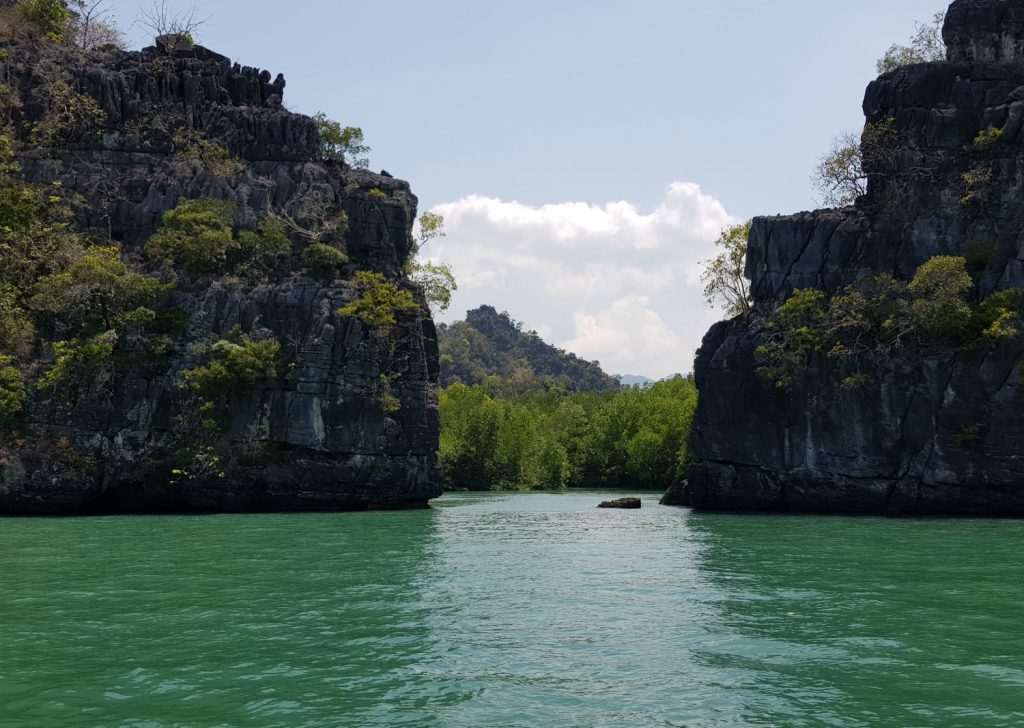
Above the waves jut the chiselled rock shapes of the limestone karst cliffs, most rounded off by time and lushly blanketed in green, even the very tops dotted with persistent trees.
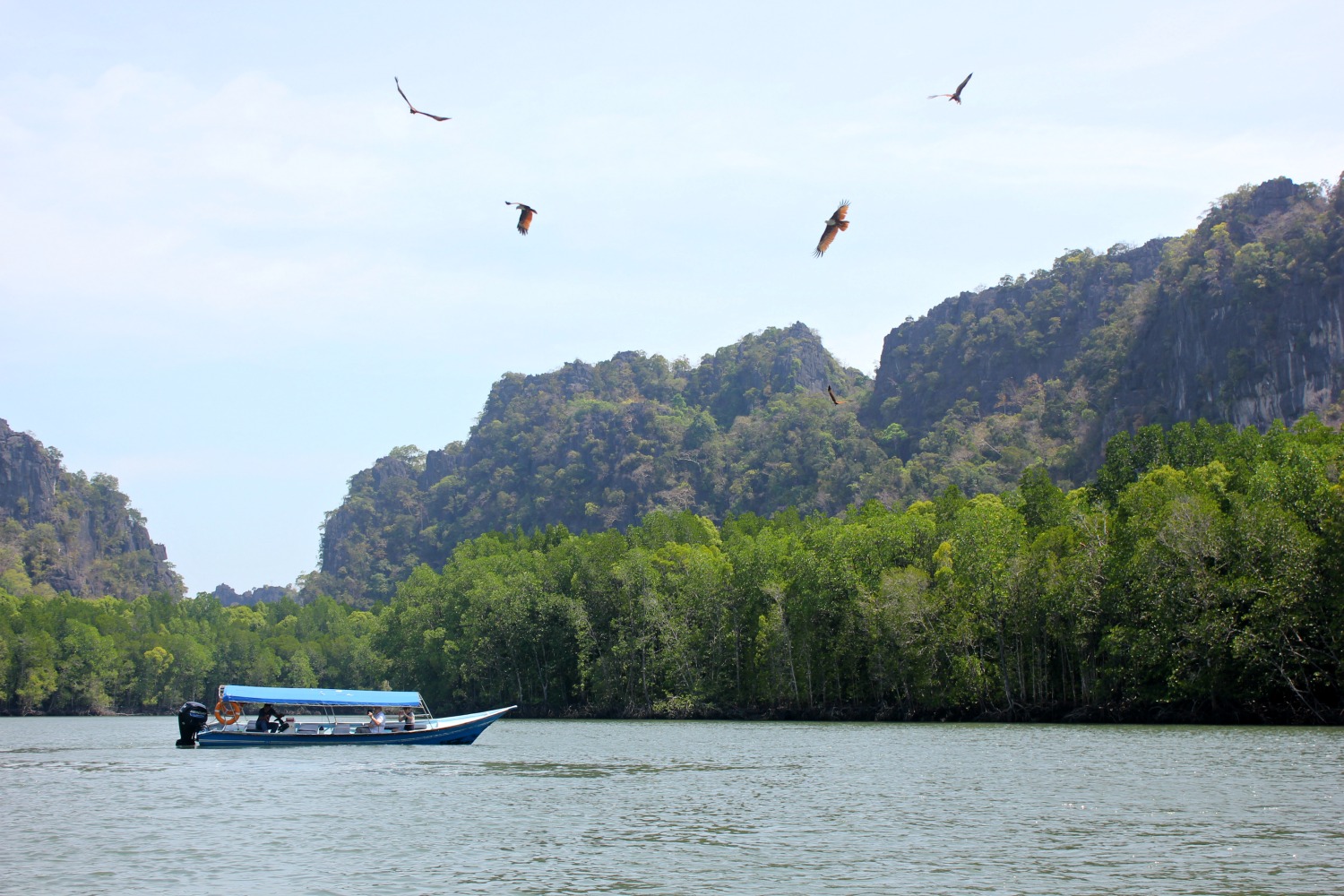
Overhead eagles swoop, Brahminy kites and white bellied sea eagles, soaring gracefully before plummeting lethally down to the surface to pounce on their food.
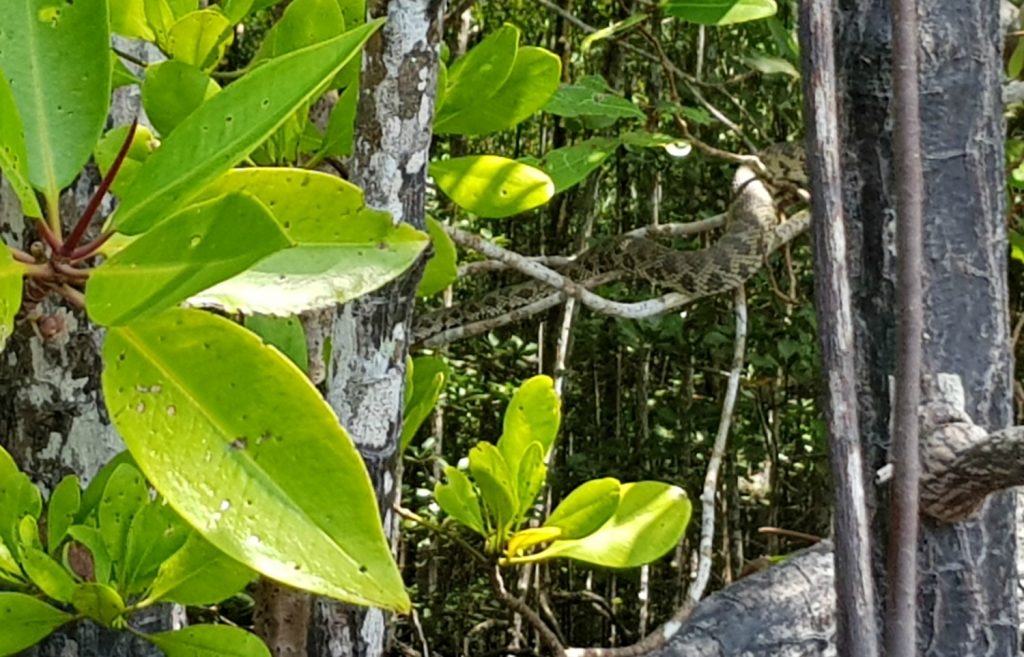
In the thickets, monitor lizards bask before sliding silently into the water, and a mangrove pit viper entwines itself around a branch. Out to sea, if you’re lucky, pods of dolphins frolic.
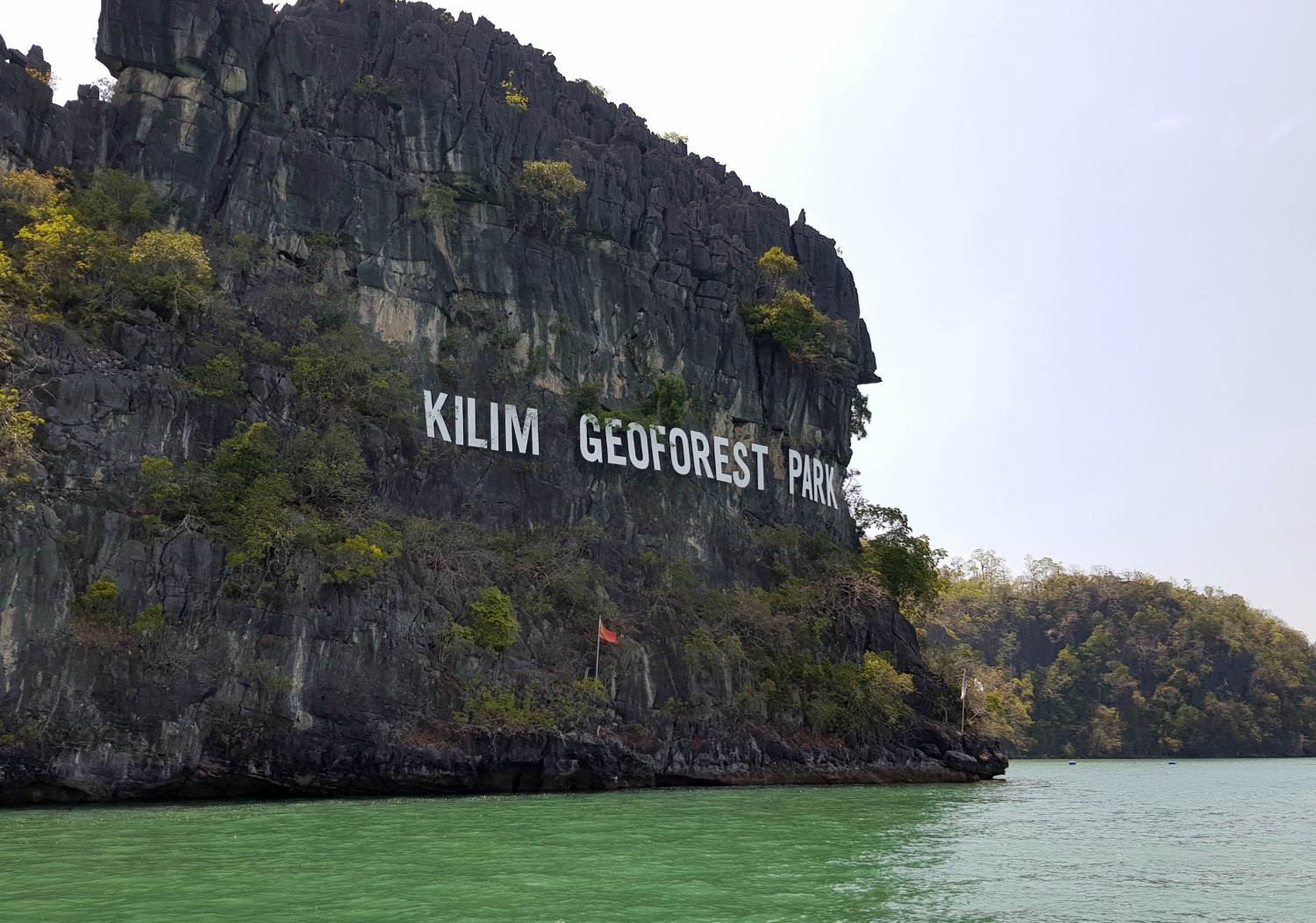
It’s hard to tear yourself away from Langkawi’s enticing beaches and hotels, but one of the highlights of a stay on the island is heading into the rivers and mangroves, or taking a tour out to sea, to discover the spectacular scenery and wildlife, especially at Kilim Geo Park.
Tempted by how much there was to discover, we took not one but two different tours – both with Dev’s Adventure Tours who I found after searching for an ethical Langkawi tour with kids.
Not only did they have some fantastic itineraries and smaller groups, they were happy to advise on which would work best with a five-year-old – and unlike many other Langkawi mangrove tours, they don’t feed the eagles.
Choosing a Langkawi tour with kids
The island itself is named for its eagles, the reddish brown eagles also known as Brahminy kites. Endangered after the building of the island’s airport several decades ago, local fishermen began to feed them anchovies to help the local population survive.
Before long the cost of the fish meant they swapped to chicken skin and scraps which continued to draw the eagles – and the tourists to see them.
But these gave the birds little of the nutrition they needed to survive or for healthy eggs. Dependent on food thrown to them, a plan to stop outright meant the eagles began to starve, having forgotten how to fend for themselves.
For now, there’s a compromise: a limited amount of food given to the birds to keep them alive but still encouraging them to hunt as they would naturally, with the aim of phasing the practice out entirely.
On our tour, we saw other boats feeding and the graceful, regal birds of prey gliding and plunging through the air towards it, but I’m glad we stuck with a Langkawi tour that isn’t perpetuating the problem.
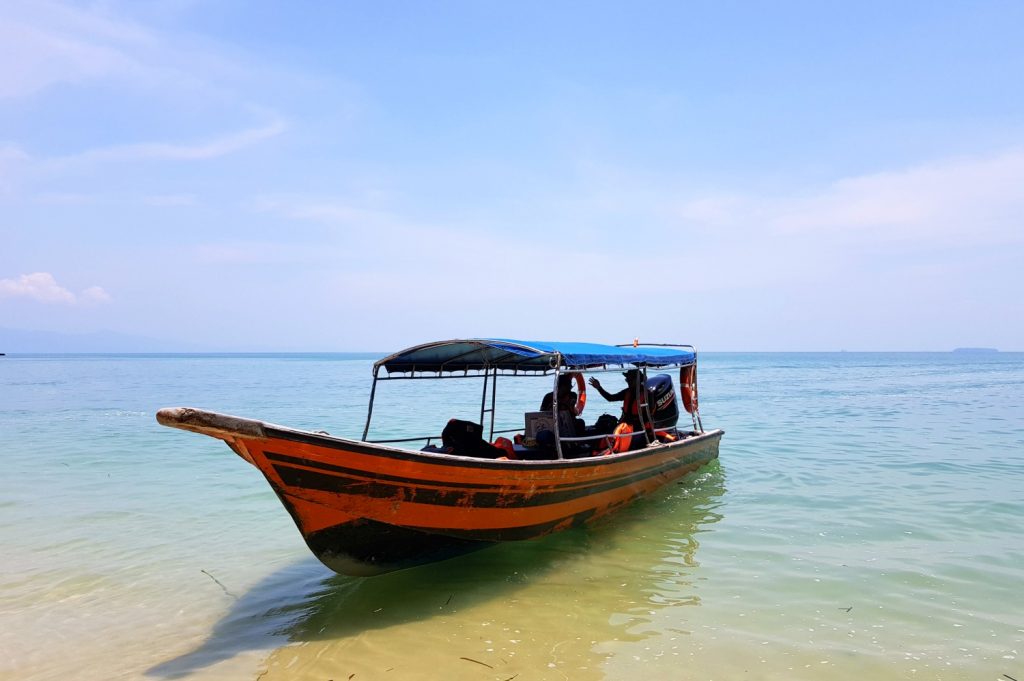
It’s not the only reason I’m glad we chose Dev’s Adventure Tours. With only around half a dozen people in the boat, plus our knowledgeable guide Chiro, it’s a great way to learn about the wildlife from an expert, to get up close rather than being shepherded around en masse.
Heading into the mangroves: our first Langkawi tour with kids
The monkey sat sternly, a yellow-eyed furry sentry who had no intention of snacks sneaking past him. Happily we’d been warned about the simian inhabitants living near Langkawi’s famous bat cave – not simply not to feed them, but not to take any bags or items which a monkey might decide was edible.
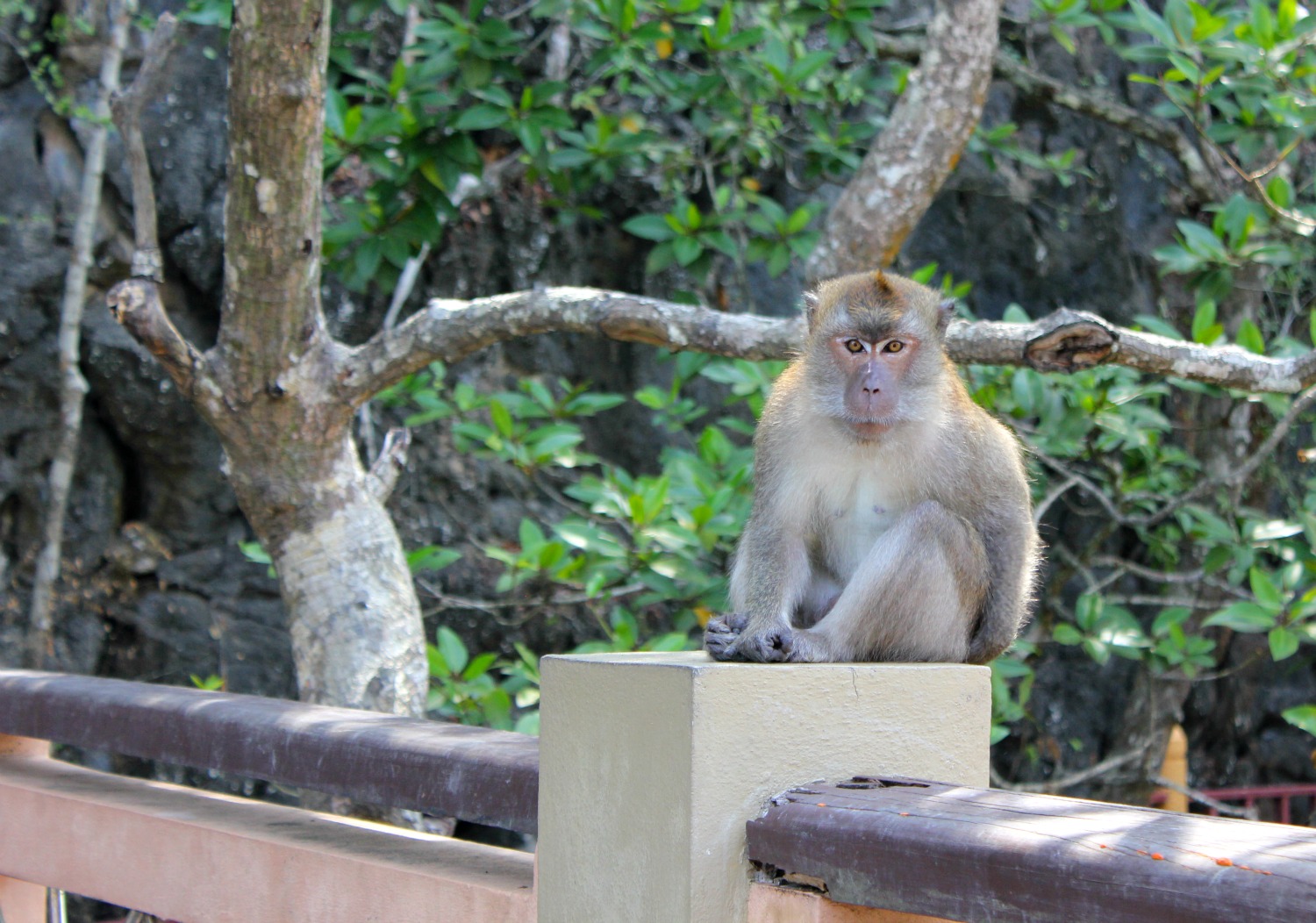
With a look of disgust, he strolled nonchalantly over to another vantage point, totally ignoring the stuffed tiger toy at the entrance – designed to prevent the alpha monkey from venturing too close to the dock.
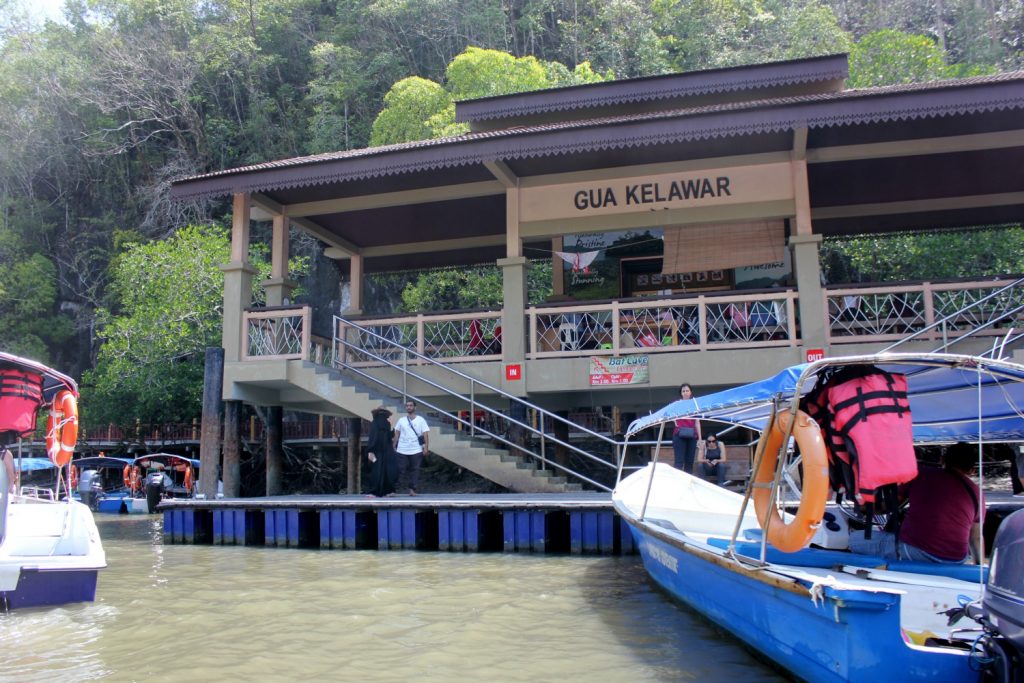
We headed into Gua Kelawar to discover the site’s other smaller furry occupants.
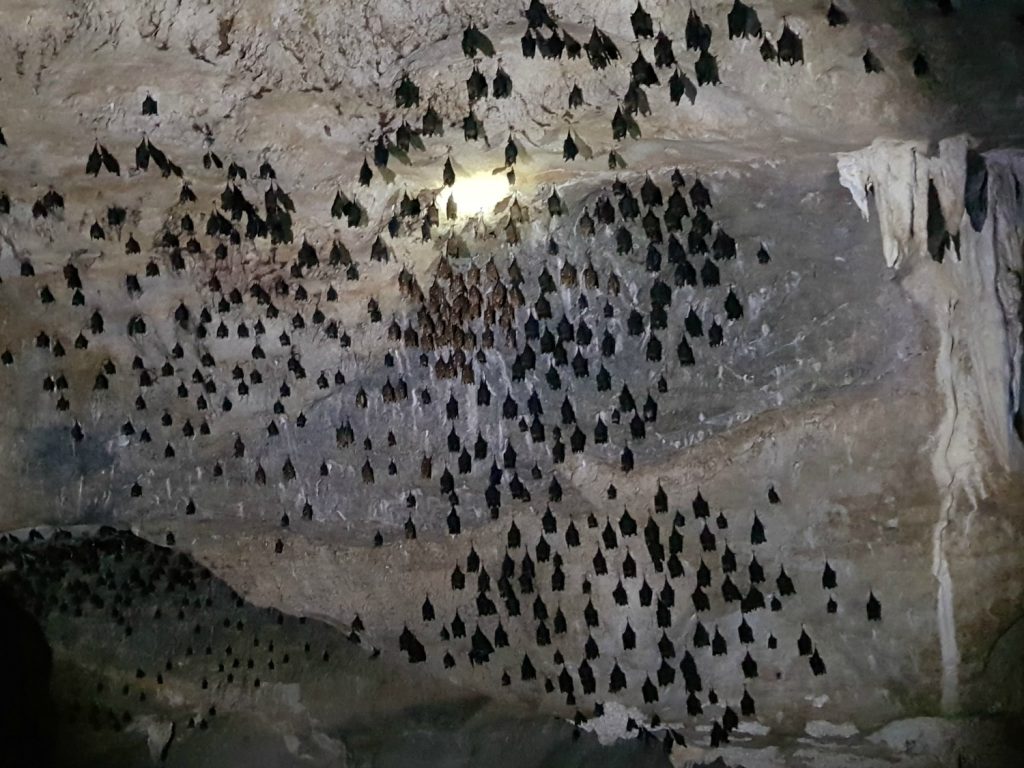
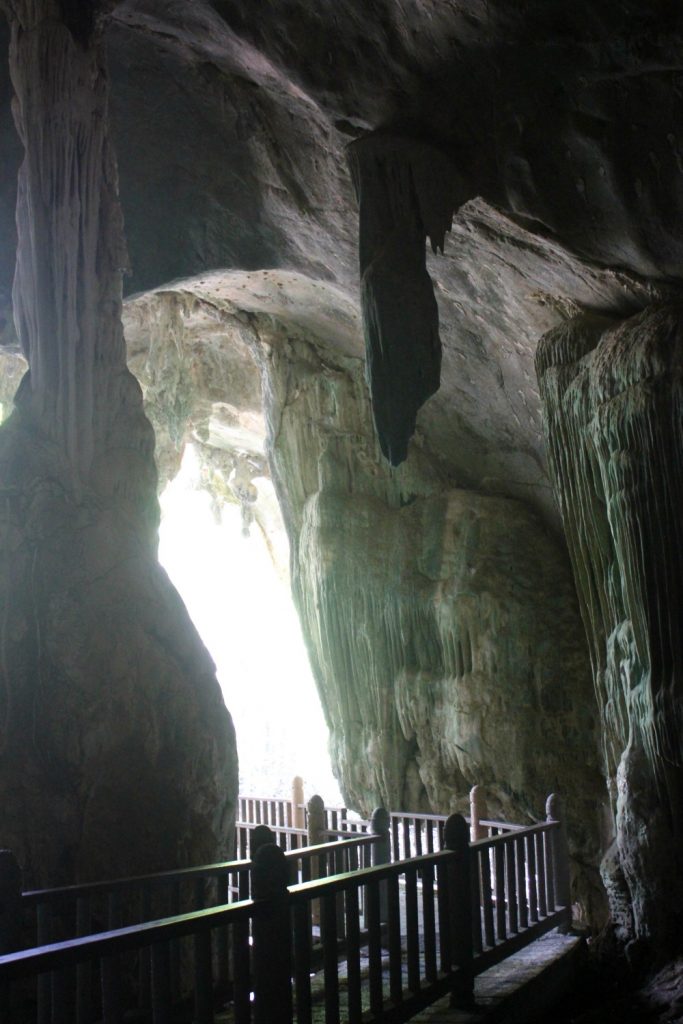
Our tour had started with a short boat ride to the cave, home to around 1,000 bats. Wandering along the wooden walkway, small sand crabs scuttled nervously across the mud flats beneath by the mangrove roots.
Then inside the cavern, more of a long tunnel, whose walls are dotted with ancient oyster shells, carbon dated to show they’re around 5,000 years old. Stalactites and stalacmites grow slowly but inexorably year on year from the floor and roof.
And all over the walls, looking like deeper shadows in the gloom hung the bats, four different species including fruit bats. With the light of our guide’s torch swinging slowly across, dim enough not to blind them but illuminating in the dark of the cave, the dark shapes seemed endless.
Bat upon bat upon bat, mostly sleeping, punctuated by the occasional squeak or rustle of wings.
We stared up open-mouthed. Or rather, very carefully close-mouthed – the guano on the floor reminding us that when a bat’s got to go, it’s got to go… whoever is underneath.
Past odd rock formations, spotting fantastical shapes and rock animals, on to a second cave of bats, before emerging into the sunlight and a farewell parade of female monkeys.
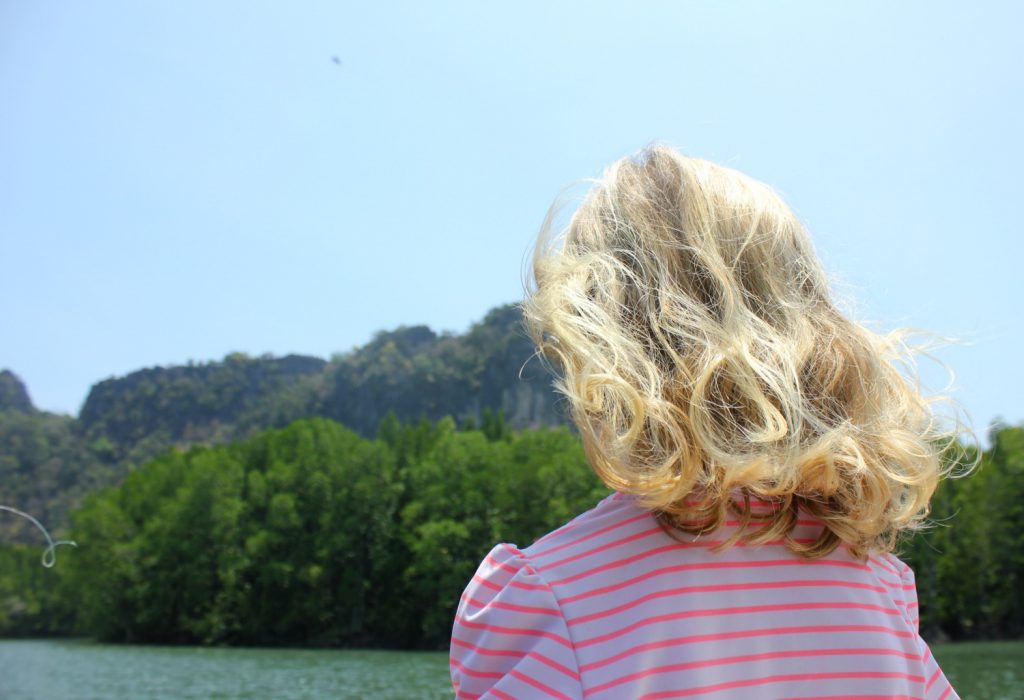
Then back to the river, winding between the quiet mangroves. More energetic kayakers paddled past, heading into the thickets of roots through narrow waterways too small for even our little boat.
Overhead the eagles circled, drawn by the sounds of the motors and the knowledge this means food.
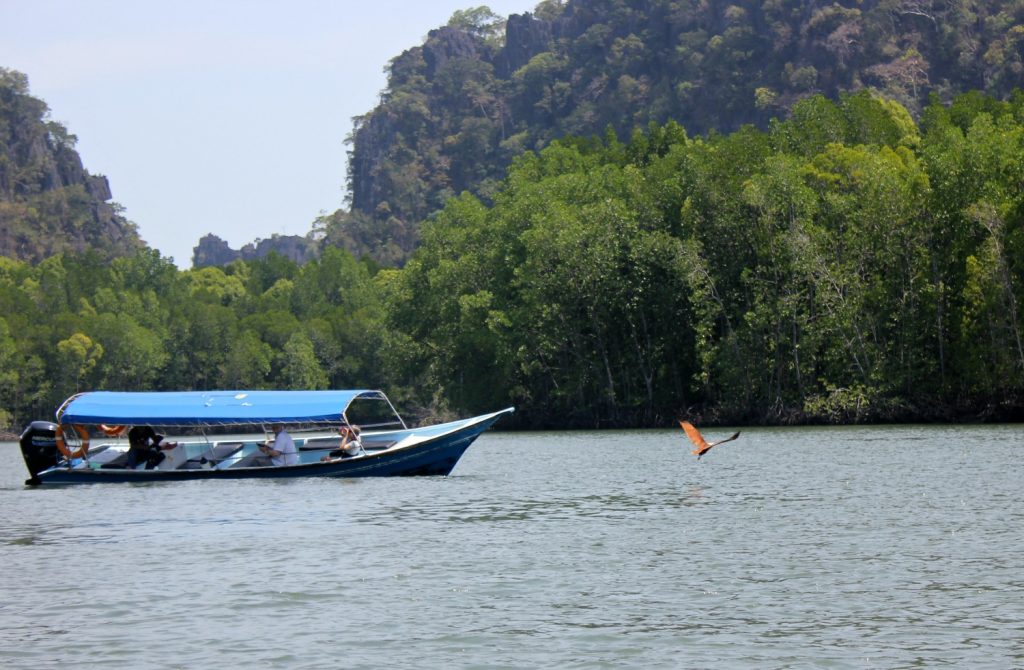
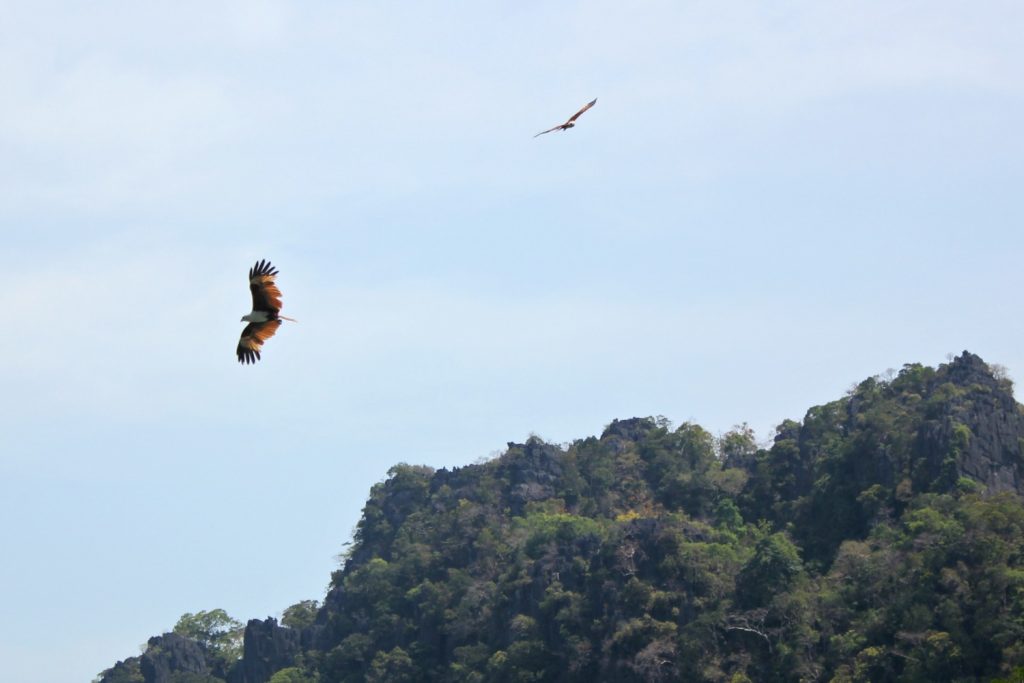

With their nests in the mangroves themselves, or high in the sea cliffs, the wheeling brown dots came closer and closer to the water, gracefully plucking the food with talons and beak before spiralling high once more into the air.
Cruising quietly, there is more to see than these star attractions: camouflaged by its pattern of scales, the island’s second most deadly snake – a mangrove pit viper – had wrapped itself around a branch, lazily soaking up some heat before slithering casually away.
A basking monitor lizard cast a quick glance in our direction and slipped quickly from its rock into the water, swimming off to hide at our approach.
And all along the waterside, the twisted shapes of the mangroves, their pale roots like spindly fingers stretched down to the mud and heavy green seeds ready to drop, floating with the current towards a suitable place to grow, their pointed end designed to anchor it firmly.
Plucking one from the water, Chiro cracked it open to reveal the fuzzy interior hidden under the tough green shell.
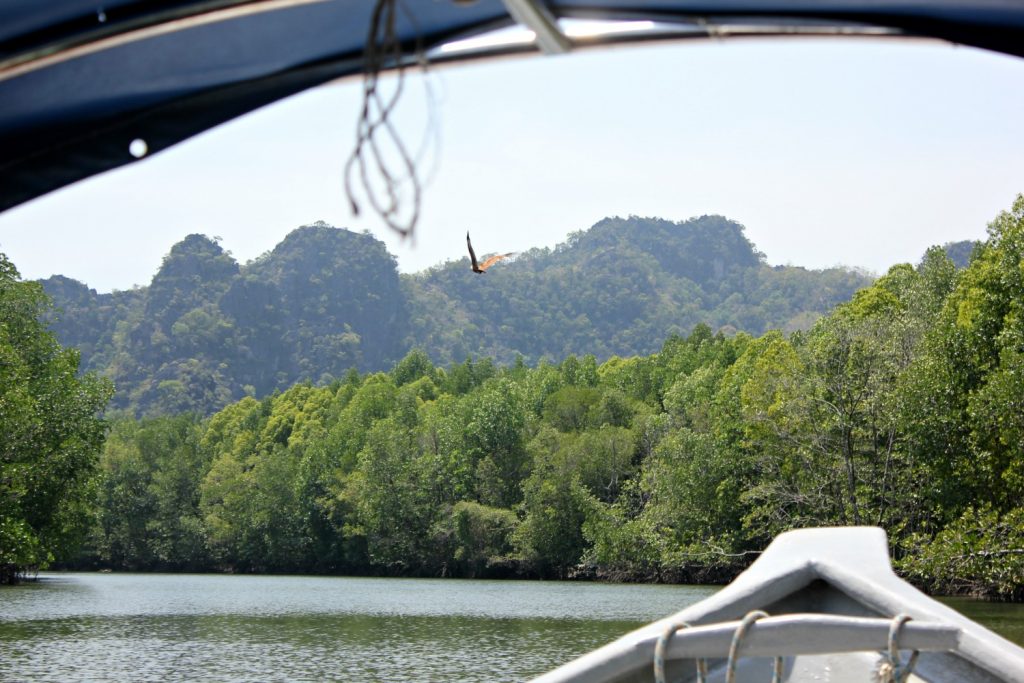
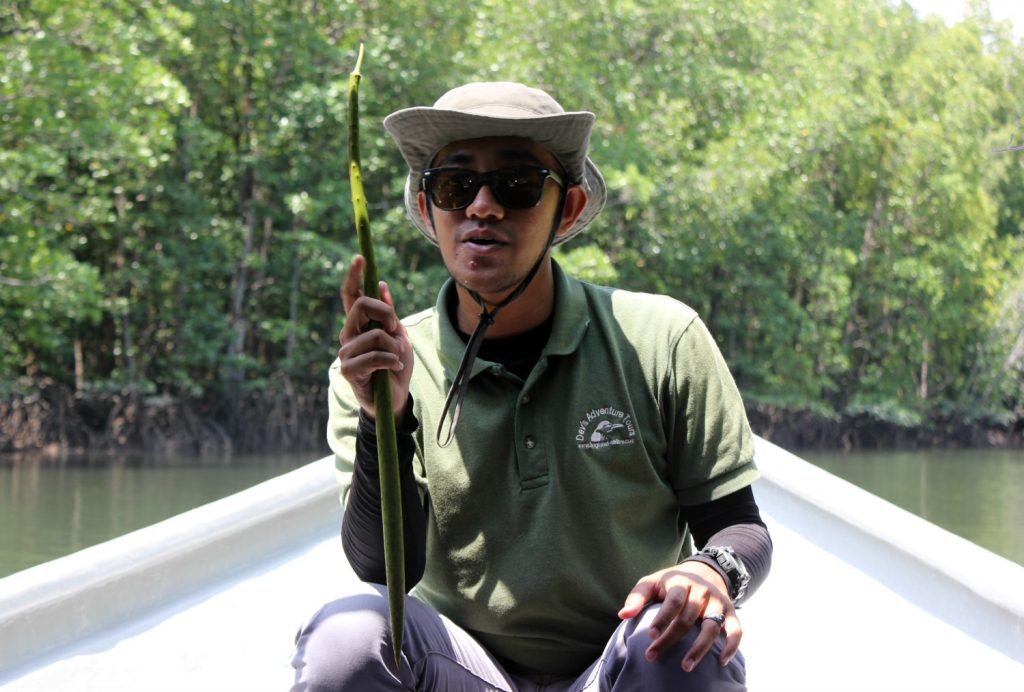
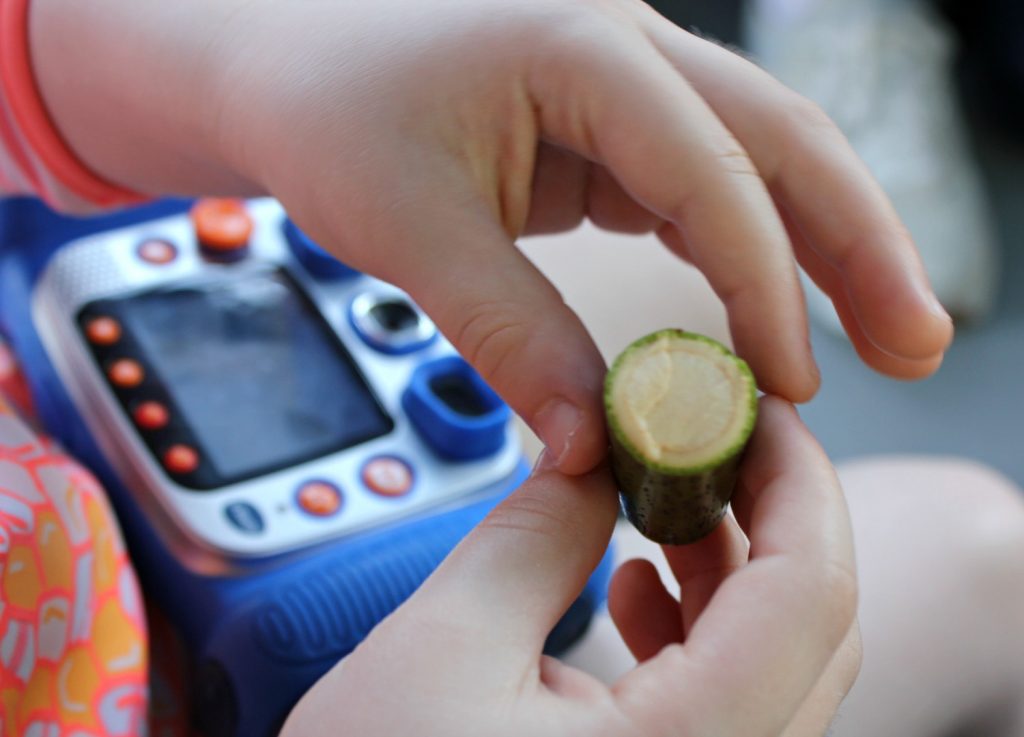
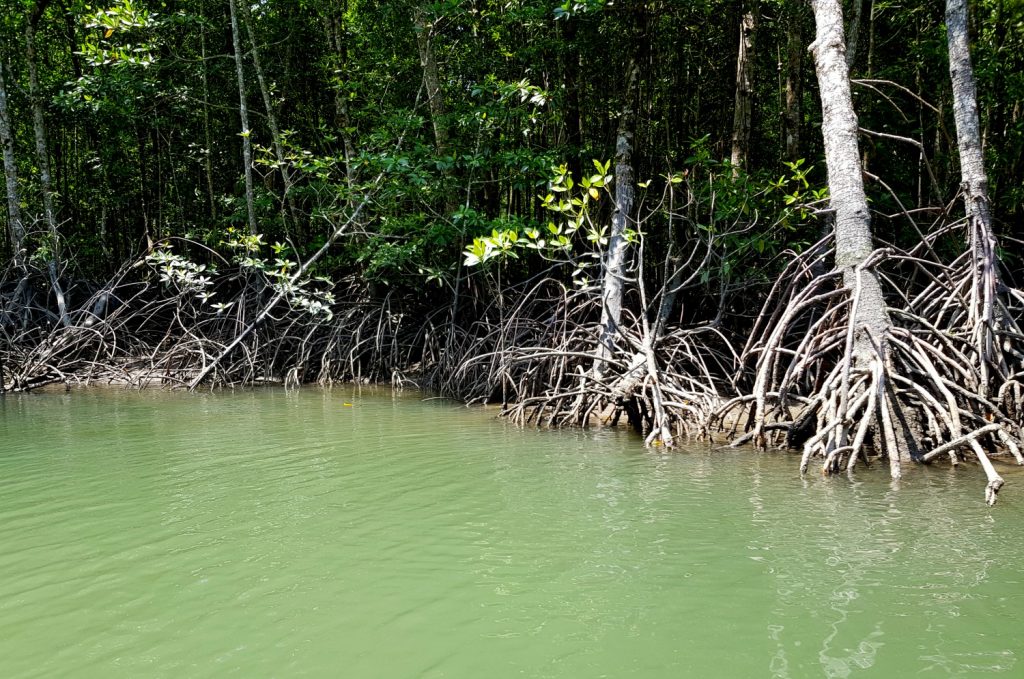
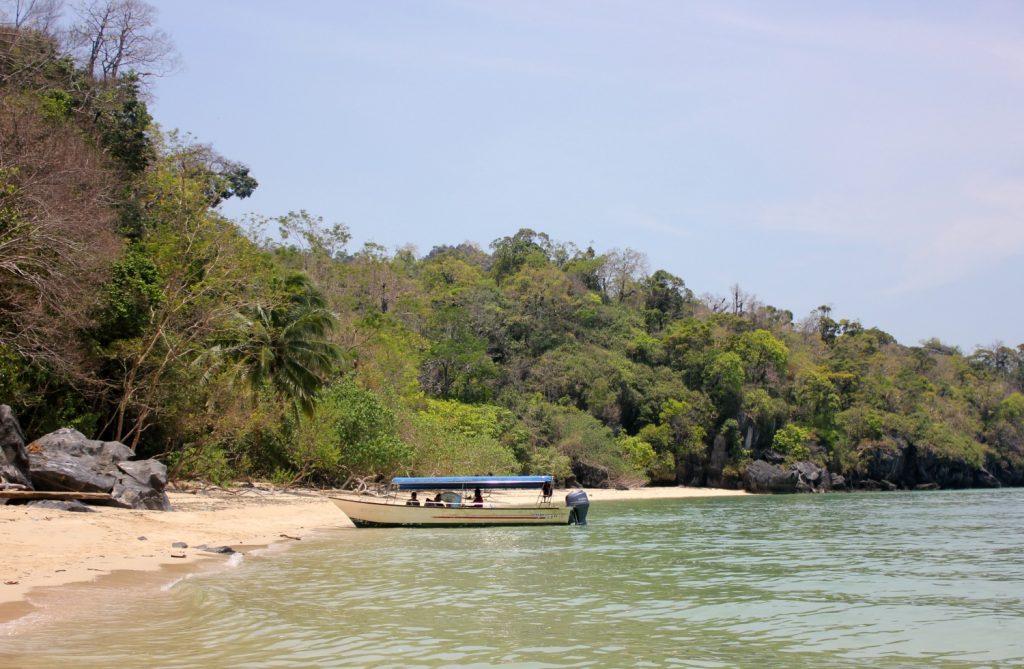
Then ahead of us, the dramatic entrance to open water – the Andaman Sea and some of the nearby Thai islands, as we sped now across the waves past the karst scenery, towering above the clear water and tiny golden beaches.
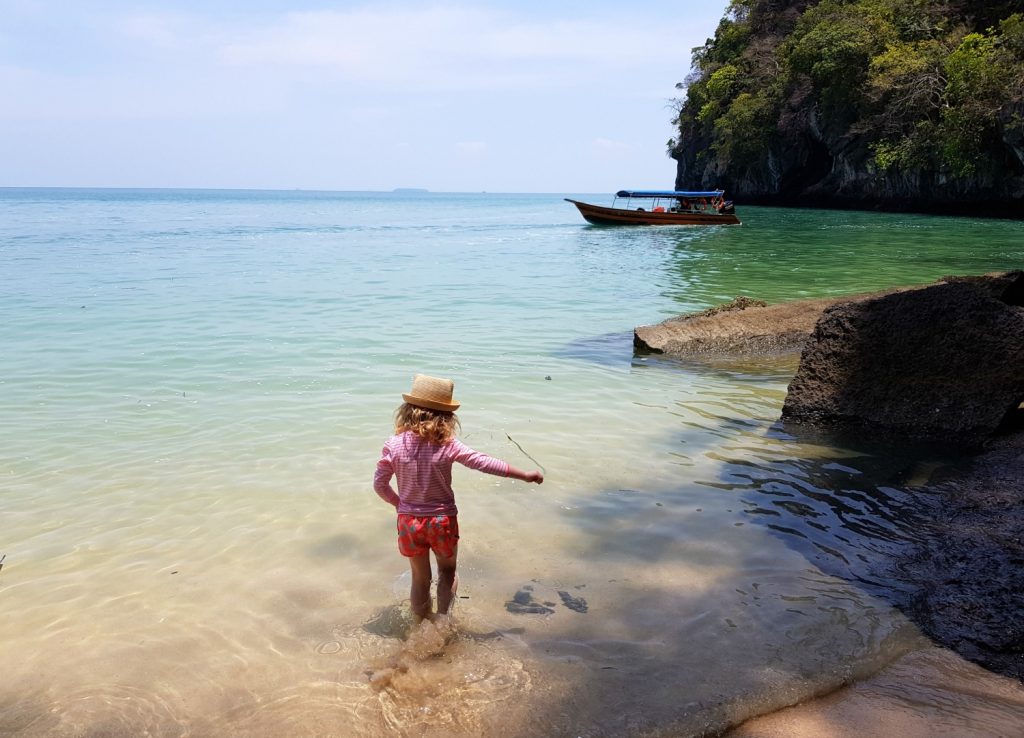
Moored at the entrance, we had our patch of shore entirely to ourselves – except for a small crab, floating contentedly on a piece of driftwood, and one more encounter with Langkawi’s wildlife, the only one we could have lived without.
Splashing gleefully in the waves, none of us spotted the stinging algae (or possibly jellyfish larvae) until they brushed against my daughter.
Distinctly unlucky, as the rest of our group escaped and we never encountered them again, but there’s a chance they might be lurking. For adults, it’s the kind of itchy sting which is uncomfortable for five or 10 minutes.
For a five-year-old, it meant departing to the floating restaurant where lunch awaited us earlier than planned, for a soothing bowl of vinegar.
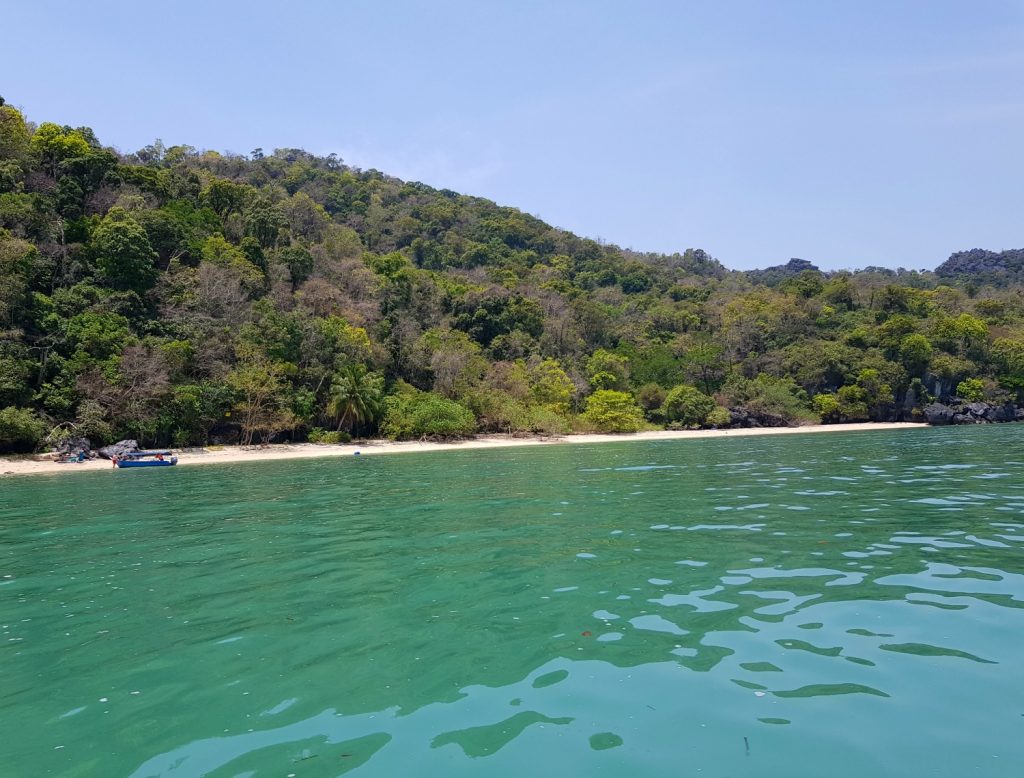
Problem solved and high spirits restored, especially after spotting the stingrays being fed at the restaurant fish farm. The only regret was not being able to stop and watch the pod of dolphins in the bay as we sped back, our sights set firmly on vinegar.
Taking a sea safari: our second Langkawi tour with kids
Imagine the wind in your hair, jetski flashing over the waves as you island hop between some of the 99 islands which make up Langkawi – the main large island is only one of an archipelago.
It’s tempting… but the picture is a bit trickier to imagine with a five-year-old. So despite the recommendations, we decided on another option, a sea safari, back with Dev’s Adventure Tours.
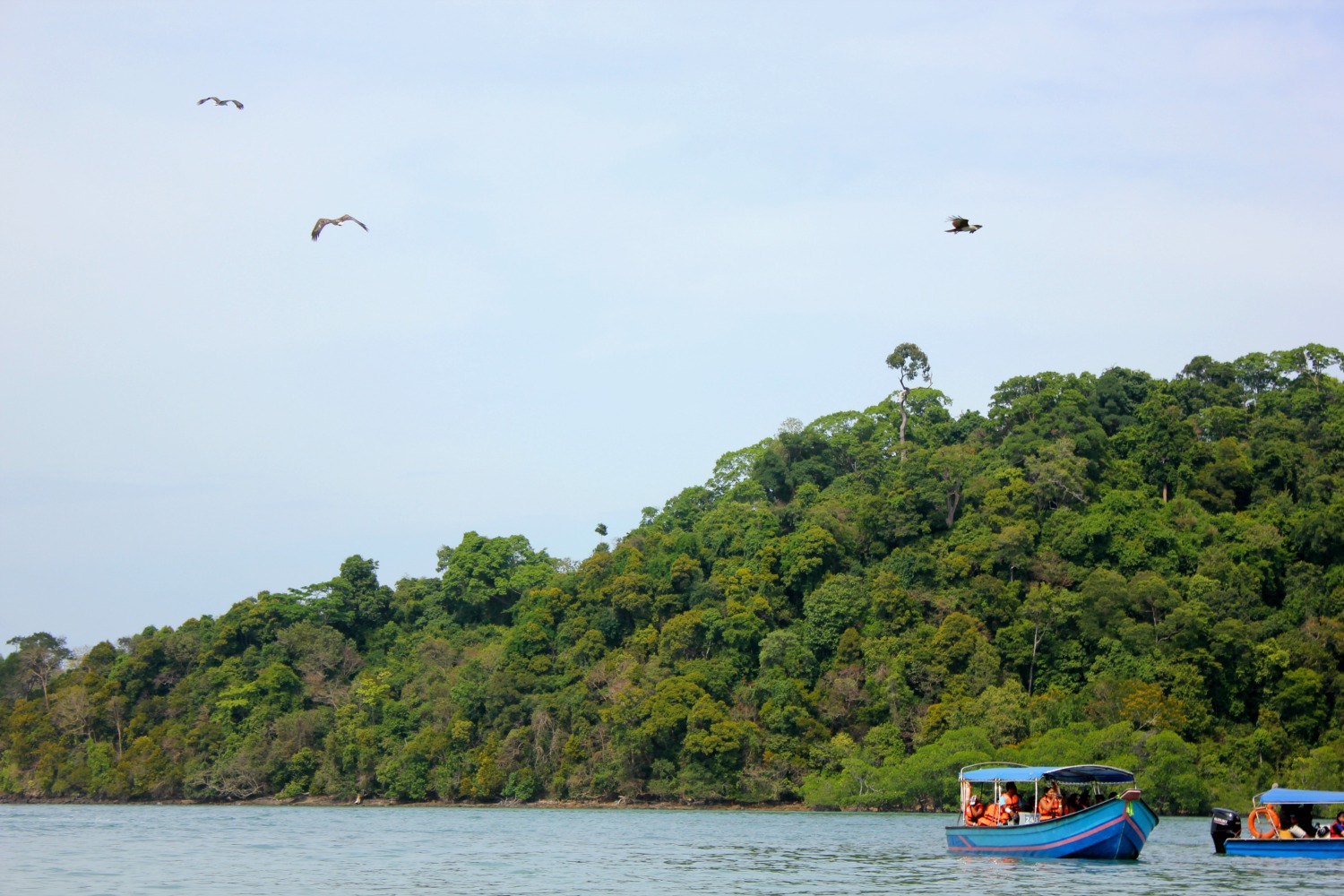
Cruising off the southwest coast, the opposite side to the mangroves in the geopark, I never felt we were missing out. The eagles were back, and as thrilling to watch the second time.
Kingfishers darted from their branches in a flash of brightest sapphire blue, while their larger brown winged cousins with bright orange beaks and golden bodies called in the quiet air.
Hornbills sat silhouetted against the sky in the tops of trees, long legged herons stood motionless in the cover of the canopy, and everywhere the curving shapes of the scenery. Most recognisably, the hills around Pregnant Maiden Lake.
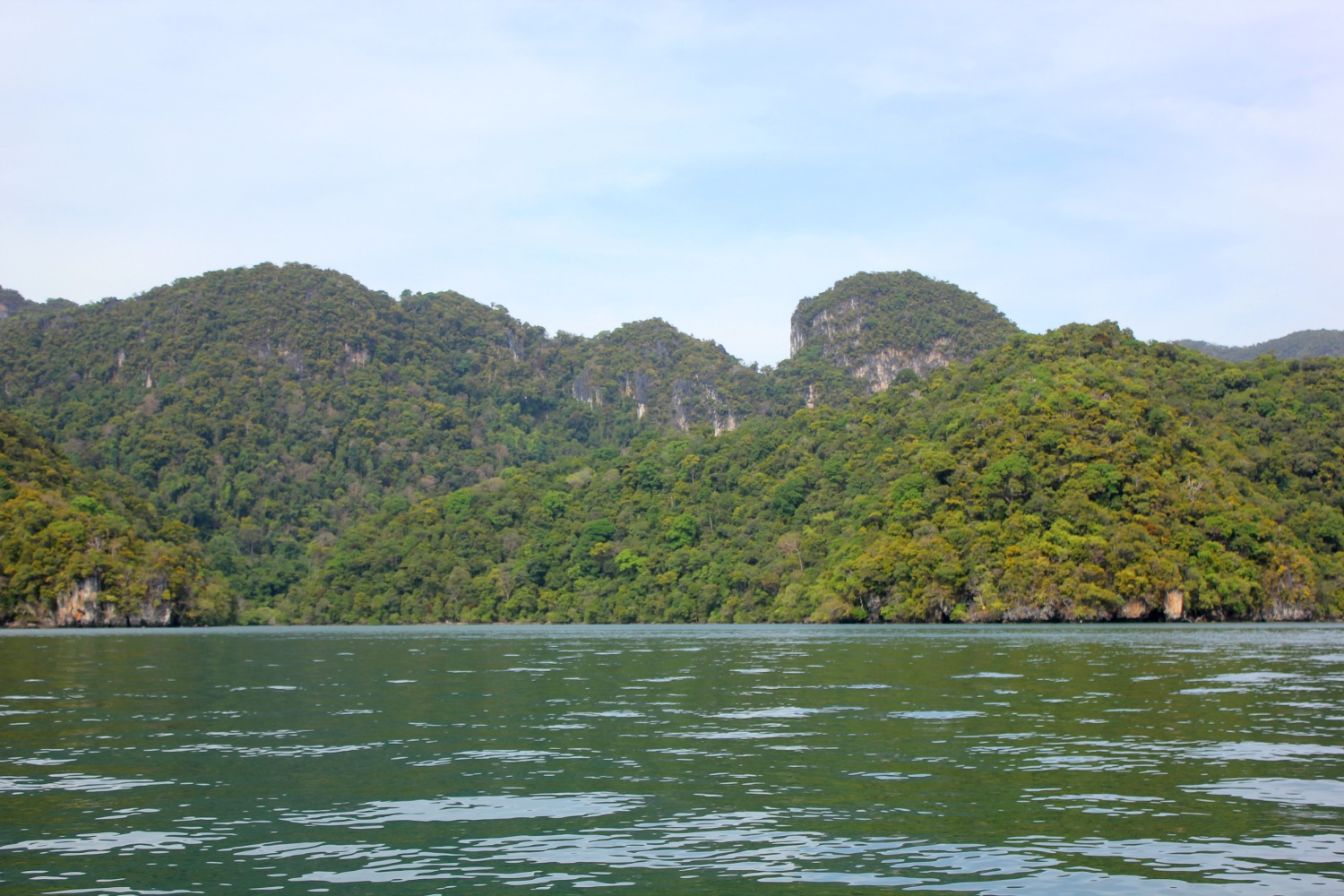
Legends have grown up around the lake itself, which is said to help women conceive if they bathe here. As the story goes (with thanks to a friend of mine from Malaysia), ‘there was once a beautiful fairy princess called Puteri Mambang Sari, who was tricked into marrying Tun Teja (or Mat Teja), a mortal warrior.
They had a baby boy who sadly died aged seven days. Legend has it that she was so distraught that she left the body of her child at the lake and she went back to her heavenly home.’
The facts are as fascinating as the myth: the lake itself is freshwater, despite only being separated from the salt water of the sea by a thin string of rocks on one side.
Under the sea, Langkawi’s coral reefs still haven’t recovered from the Boxing Day tsunami of 2004. Breaking much of the force of the wave, they helped to protect the island, one of the first places in its path by bearing the brunt themselves.
Although there are programmes to help repair it, it’s a slow process and there’s no real snorkelling here.
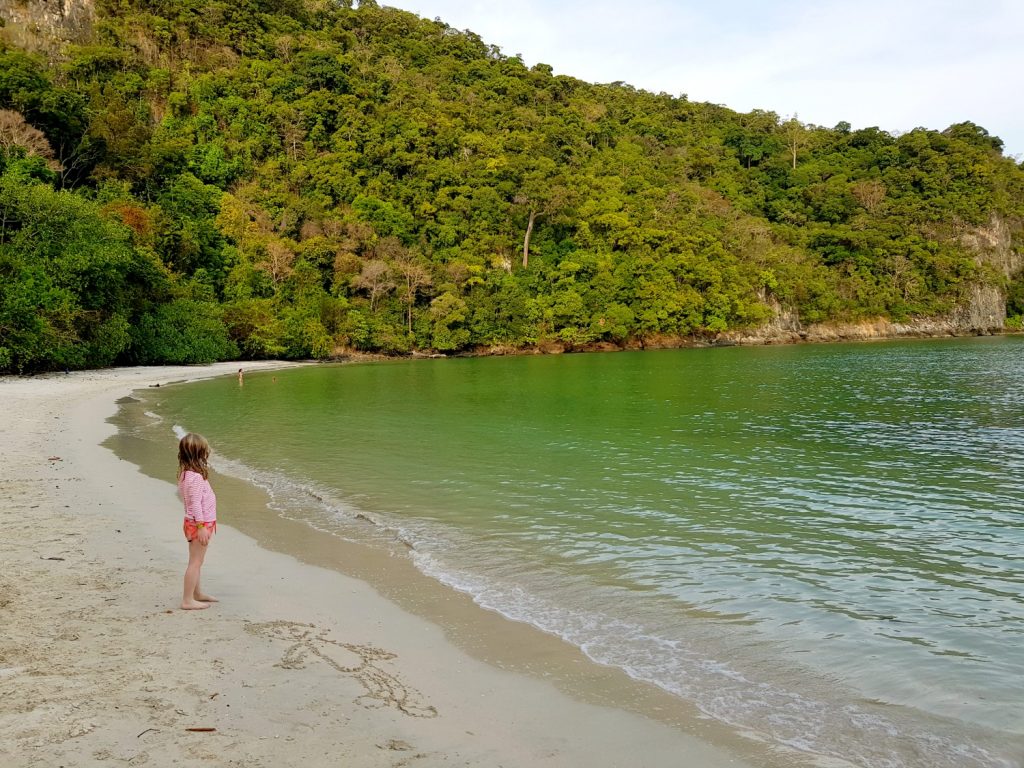
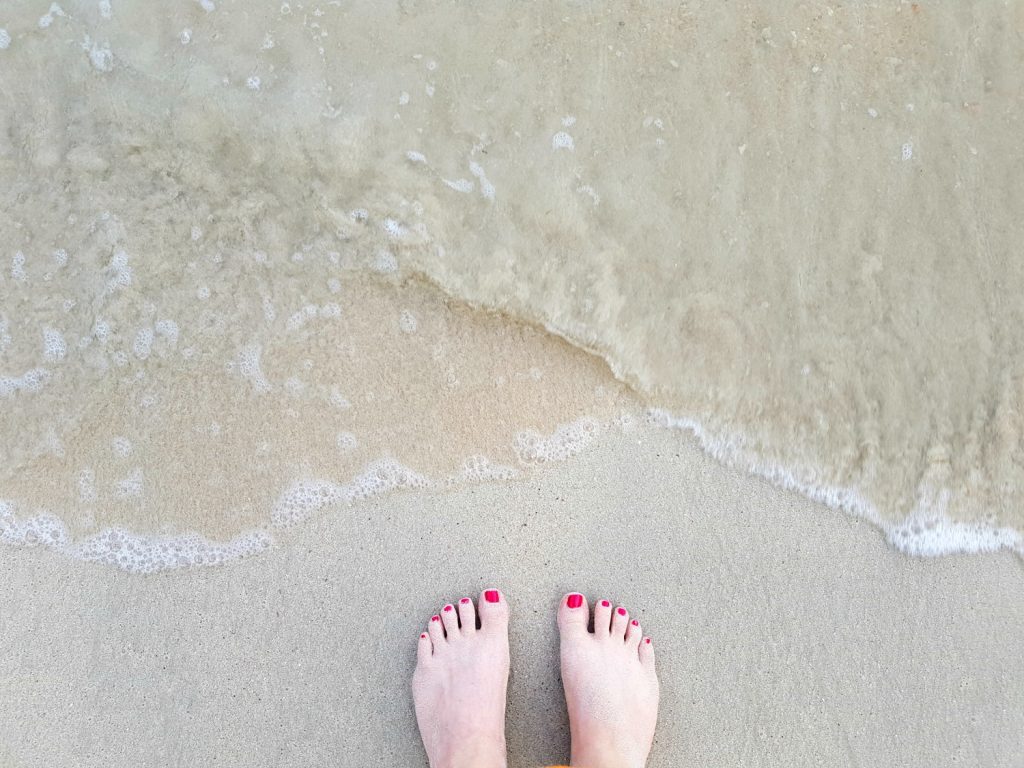
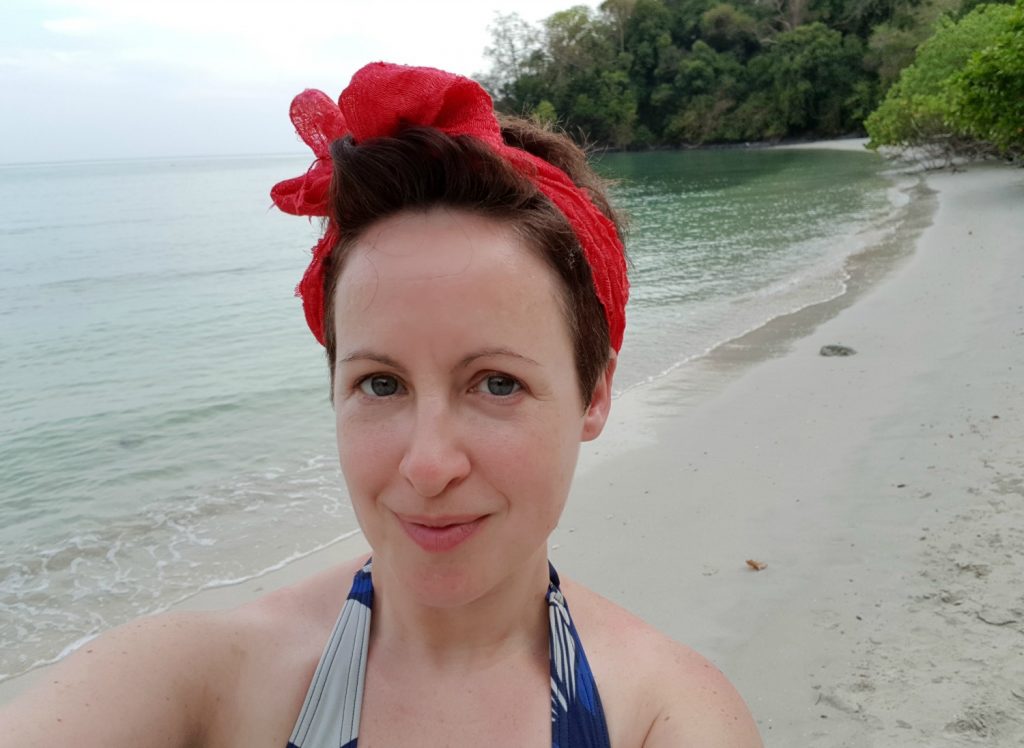
But as elsewhere, there are isolated coves to stop at and swim or sunbathe, and Langkawi is the only place where I’ve seen a monkey sitting on the shore waiting for an incautious crab as we cruised in.
Behind the sand, it’s easy to wander through the jungle, a black monkey crashing through the leaves as it leapt from tree top to top, briefly silencing the cicadas below.
No stinging company in the waves here either, tempting my daughter back into the warm waters of the little bay.
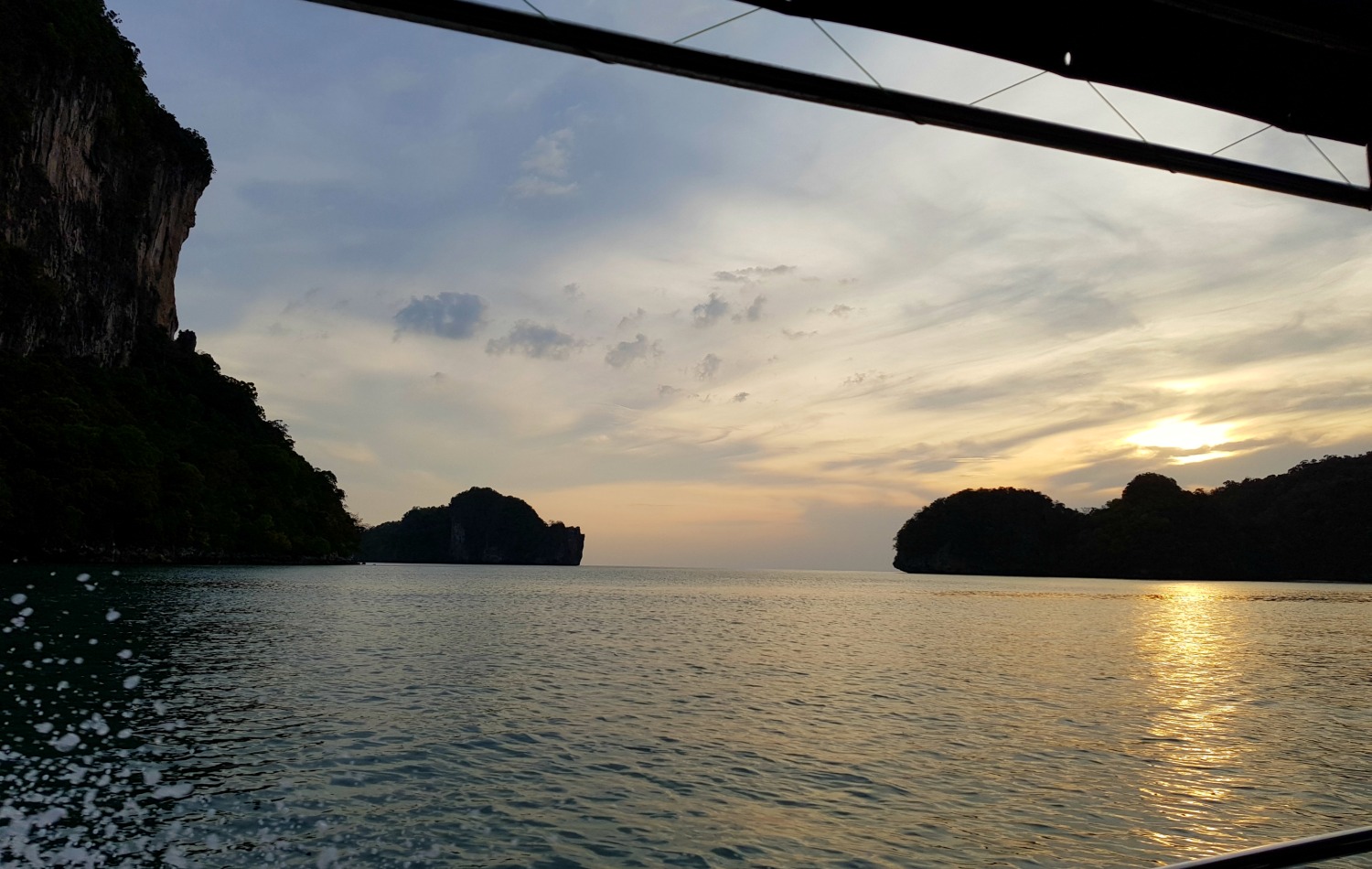
And as we sailed back, the pale gold of the sun setting into the water.
Langkawi tour with kids: need to know
The tour of Langkawi’s mangroves costs 170 Malaysian Ringgit (RM) for adults, 110 RM for children aged five to 10. Ages four and under are free, although with around four to five hours out on the boat, it’s not ideal for easily bored toddlers – there is a canopy for shade on the boat though.
There are several tours per day, in the morning and afternoon: click here for the most up to date times and prices.
The Mangrove kayak trip costs 240RM for adults, 170RM for children aged five to 10, although Dev’s Adventure tours recommends the boat trip for younger kids as you need a certain amount of stamina for a tour of around five hours.
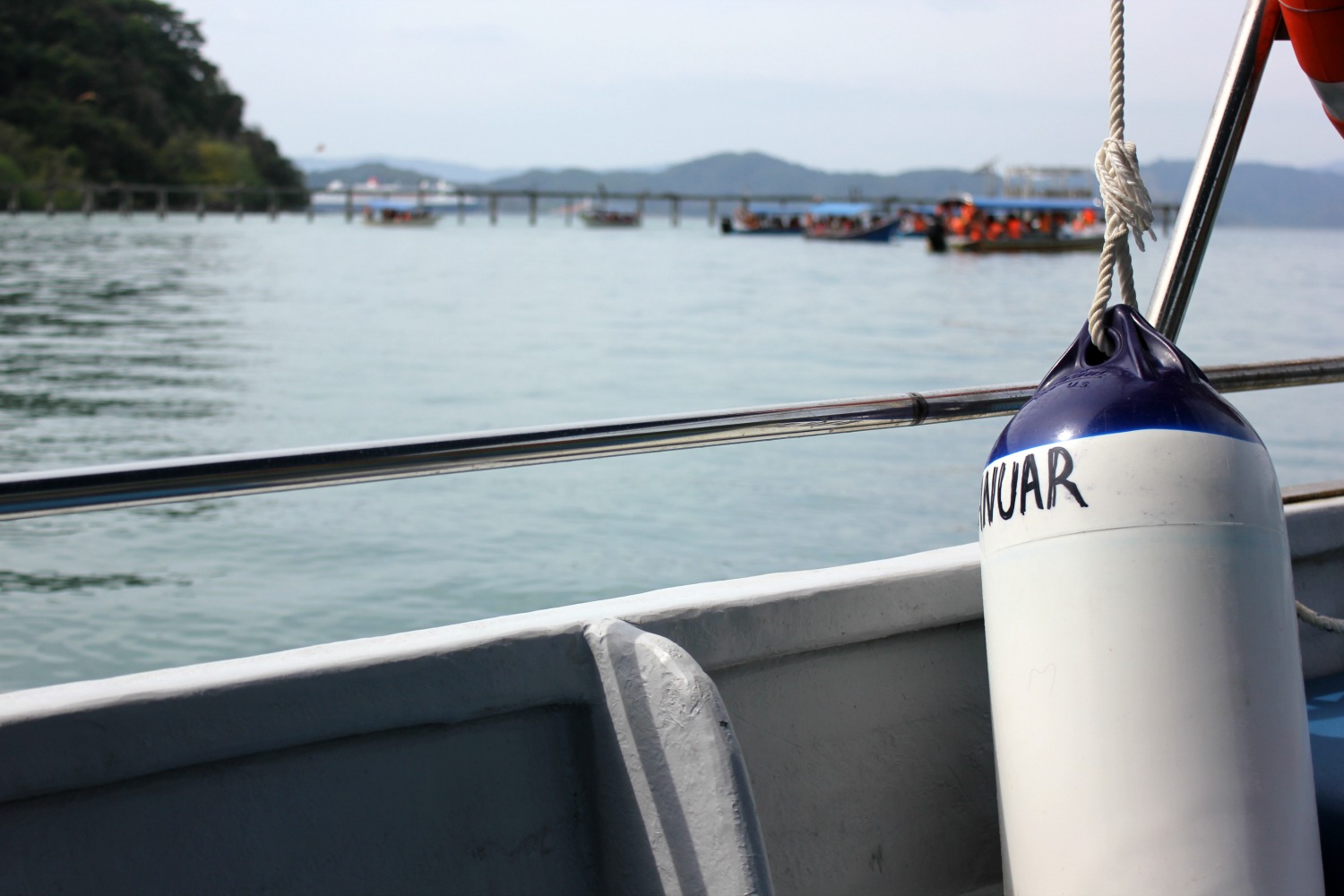
The sea safari tour costs 200RM for adults, 140RM for children aged five to 10 and lasts four hours. Afternoons only.
When we booked, there was a small discount if you booked more than one tour. Both tours included compulsory life jackets, with small ones for kids, when out on open water (and as we discovered on our second tour, the coastguard sails around the coast carrying out spot checks that the regulations are being followed).
For more amazing Malaysian wildlife, check out what we discovered during a week in Sabah, spotting Borneo wildlife with kids
PIN FOR LATER: LANGKAWI TOUR WITH KIDS
Images copyright MummyTravels
LIKED THIS? SIGN UP FOR MY EMAIL NEWSLETTER
Oh wow, what an adventure! I love that life jackets are compulsory – it sounds like they’ve really thought about kids and taken them into consideration. The last shot of the sunset is beautiful x
It was great to be able to explore a bit more, and given how much the boat picked up speed when we were on open water, the lifejackets definitely made me relax a bit. Thank you!
What an incredible trip! I think the sea safari sounds perfect and a great way to see so much wildlife (stinging algae aside!). I also like that they practice responsible tourism, something I always look for in a tour operator.
Absolutely – there are a lot of tours around the island, most of which follow similar routes, but only a couple which say they won’t feed the eagles. I’m so glad we picked this, such a great way to explore and a lovely way to learn about the wildlife.
I have been to other parts of Malaysia, but not Langkawi, it looks so beautiful! I think it would be a great place for kids, plus the wildlife is amazing! Those bats! The monkeys do sound like characters. My friend went and had her camera stolen by one! 😀
I’ve only been to the mainland, and that was a while back, but loved Langkawi, such a gorgeous place and lots for kids of different ages – the monkeys aren’t as aggressive as some I’ve heard about in other places, but they definitely had their eyes open for snacks. Thankfully they decided not to snaffle my camera! 😀
What a fabulous way to spot the wildlife. Those swooping eagles are beautiful. What a shame you missed the dolphins but thank goodness for vinegar!
I did get a brief glimpse over my daughter’s shoulder, but no chance of stopping to admire them alas. Thank goodness for vinegar. And everything else was amazing, stings aside, we both loved it.
Wow, what a trip! I’d be so nervous taking my girls on something like that – I love that your five year old takes it all in her stride, even after being stung. Memories to last her a lifetime for sure.
That’s one thing I love about travel, especially when they’re young – each step is an adventure, but each gives you confidence and proves just how adaptable kids are. I was worried she might be too nervous to go back in the sea, but the next day she was paddling and splashing again.
Clever monkeys, to know when a tiger is stuffed! Really interesting, especially about feeding the eagles. It’s amazing what harm humans can do without intending it.
Absolutely! No fooling those monkeys. And it’s scary how quickly people can have an impact too – a generation perhaps in human terms but long enough to disrupt the eagles natural habits. Hopefully the plan to reduce it will mean it’ll be a thing of the past before another generation goes by.
I would love to do a trip like that! I especially would like to see the bats and the rest of the wildlife! MY little would certainly love an eagle
My daughter was fascinated by the bats (from a safe distance :D) The eagles were so beautiful to watch
Oh wow what an experience Cathy. I’ve been on a mangrove boat tour in Antigua but it wasn’t as exciting as this. Really pity about your daughter and missing the dolphins, clearly a great excuse to return!
I’ve been on a few and I think the ones in Asia really are special – glad we weren’t too far from vinegar though!
Sounds absolutely wonderful. I love the look of the Monkey, he does look stern! And what a great find to discover an ethical tour that really care about the wildlife and if five year old girls are kept happy and entertained!
Doesn’t he! Such disapproval that we hadn’t turned up laden with bananas. I was so pleased to have found these tours though, such a great experience.
These are exactly the kinds of experiences I would like my children to have as they travel more. The tour without the eagle feeding certainly sounds like the right choice and there’s some great lessons to be learned here for all kinds of travellers
Absolutely, it was fascinating for adults as well, and the eagles were mesmerising.
Langkawi is so astonishing and definitely worth exploring, Cathy! This tour sounds so much fun and it’s a pity I didn’t do it when exploring Langkawi. I’ll have the tour in mind when I get back there one day!
It is such a fascinating island, isn’t it – definitely one for the list next time.
These sound like brilliant experiences Cathy, and it’s good to be aware of the issue with the eagles. Sorry that your daughter was stung – I hope she doesn’t remember that too much.
The tours were amazing, such a wonderful way to explore the island – and a reminder of the impact tourism has for good and bad. My daughter still looks back very fondly on the holiday, although the memory of the sting hasn’t quite faded yet!