
Review: Inside Aardman exhibition at the Young V&A
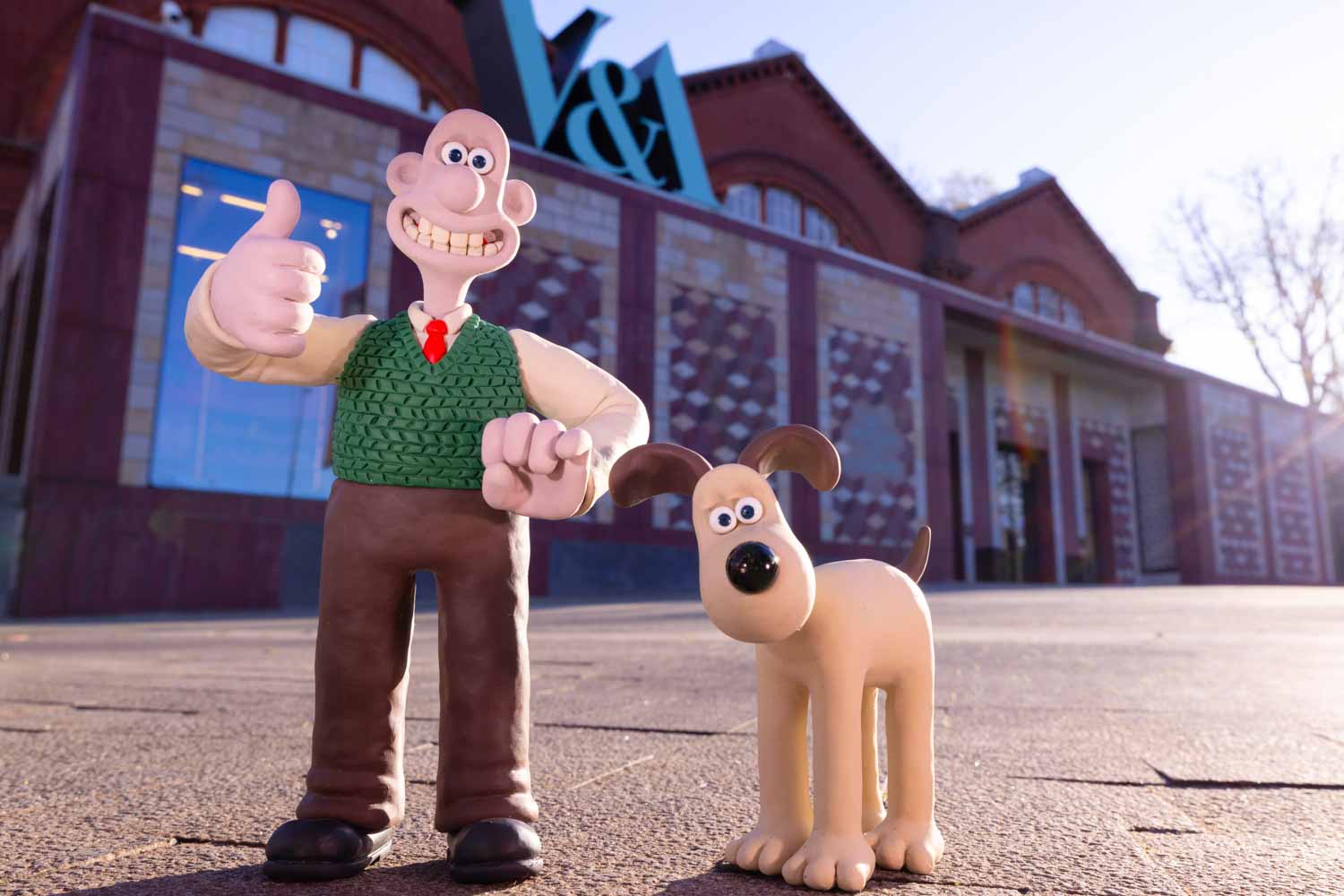
You don’t have to be a fan of Aardman Animations (though who isn’t?) to enjoy the new Aardman exhibition at the Young V&A in London, as my Inside Aardman review goes to show.
review visit/contains affiliate links*
Because even leaving aside all the much-loved characters from Morph to Wallace and Gromit, Shaun the Sheep et al, the lovely new exhibition is a fantastic chance for kids to get hands on, to discover what goes into creating these stop-motion gems, and be inspired to unleash their own creativity.
But then add in the familiar characters to bring it all to life, and this is unmissable for families. Given a sneak peek beforehand to write this review of the Aardman exhibition at the Young V&A before it opened, here’s what you can expect.
The exhibition itself is designed to take you from the very start of the process to bring creations from sketchbook to screen, and coincides with Aardman’s 50th anniversary.
Along the way, you can see over 150 original items including never-before-seen models, Aardman’s early character sketches, concept art, puppets, character ‘bibles’, props, scripts, set models and several optical illusion toys and early examples of stop-motion animation.

Plus you can try your hand at everything from drawing to creating a short stop-motion film, adding sound effects to a couple of scenes, and performing in front of a green screen.
The exhibition starts before you even pick up a sketchbook, explaining how stop motion animation works, and looking at some of the influences behind Nick Park’s work, reminding visitors that you don’t need far-flung locations or complicated equipment to get creative.


Instead some of his original ideas were jotted down on scraps of paper, with Wallace and Gromit changing looks over the years – Wallace started off as a postman with a moustache, while Gromit could talk in early drafts. Wallace’s wide mouth didn’t get added until Peter Sallis had started voicing him, and they needed to match his look to the distinctive ‘cheeeeeese’ delivery.
Even in the early sketches, you’re reminded of the attention to detail that’s a trademark of Aardman, such as scenes in Wallace’s house drawn from a low-down dog’s eye view. Or the way colours influence the whole feel of a scene.


After a stop to create your own character or three, as well as enjoying the hand-drawn storyboard of the famous train chase scene from The Wrong Trousers, and seeing sketches brought to life, it’s time to work out how to transform your pencil drawings into models.
From a desk containing some very unexpected tools of the model-maker’s trade, the exhibition takes you from the tiny details to some of the biggest and most unusual models made by Aardman. Who knew that lentils were the perfect size to be rivets on a space rocket?


There’s a chance to check out everything from an armoured mammoth puppet and plasticine figures to a pirate ship.
The models are equally varied, with the original characters like Morph created more simply from modelling clay and plasticine.


Meanwhile later models have a wire ‘skeleton’ framework inside to give them more flexibility and range of movement.
Or peek behind the scenes at the ‘hospital’ responsible for repairs incurred during filming – lost eyes, wonky ears and more.


There’s plenty to make it child-friendly if you’re visiting with younger kids, from little steps to let them climb up to see inside sets like Wallace and Gromit’s house, or a chance to touch the ‘fur’ of a cat and get a sense of what the clay models feel like.
For older ones, there’s more insight into the reality behind the scenes, whether that’s 3D printing, used for some elements of the films, or watching videos of voice artists recording – who wouldn’t love seeing Tom Hiddleston getting a shoulder rub as he records his part in Early Man!


Nothing is overlooked either, whether it’s a complicated board of bits of paper outlining a filming schedule to the lighting used.
There’s nothing like being able to play around with the lights on Feathers McGraw’s prison cell to see the surprising difference a few tweaks make to swap between night and day, as well as how changing particular lighting points can make a difference.
Or add your own sound effects with some everyday items that provide rather different soundtracks than you might expect, before watching one Foley artist mulching porridge and papier mache to get the ultimate squelchy sound.


There’s even a chance to see some of the early inspirations behind stop-motion animation, with Victorian photos showing each step of a jump, right up to modern green screens – and your own chance to perform in front of one.
And that doesn’t even cover some of the endless details which make all the difference; model newspaper front pages, the unique Mona Lisa in Wallace’s local museum or the dozens of mouth shapes needed to get all the various different sounds.


Once you’ve absorbed every element of what goes in to making a film like Aardman’s, there’s only one thing to do next – try your hand at doing your own, with several desks set up, complete with props and instructions.
It’s not the first time I’ve had a go, but my dramatic storyline of a person and horse escaping giant rolling pine cones reminded me just how incredibly precise you need to be to get a smooth finished product, and how astonishingly time-consuming it can be to get a few seconds of film.
Although obviously, it was so much fun, I went straight back and did another one.

One of the best things about the exhibition is the constant reminder that you don’t need expensive tools, cutting-edge technology and a huge team to get creating.
While Aardman certainly has all those things today, paper for sketching and ideas, plasticine for your models (maybe with some googly eyes) and a phone camera to capture is all kids need to get started. And who knows, perhaps to become the next Nick Park.
How to finish? With a taste of the original of course – some comfy seats and snippets from various Aardman films. I wasn’t the only person laughing out loud at some of the slapstick humour in Early Man and the fantastically expressive face of Hognob, Dug’s boar-like pet.
In fact, you could easily chill out here for quite a while to remind yourself of just how funny and clever the Aardman animations are, as well as appreciating the attention to detail all the more now you realise just what goes in to bringing it to the screen.


Do save a bit of time for the little gift shop as well. While I was seriously tempted to go home with a Feathers McGraw bottle or a Gromit mug, there’s everything from cuddly Shaun to sheep to plasticine, if you’ve been inspired to get creating, as well as books and other souvenirs.
The verdict? Cracking, Gromit!


Inside Aardman review: Need to know
The Inside Aardman exhibition opens on February 12 and runs to November 15. Tickets cost £12.50 for adults and children aged 4+ (£11 without donation) and this gives you unlimited return visits.
V&A Members get free entry, including dates which show as sold out, to all exhibitions at the Young V&A and V&A in South Kensington.

There are also free tickets if you receive Universal Credit, and discounts if you’re an Art Pass holder.
The exhibition is open to all ages, with free entry to kids aged under four. There’s certainly plenty for younger kids to do and enjoy (and adults!), although it’s focused particularly on age 8-14.
Allow at least an hour to 90 minutes to look around and to enjoy all the interactive elements. At busier times, you might need longer if you’re waiting for a chance to get hands on, and if your kids are fascinated by animation, film-making and creative arts, you could very easily spend longer.
Entry to the Young V&A itself is free, and there are toilets, a cafe and buggy parking.
Disclosure: My entry to the Inside Aardman exhibition was free for the purposes of review but all opinions remain my own. This post contains affiliate links – any purchases you make are unaffected but I may receive a small commission
Main image/Wallace and Gromit insid ethe V&A copyright David Parry for the V&A, all other images copyright MummyTravels
LIKED THIS? SIGN UP FOR MY EMAIL NEWSLETTER