
London Tutankhamun exhibition with kids: Treasures of the Golden Pharaoh
There’s probably no pharaoh better known than Tutankhamun – so when the new London exhibition Treasures of the Golden Pharaoh was announced, I booked my ticket straight away. But the big question in my mind was whether to visit the Tutkankhamun exhibition with kids.
Two weeks after it opened at the Saatchi Gallery, I was front of the queue to get in and waiting to answer that question – my Ancient Egypt-loving daughter had been very cross to discover I was going without her.
So how good is the Tutankhamun exhibition in London? Short answer – it’s really impressive. But seeing the Tutankhamun exhibition with kids? Read on, because that’s a longer answer…
What’s on display at Tutankhamun: Treasures of the Golden Pharaoh
The London exhibition at the Saatchi Gallery is the only UK venue on the collection’s world tour, with 150 original artefacts from Tutankhamun’s tomb on display.
And 60 of those have never left Egypt before. It’s bigger than the 2007 exhibition at the O2, the last time similar treasures came to London, and after the tour is over, they’ll be permanently displayed at the new Grand Egyptian Museum near the pyramids of Giza.
That’s due to open in 2021, just before the centenary of the discovery of King Tut’s tomb by Howard Carter in 1922. [Edit: repeated delays mean it’s opening in 2024]
If you’re hoping to see the famous blue and gold death mask, you need to head to Cairo to the Egyptian Museum – or the new museum when it opens – as the Egyptian government has taken the decision that that is never going to travel again.



The treasures of the Tutankhamun exhibition in London
As Howard Carter took his first steps into the tomb, undisturbed for over 3,000 years, he was asked what he could see – “wonderful things”, he famously replied.
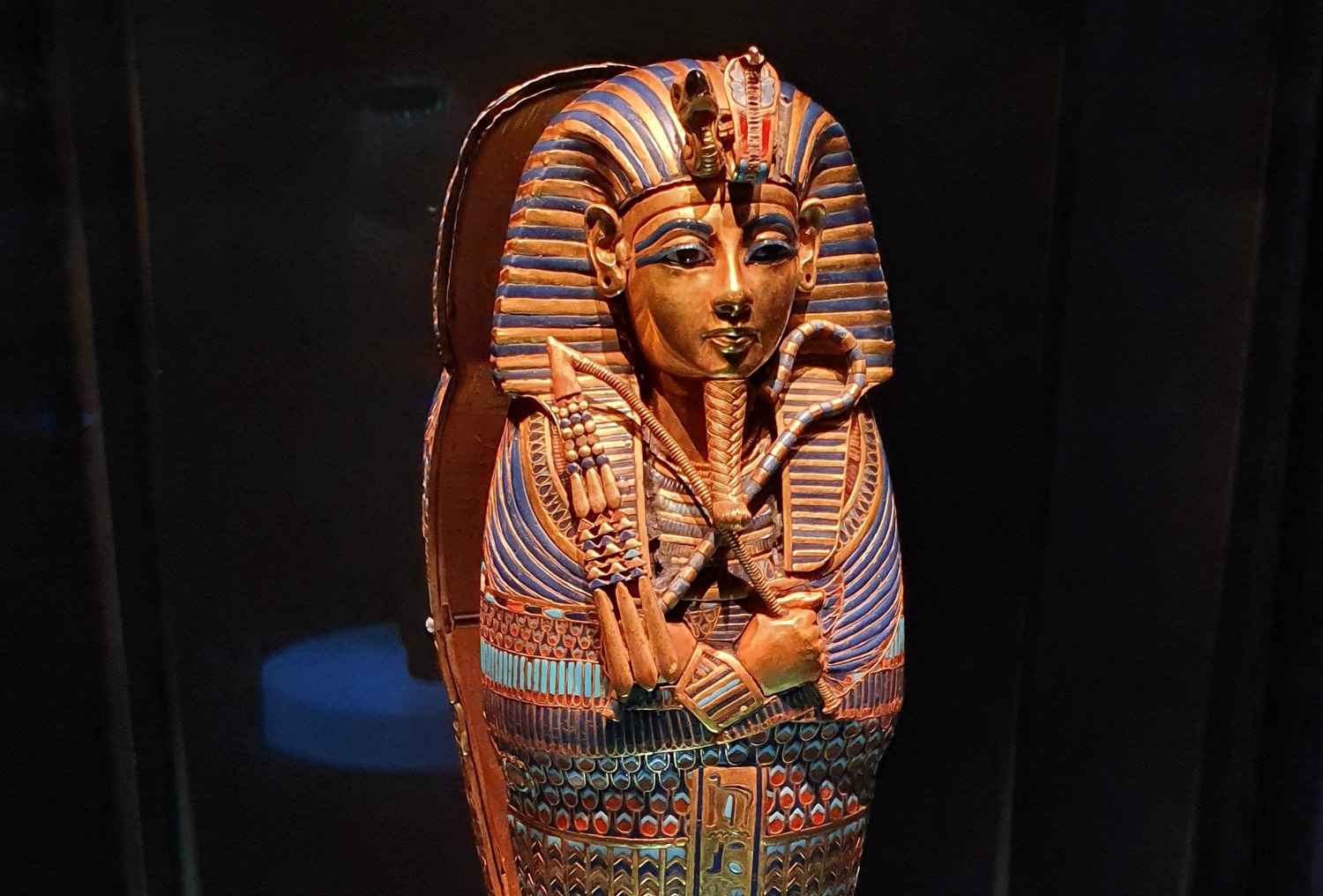
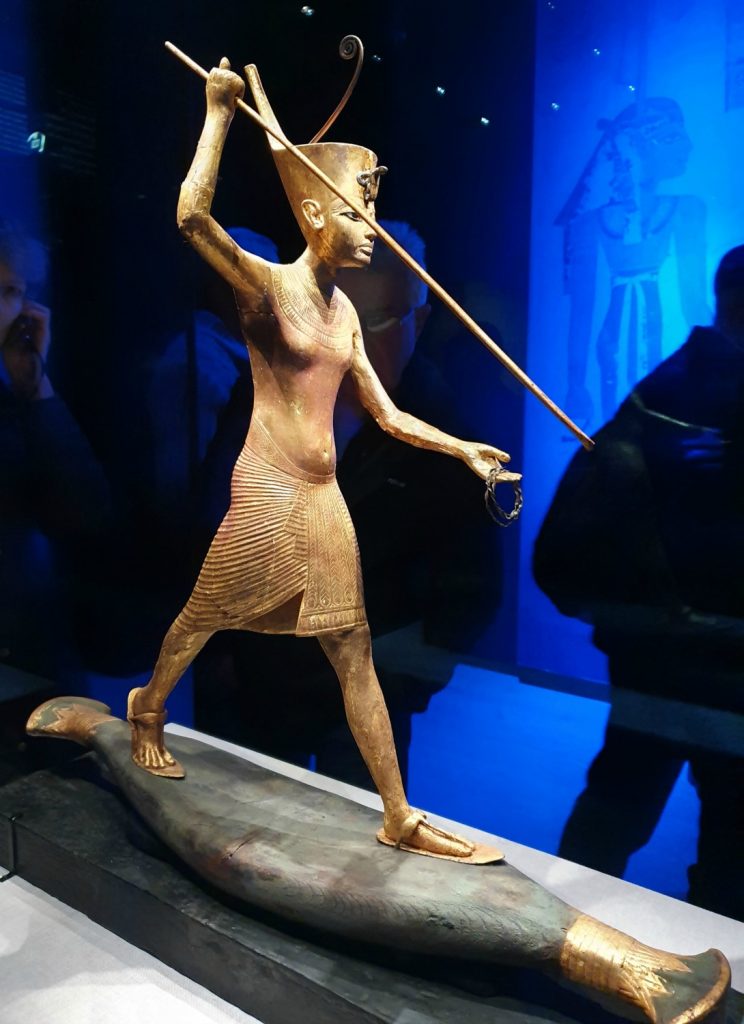
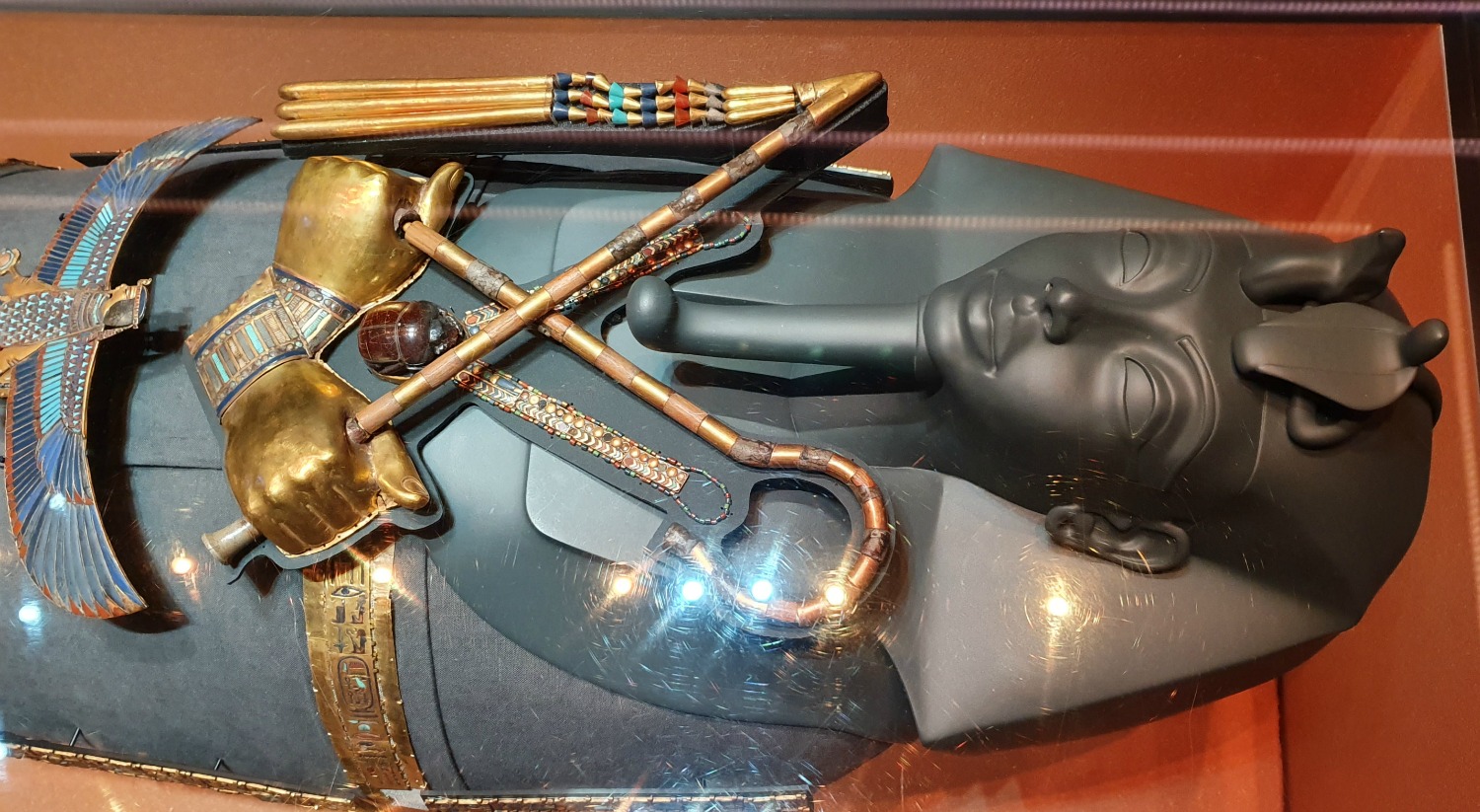
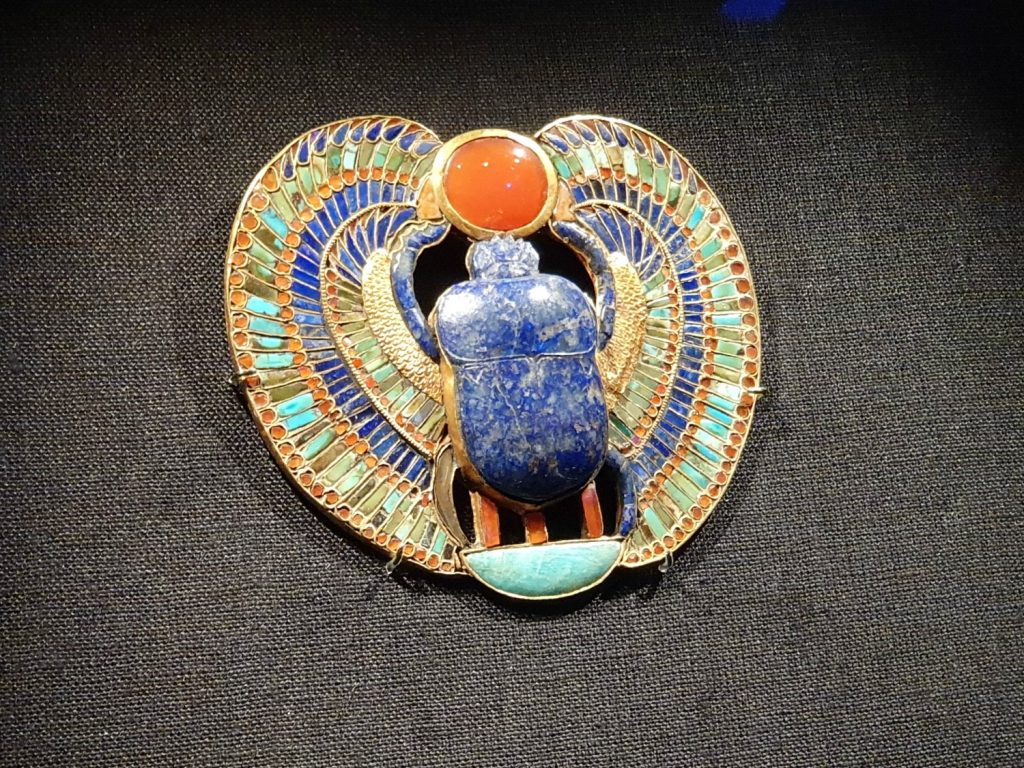
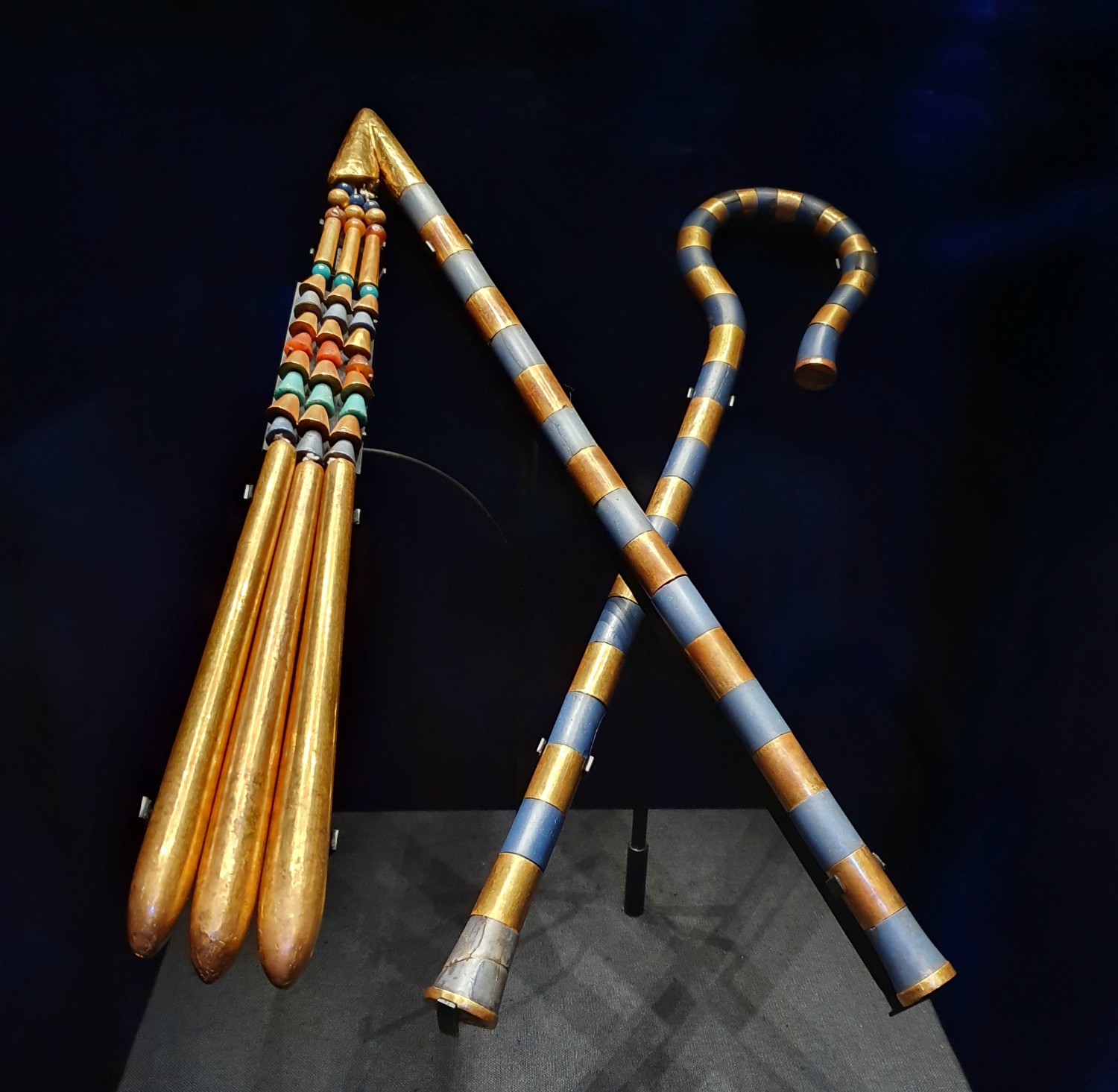
Wonderful things indeed. Intricate golden pieces and beautiful carvings, statues and jewellery, plus at the heart of the tomb, the mummified body of the pharaoh in its sarcophagus holding a golden crook and flail, canopic jars stacked into dazzlingly ornate coffinettes and amulets and ritual regalia protecting him on his journey.
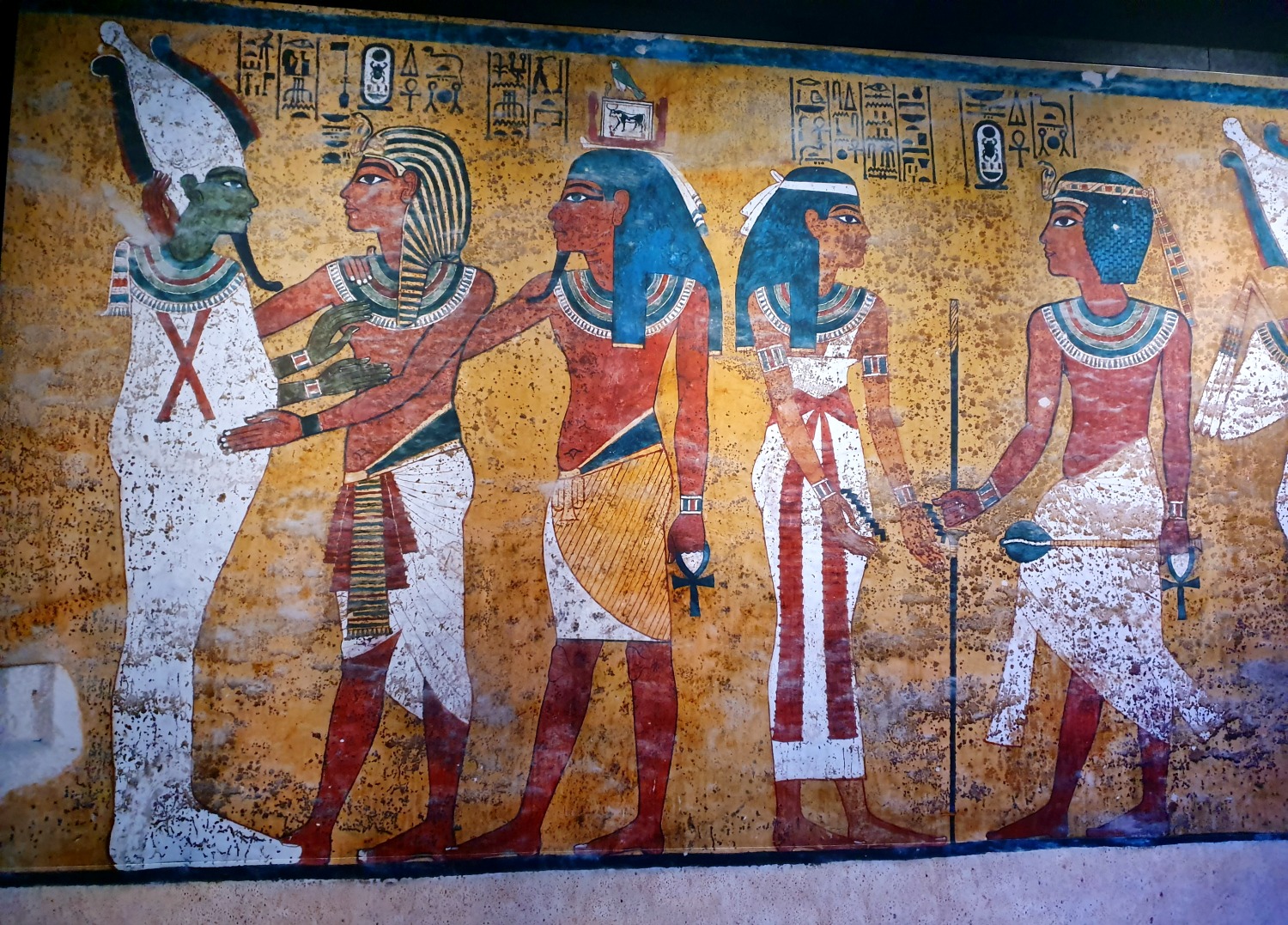
The exhibition tries to bring some of that wonder to life, laid out so you take a journey through Egyptian beliefs and society, tracing Tutankhamun’s life and death – culminating in the discovery of his tomb by Howard Carter.

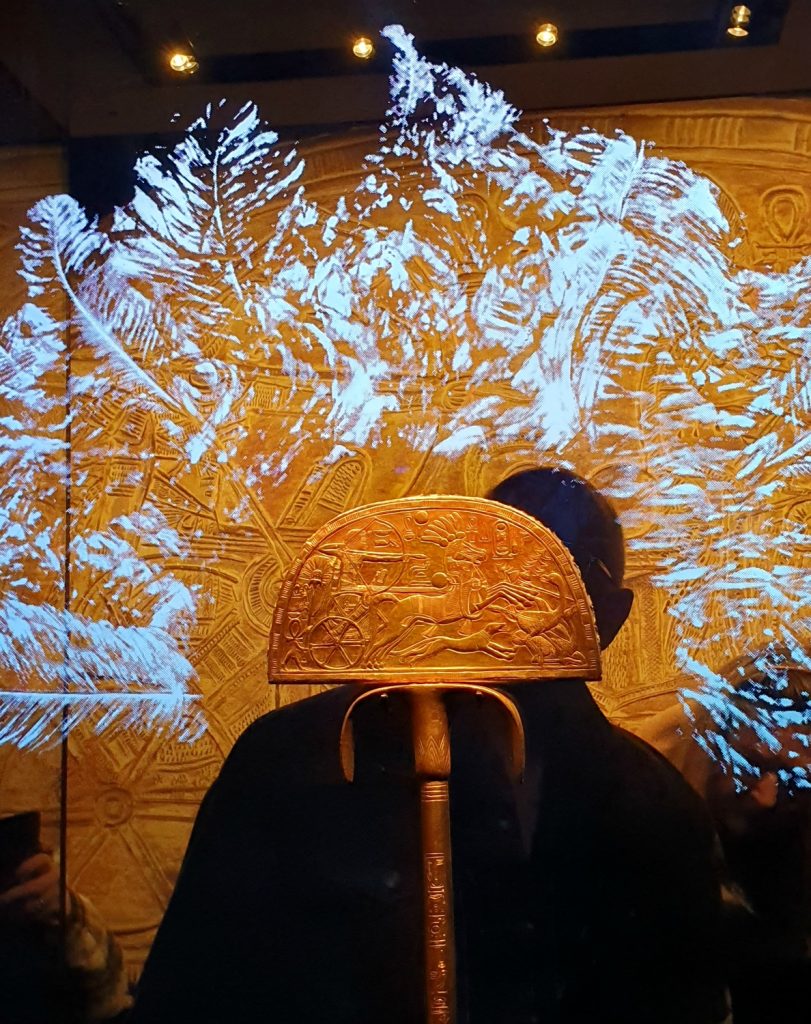
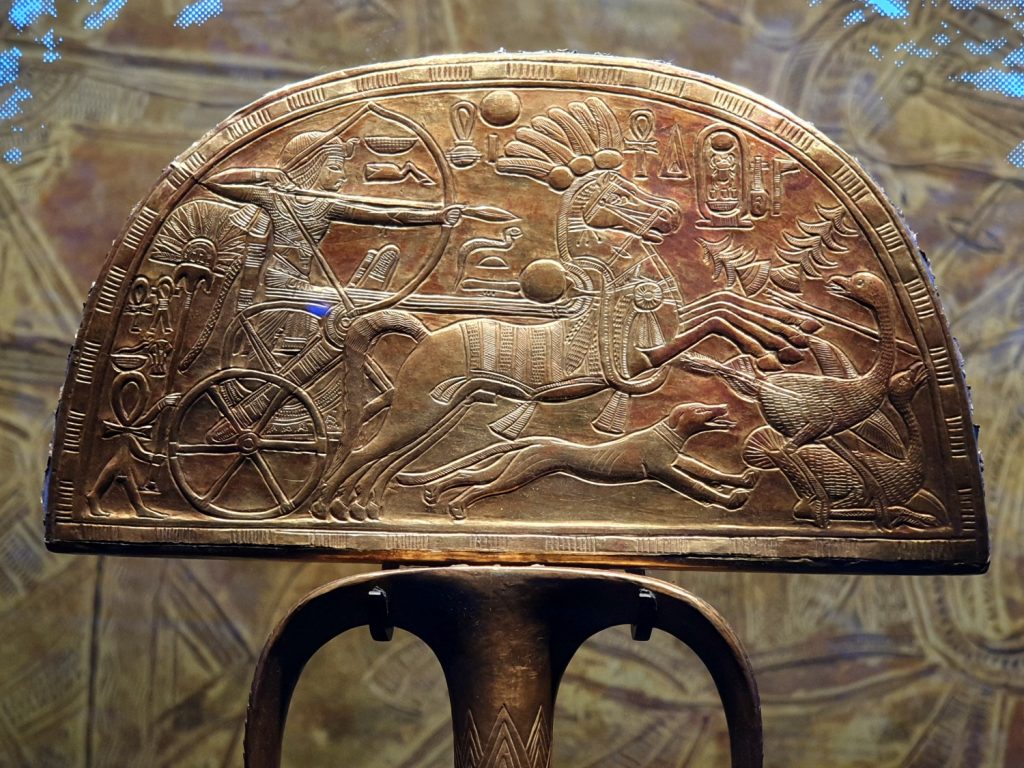
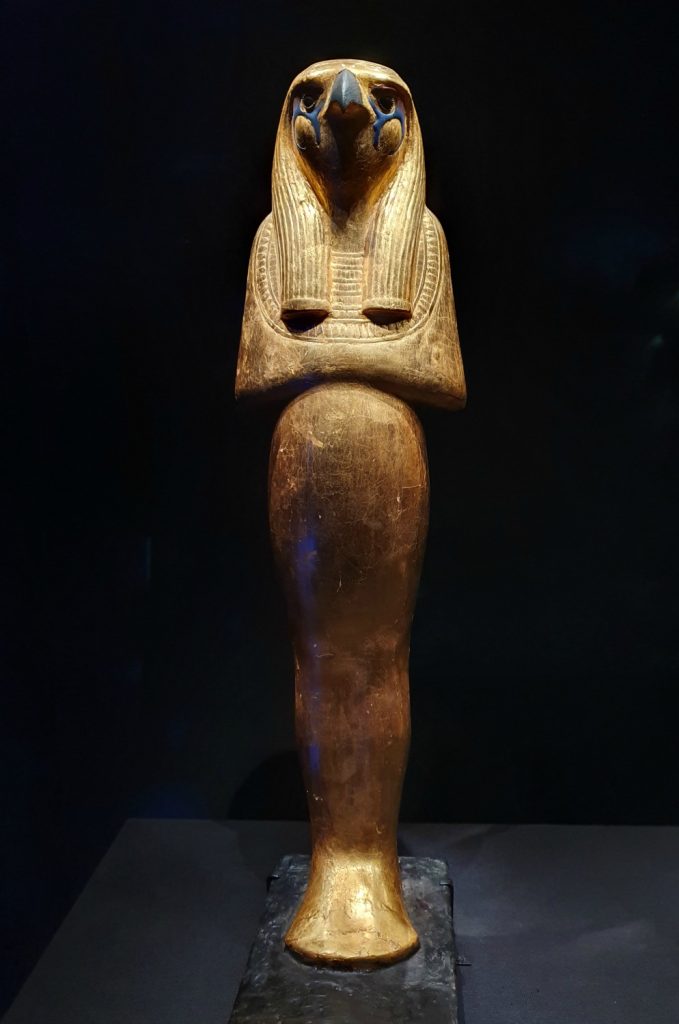
The pieces themselves are stunning. It’s incredible to think how long they’ve lasted as you drink in the beautiful detail and colours.
But what’s even better is that there’s information at every turn, both general background about Egyptian society and mythology, but also more specific details about the significance of the displays and decoration.
There’s nothing worse than standing in front of a fabulous artefact, not knowing what the symbolism means. Here, although we chose not to get the audio guide, there was still lots to take in and none of the bumbling around wondering what particular items were for.
Howard Carter: “Details of the room within emerged slowly from the mist, strange animals, statues and gold – everywhere the glint of gold … I was struck dumb with amazement.”
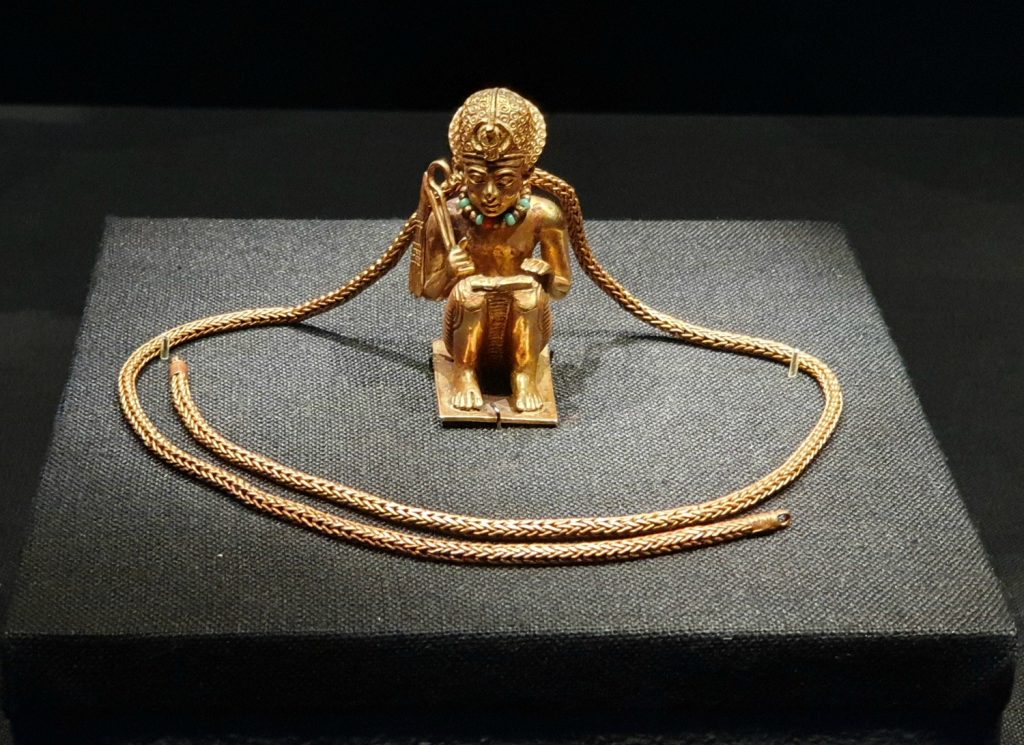
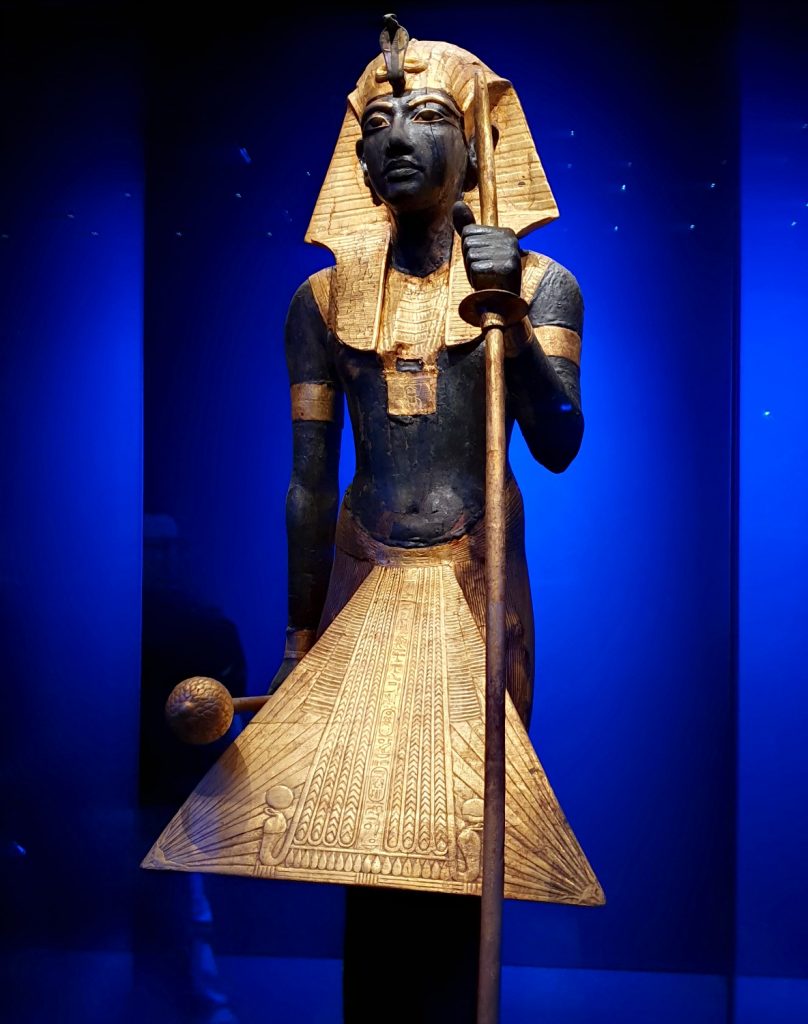

The layout of the gallery does mean it’s broken up – corridors and stairs divide the galleries, but in many cases that makes the most of the impact and adds to the sense of a journey, both through history and the voyage Ancient Egyptians believed their pharaoh would make through the perils of the netherworld.
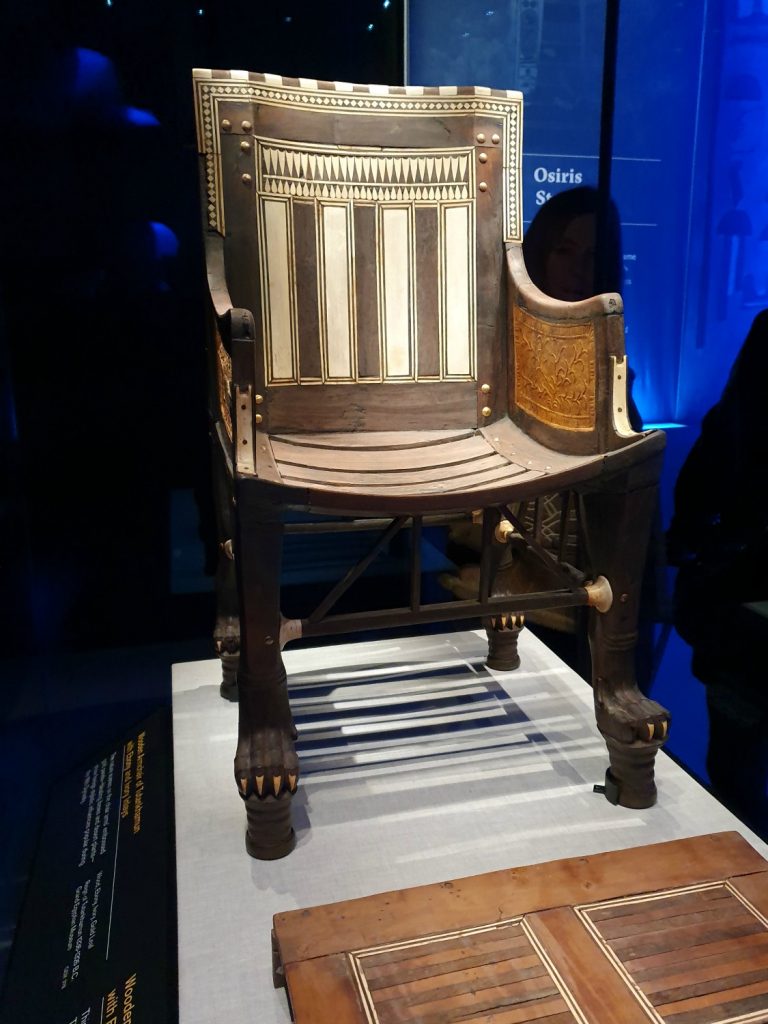
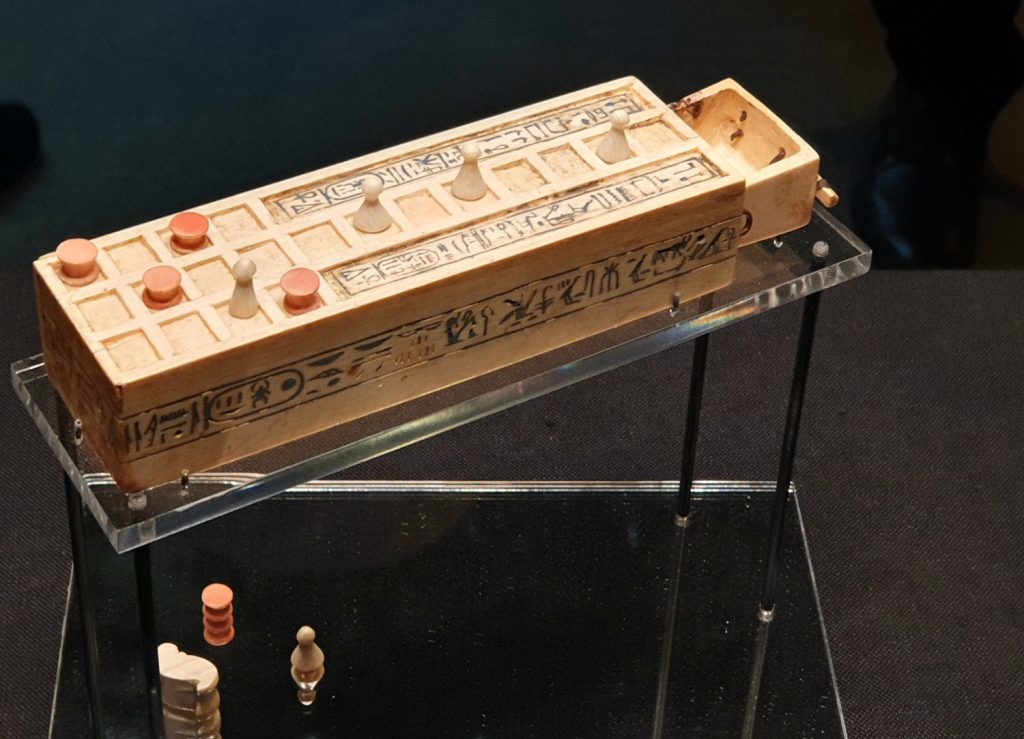
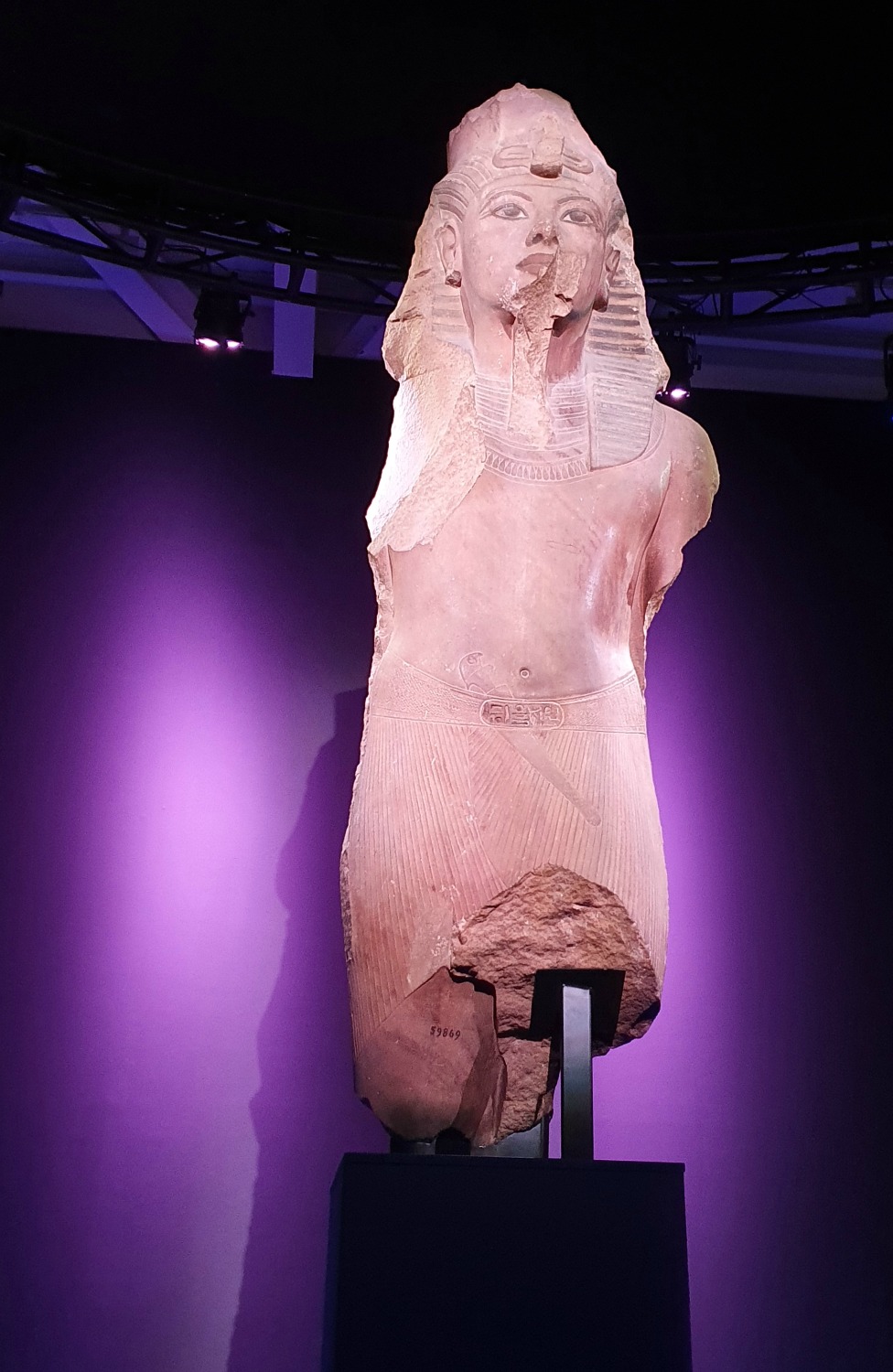
And while the eye-catching golden statues are enough to wow any visitor, there are some far more intimate, personal items too – child-size furniture for the nine-year-old pharaoh, even a little travel-sized game, plus a gilded wooden shrine commemorating his marriage, the detail that locks of hair believed to belong to the pharaoh and his wife were found.

As well as statues of workers to serve the pharaoh in paradise, there were even statues of overseers – another rather organised element which appealed to me.
I particularly liked one touch towards the end too, namechecking Hussein Abdel-Rassoul, the Egyptian water boy who stumbled across the first step down as he made holes for water jars, and who rarely gets mentioned in the official accounts.
And if it’s Carter and Carnarvon who get the glory, we discovered Hussein made his own living posing by the tomb for the rest of his life, a story I hadn’t come across before.
It’s details like this – or the quote by Egyptologist Flinders Petrie, dismissing a young Carter’s potential as an excavator – which also help bring the story behind the legend to life.
The Ancient Egyptians believed a person died twice: first when their soul left their body, and secondly when their name was mentioned for the last time.
Despite his successors’ attempts to wipe him from history, Tutankhamun’s immortality seems assured for centuries to come, the boy pharaoh’s name on everyone’s lips again.

Should you visit the Tutankhamun exhibition with kids?
So with so many truly wonderful and unique artefacts on display, should you visit the Tutankhamun exhibition with kids?
One of the biggest factors is the crowds. Even early on a November Monday, it was busy – we turned up on time for our appointed slot and had to wait in a queue for around 15 minutes to get in, then another queue for the first room with an introductory film.
I’m not sure whether it was sold out to capacity but I don’t think you could comfortably fit many more people in – the layout does mean that there’s a good flow through, apart from one bottleneck.
As a result, I don’t think it’s a good one for younger kids – at age 7, I think my daughter would have struggled with the crowds and the waiting, despite being a big fan of Ancient Egypt.
Alternatively, if I’d taken her, I suspect we’d have gone round a lot faster rather than being able to linger – and as tickets aren’t cheap, you do want to make the most of it. I was there for about 90 minutes, neither rushing nor dawdling, while another friend spent around two and a half hours.
There were little ones and they were just bored/cross: this isn’t for pre-schoolers.
For age 8-12, I think it depends very much on your kids. Another friend took her eight-year-old who loved every minute (unlike her five-year-old), while a friend’s 12-year-old struggled with the crowds but the amazing pieces on display were worth it.
Bear in mind there’s a lot to read and some difficult concepts so if your kids haven’t learned much about the history, the British Museum is a better bet to start with.
If they’re already fans of Ancient Egypt, especially if they’re 10 or older, this is a once-in-a-lifetime experience (unless you’re heading to Egypt on a family holiday) to see this magnificent collection.
Tips for visiting the London Tutankhamun exhibition with kids
Children of all ages are welcome at the exhibition, but you won’t be allowed to bring buggies inside the exhibition space.
Pushchairs can be left at the front entrance (at your own risk) and there’s a cloakroom – with limited space – for coats (£2) and small bags (£3), while umbrellas cost £1. Large bags, folding bikes and scooters can’t be brought in or stored – Victoria station has luggage storage and is only one stop away on the tube.
The Saatchi gallery is a five-minute walk from Sloane Square tube station and the exhibition runs to May 3, 2020.
You get a timed ticket for entry – you’re advised to turn up on time but not early (you’ll just have to wait for your slot) and there may be queues of up to 30 minutes to even get inside.
Tickets are sold in 30-minute slots between 10am and 4.30pm, plus there are extended hours for November and December from 9am every day until last entry of 5.30pm on Monday-Wednesday and Sunday, and last entry of 8.30pm on Thursday-Saturday.
Once you’ve entered you can stay for as long as you want, although the exhibition closes 90 minutes after last entry. Most people stay for between one hour and 90 minutes.

Tickets cost from £24.50 off peak for adults, from £16.50 for children (aged 16 and under), excluding a booking fee. Three-year-olds and under enter free.
Off peak times are on weekdays, more expensive peak times include weekends, school holidays and public holidays.
If you want an audio guide, it’s cheaper to book online in advance at a cost of £5, versus £6 on the day.
You can also get a VR experience ticket for £16.50 extra to see a virtual recreation of the tomb of Tutankhamun as it was discovered almost 100 years ago.
Cameras are permitted but you can’t use flash and we were asked not to take any video.
PIN FOR LATER: SHOULD YOU VISIT THE TUTANKHAMUN EXHIBITION WITH KIDS?

Images copyright MummyTravels
LIKED THIS? SIGN UP FOR MY EMAIL NEWSLETTER
My tip – book for the first or the last slot of the day to beat some of the crowds. I’m definitely going back with my 12 year-old.
Good tip! Especially the first I imagine, as you don’t have people from earlier tours lingering slowly in front of you…
I love the detail about people not being properly dead until someone said their name for the last time. I so want to see this!
I know – that really resonated with me. And definitely recommend going!
My 6 years old and I loved it! It took us slightly longer than 90min and the Egyptian collection at BM the day before was great preparation. Saatchi as usual hosts superbly! Some spoilt #CulturedKids to be invited, this is the environmental friendly way to travel back to ancient Egypt.
Definitely a good one to team with the British Museum – and definite green points for the tube rather than the plane… 😉
We went yesterday with our 8 year old daughter and 11 year old son, as none of us cope at all well in any sort of heat so a holiday to Egypt is pretty unlikely. Both children were really interested and only started struggling in Gallery 4 (out of 5… but then perked up at 5 a it was a biggie). It was more the crowds that had got to them by then rather than the artefacts but I did find other visitors to be very pleasant and polite; everyone understood that we’re all there to get a good close up look and a picture. I, myself, having studied some Egyptology at uni found the exhibition breathtaking. My opinion was that it was of far too much international importance for my children to miss, and I hope they will treasure the memory. As for me, I was so moved (particularly by the guardian statue) that I actually cried. Not to be missed.
It really is an amazing exhibition isn’t it – and I absolutely agree, there’s so much to appeal to kids too that it’s really their attention spans and the crowds but that’s great to know people were making sure everyone got a chance to see, I think that was my experience too.
And I definitely think for 8+, it’s perfect: I’m wondering about going back with my daughter later in the run as she does love Ancient Egypt, and she’ll be much closer to 8 by then than when I went in November…